
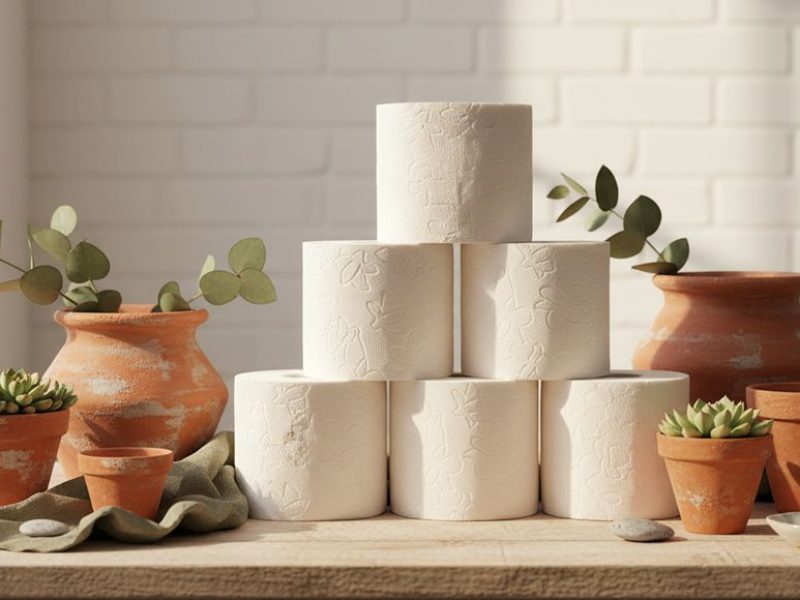
Whiteness & Brightness (ISO) metrics determine whether your paper inventory maintains its premium appeal or suffers from rapid yellowing during long-term storage in 40HQ containers. Relying on unstable chemical brighteners often leads to skin irritation complaints and significant inventory devaluation, especially in safety-critical sectors like healthcare and hospitality.
We benchmark the performance of 100% OBA-free virgin wood pulp against these industrial standards. Our analysis shows how a natural 85-92% brightness level ensures compliance with FDA and EU hygiene standards while protecting long-term supply chain margins.
What is the Difference Between ISO Brightness and CIE Whiteness?
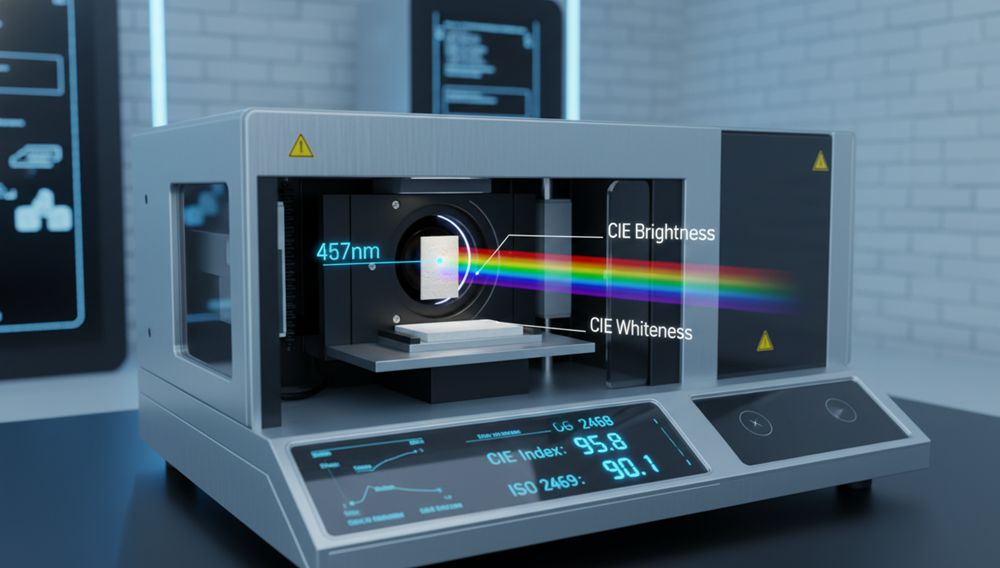
ISO brightness measures blue light reflectance at a specific 457nm wavelength, while CIE whiteness evaluates the full visible spectrum (380–720nm) to align with human sight.
| Measurement Aspect | ISO Brightness | CIE Whiteness |
|---|---|---|
| Spectrum Coverage | Single blue wavelength (457 nm) | Full visible spectrum (380–720 nm) |
| Visual Accuracy | Ignores red and green light | High; matches human visual perception |
| Standard Scales | 0–100 (ISO 2469 / TAPPI) | 0–100+ (CIE Index) |
| Standard Illuminant | Illuminant C | D65 (Outdoor Daylight) |
Spectral Focus and Human Visual Perception
Industry veterans know that two paper samples can share identical ISO brightness scores yet look completely different to the naked eye. This happens because ISO brightness only tracks the blue-light reflectance at 457 nanometers. It effectively ignores how the paper handles longer wavelengths like red or green.
CIE whiteness provides a more realistic assessment. By measuring the entire visible spectrum, it accounts for the actual shade of the paper—whether it leans yellowish or bluish. We use these metrics to ensure that paper appearing “white” in a warehouse also looks “white” under standard office lighting.
- ISO 2469 Standard: Focuses exclusively on the 457nm blue wavelength.
- Visible Range: CIE Whiteness captures 380–720nm to mirror human sight.
- Illuminant D65: Simulates natural outdoor daylight for whiteness testing.
- Visual Tint: High CIE values often result in a crisp blue tint, while lower values lean yellow.
Optimizing Fiber Selection for 85-92% Natural Brightness
At Top Source Hygiene, we skip the chemical shortcuts. Achieving high-tier brightness without Optical Brightening Agents (OBAs) requires a strict focus on raw material quality. We source premium long-fiber 100% Virgin Wood Pulp from our Hebei industrial hub to hit a natural brightness range of 85-92%.
Our manufacturing process focuses on fiber integrity. By avoiding fluorescent whiteners, we provide a product that is safe for sensitive skin and fully compliant with international health standards. This OBA-free strategy also prevents the yellowing often seen in lower-grade papers during long-term storage in 40HQ containers.
- Material: 100% Virgin Wood Pulp for a natural 85-92% brightness level.
- Chemical Safety: Strictly 100% OBA-Free to ensure skin safety and eco-compliance.
- Consistency: Batch protocols maintain uniform whiteness across massive wholesale orders.
- Strength: Engineered fiber integrity provides high tensile strength without synthetic additives.
What Role Do Optical Brightening Agents (OBAs) Play in Retail?
Retailers use OBAs to mimic extreme whiteness, but safety-conscious B2B markets are shifting toward 100% OBA-free materials to protect sensitive skin and ensure chemical compliance.
Visual Enhancement and Consumer Perception in Retail Markets
OBAs function through an optical illusion. These chemicals absorb ultraviolet light and re-emit it as visible blue light. This process effectively masks the natural yellowing found in organic fibers, making paper and textiles look “whiter than white” on retail shelves.
- Color Correction: OBAs counteract the natural yellow hues in raw pulp by reflecting blue light across the spectrum.
- Quality Signaling: Consumers associate high-intensity brightness with hygiene, freshness, and premium manufacturing standards.
- Shelf Visibility: Enhanced whiteness increases print contrast, making brand logos and packaging text sharper and more legible for shoppers.
Safety Standards and 100% OBA-Free Material Integrity
Top Source Hygiene eliminates chemical shortcuts. We utilize 100% OBA-free virgin wood pulp to ensure our products never cause skin irritation or chemical exposure. This approach prioritizes long-term safety over artificial visual tricks.
- Natural Brightness: We achieve an 85-92% brightness level through premium fiber selection rather than fluorescent whiteners.
- Chemical Safety: 100% OBA-free materials prevent contact dermatitis and are safe for sensitive skin and infant care.
- Regulatory Compliance: Our manufacturing processes strictly follow FDA and EU hygiene standards for tissue and personal care products.
- System Integrity: OBA-free virgin pulp ensures rapid disintegration, making it completely safe for septic systems in North American and European markets.
Scale Your Brand with Premium OEM Manufacturing
Why Does the Healthcare Sector Demand High-Brightness Paper?
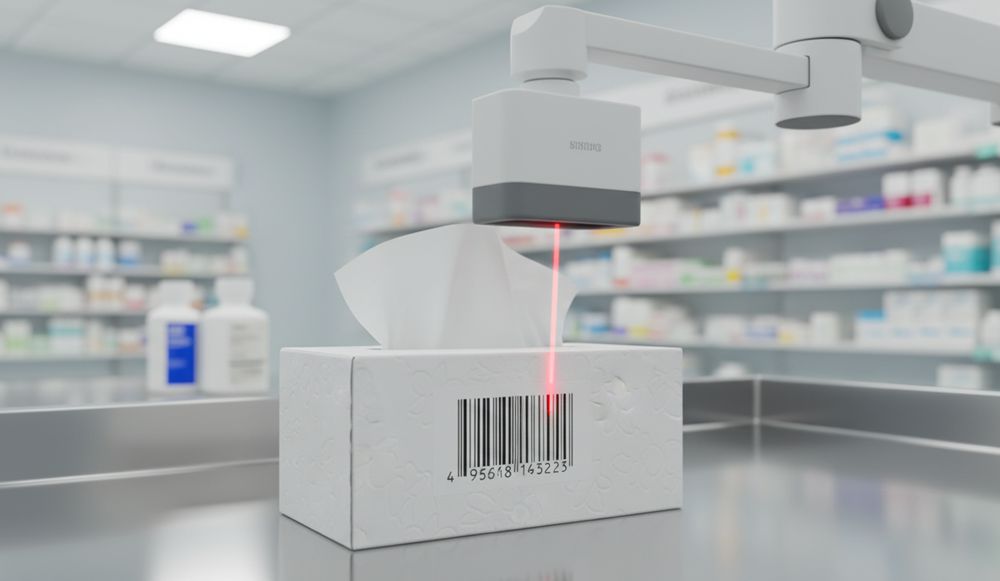
Healthcare relies on high-brightness paper for barcode scannability and clinical accuracy. Premium 100% virgin pulp ensures 85-92% brightness without chemicals, protecting patient safety and long-term records.
Maximizing Visual Contrast for Clinical Safety
Medical environments demand extreme visual clarity. High-contrast surfaces allow scanners to read barcodes instantly under varying clinical lighting conditions. This legibility reduces communication errors between pharmacy staff and hospital departments where precision is non-negotiable.
Clinical documentation requires a surface that maintains its integrity over time. High brightness levels support long-term document durability. This ensures that medication instructions and patient records remain fully accessible for regulatory audits and clinical reviews months after the initial print.
Achieving 92% Brightness Through OBA-Free Virgin Wood Pulp
Achieving high visibility does not require harsh chemical bleaching. We utilize specific material standards to ensure the paper meets medical-grade purity without sacrificing performance.
- Fiber Source: 100% Virgin Wood Pulp ensures high tensile strength for high-traffic laboratories.
- Natural Brightness: 85-92% levels reached through fiber selection rather than chemical additives.
- Chemical Safety: Strictly OBA-free manufacturing prevents skin irritation in sensitive clinical areas.
- Compliance: Materials meet ISO 9001 and EU hygiene standards for institutional supply.
By sourcing long-fiber pulp from our Hebei production hub, we provide the structural durability required for high-volume healthcare distribution. This approach eliminates the need for optical brightening agents (OBAs), which are often avoided in medical settings to prevent potential allergic reactions and maintain a non-toxic environment for patients.
How to Manage Whiteness Degradation During Long-Term Storage?
Manage whiteness by combining climate-controlled storage with high-barrier 5-ply packaging. Using 100% virgin wood pulp ensures long-term color stability and prevents the enzymatic browning that causes yellowing.
Environmental Factors and Fiber Senescence
Storage temperature drives the rate of fiber aging. High heat accelerates enzymatic browning and the physiological senescence of plant-based fibers. We recommend maintaining stable, cool warehouse conditions to slow these biochemical reactions. For distributors in high-heat regions like the Middle East or Africa, climate-controlled environments are necessary to preserve the crisp look of premium tissue rolls over long cycles.
Humidity levels also play a critical role in color retention. Maintaining a relative humidity between 85% and 95% prevents the moisture loss that compromises paper texture. Also, this specific range stops the water activity that triggers nonenzymatic activity, which is a primary cause of discoloration in stored wood pulp products.
Material Integrity and Reinforced 5-Ply Packaging
The most effective way to lock in brightness starts with material selection. At our Hebei manufacturing hub, we prioritize 100% virgin wood pulp. Recycled fibers contain residual lignin and impurities that oxidize and yellow rapidly when exposed to warehouse pollutants. Our virgin fiber naturally achieves an 85-92% brightness level without the need for unstable optical brightening agents (OBAs).
Secondary protection is vital during international transit and extended warehousing. We use specific packaging standards to shield products from environmental contaminants:
- 100% Virgin Fiber: Eliminates the premature yellowing caused by recycled waste and chemical additives.
- 5-Ply Export Cartons: Provides a mechanical barrier against light exposure and oxidative degradation.
- Mechanical Compression: Minimizes air pockets inside packaging to reduce the paper’s exposure to atmospheric pollutants like nitrogen oxides.
- Batch Color Consistency: Ensures uniform brightness levels are maintained across a full 40HQ container payload.
By combining high-purity pulp with reinforced export cartons, we ensure that the paper reaching your facility maintains its original “factory-fresh” brightness, even after months in the supply chain.
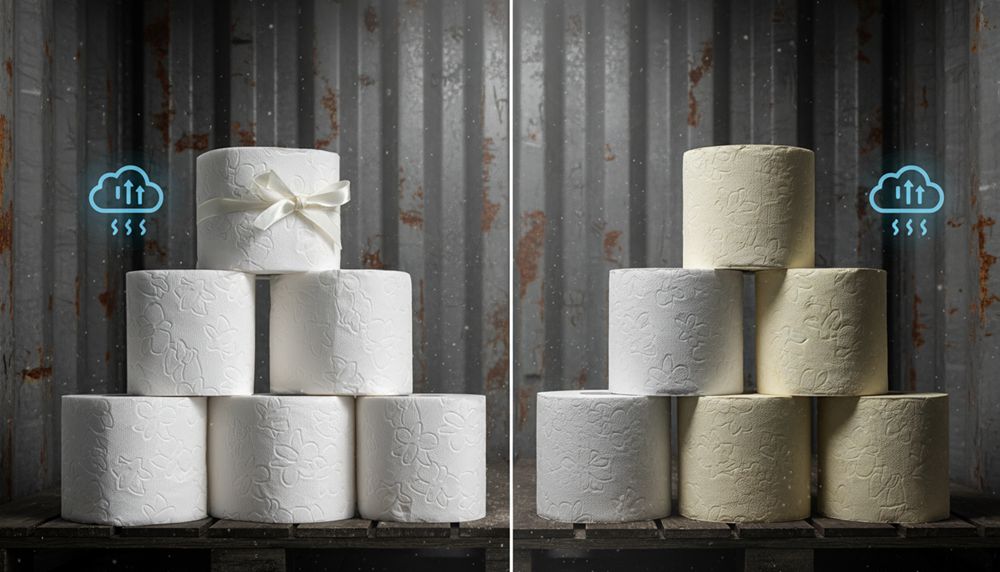
Is Natural Whiteness the Future for Eco-Branding?
2026 eco-branding shifts from sterile whites to unbleached, creamy naturals, replacing chemical brightness with organic textures to meet rising consumer demand for authentic, low-impact products.
The 2026 Transition to Unbleached Aesthetics and Warm Neutrals
Design trends for 2026 prioritize earthy tones like terracotta, clay, and soft greens. This direction moves away from the sterile, high-brightness whites that defined previous decades. Consumers now associate extreme whiteness with heavy chemical processing, shifting their preference toward colors that feel grounded and real.
Pantone’s “Cloud Dancer” highlights this evolution. It is a soft, airy white that feels organic rather than artificial. It offers a minimalist aesthetic that avoids the cold, clinical feel of standard bleached paper. This shift allows brands to communicate a “non-toxic” visual message without saying a word.
- Primary Palette: Terracotta, clay, and muted moss greens.
- Visual Textures: Oat milk, undyed wool, and natural limestone finishes.
- Design Goal: Reducing screen fatigue through soft, low-contrast “imperfect” neutrals.
Leveraging OBA-Free Fibers for Natural Brightness
Top Source Hygiene achieves a natural brightness level of 85-92% by focusing on fiber selection rather than harsh chemical bleaching. This range provides a clean, premium appearance while remaining firmly within the “natural” aesthetic requested by modern eco-conscious distributors and hospitality groups.
We provide a 100% OBA-Free (Optical Brightening Agent) guarantee across our production lines. This means our tissue products contain no fluorescent whiteners, making them safe for sensitive skin and fully compliant with strict European hygiene standards. For B2B buyers, this transparency is a major selling point in the health and wellness sector.
- Material Base: 100% Virgin Wood Pulp for maximum tensile strength.
- Brightness Standard: 85-92% ISO brightness achieved via long-fiber blending.
- Safety Profile: Zero chemical fluorescent agents, ensuring microbiome-friendly skin contact.
- Compliance: Meets FDA and EU hygiene standards for commercial and retail distribution.
Utilizing pure wood pulp ensures the paper maintains a cloud-like softness and high-wet-strength durability. Brands can now offer a high-end, lint-free experience that matches the “unbleached” trend without sacrificing the functional performance of traditional premium tissue.
Frequently Asked Questions
Industrial whiteness standards rely on ISO 12625-7 and CIE metrics to balance visual appeal with skin safety and fiber integrity in bulk production.
What are the industry standards for premium hotel toilet paper whiteness?
Tissue brightness follows the ISO 12625-7 standard measured under D65 outdoor daylight conditions. While luxury chains set proprietary targets, Top Source Hygiene maintains a natural brightness level between 85-92% by using premium long-fiber 100% virgin wood pulp. This avoids the structural damage associated with heavy chemical bleaching.
How do ISO Brightness and CIE Whiteness measurements differ in paper production?
ISO Brightness specifically measures the reflectance of blue light at a wavelength of 457 nanometers. CIE Whiteness assesses color balance across the entire visible spectrum (380-720 nm). Our production facility uses both independent metrics to ensure the paper looks neutrally white rather than artificially blue.
Are optical brightening agents (OBAs) safe for users with sensitive skin?
OBAs resist rinsing and stay on the paper fibers, which can lead to skin accumulation and irritation or contact dermatitis. We eliminate these risks by guaranteeing all our household and hospitality rolls are 100% OBA-free, ensuring safety for high-frequency contact and sensitive users.
What causes high-brightness paper to turn yellow during long-term storage?
Yellowing typically results from high humidity and temperature triggering hydrolysis, which breaks down paper fibers and chemical brighteners. Additionally, nitrogen oxides from warehouse machinery react with phenolic antioxidants in plastic packaging, accelerating discoloration even in dark storage environments.
Does the choice between hardwood and softwood pulp impact paper whiteness?
Hardwood pulps naturally provide higher whiteness levels because they contain less lignin (20-40%) than softwoods. This lower lignin content requires fewer bleaching chemicals to reach ISO brightness levels above 83%, allowing the paper to remain soft while achieving a cleaner visual profile.
How do manufacturers maintain color consistency across large wholesale orders?
We use d/0° geometry spectrophotometry to apply diffuse illumination to the paper surface, which eliminates directional variations in appearance. Combined with strict batch control at our Hebei facility, this measurement technique ensures brightness and texture remain uniform across every 40HQ container shipped to global distributors.
Final Thoughts
Selecting 100% Virgin Wood Pulp with a natural 85-92% brightness protects your brand from the rapid yellowing and skin irritation risks associated with cheap, OBA-reliant alternatives. While chemical brighteners offer a temporary visual boost, our fiber-first strategy ensures long-term storage stability and batch consistency across every 40HQ container. Investing in high-purity material reduces customer returns and secures your reputation in the growing health-conscious retail and hospitality sectors.
Verify our material integrity firsthand by requesting a sample kit or reviewing our Big 10 global inventory specifications. We recommend starting with a trial 40HQ container to test our TSH-series performance in your specific climate and supply chain. Contact our Hebei production hub today to discuss private label packaging and lock in your next shipment schedule.