

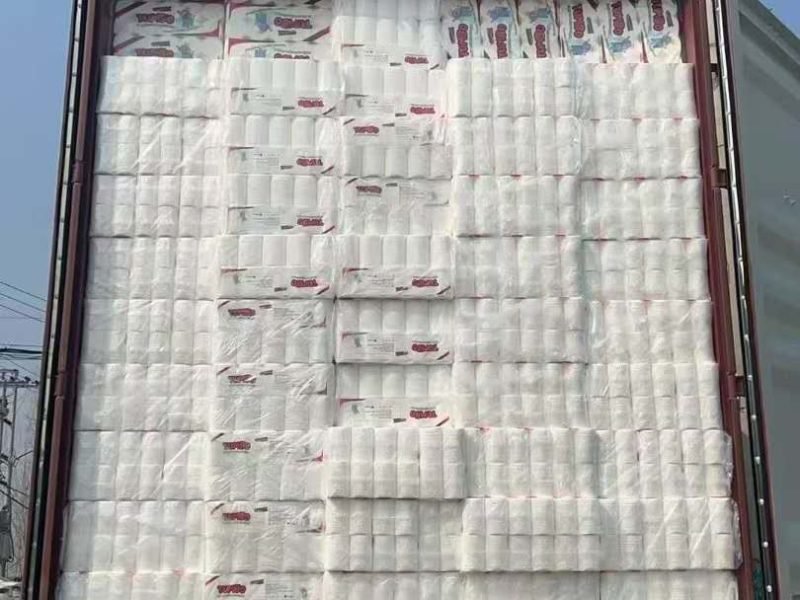
Global procurement teams keep asking Türkiye the same question: can one country supply both the jumbo reels our converting lines need and the finished rolls our shelves need, close enough to ship in days rather than weeks? The short answer is yes. Turkish tissue mills sell a large share of what they make as semi-finished reels to converters abroad, and the rest as retail and away-from-home goods. That dual role is what makes the country worth shortlisting, and it is also why the list below separates mills from traders — the two buy very differently.
This guide keeps its original shape — ten Turkish suppliers, one verdict each, then the logistics, standards and duty questions that decide your landed cost. What has changed is the evidence behind the names. Every company here was re-checked against its own corporate site, its holding company, or industry press, and anything we could not confirm was removed rather than softened. See About This List for what we corrected.
Key Takeaways
- Türkiye supplies both jumbo reels and finished rolls. Decide which one you are buying before you request a quotation — the specification sheets are different documents.
- At least one name on every “top manufacturers” list in this market, including ours, is a trading business rather than a mill. Ask which plant produces your goods and whose name appears on the invoice.
- The tissue arm of Eczacıbaşı (Sanipak / İpek Kağıt, maker of Selpak) is the subject of a takeover by Indonesia’s APP Group, announced in 2026 and conditional on regulatory clearance. Confirm the contracting entity before signing.
- Turkish-origin tissue enters the EU without customs duty under the Customs Union. That preference attaches to the goods’ origin, not to your company — it does nothing for a buyer importing into China.
- Toilet tissue sold into the EU sits under general product safety law, not the food-contact framework Regulation (EC) 1935/2004. Paper that touches food is a different product class with different tests.
- Paper products are in scope for the EU Deforestation Regulation ((EU) 2023/1115, application pushed to 30 December 2026 for medium and large operators and 30 June 2027 for micro and small enterprises). EU-bound buyers need plot-level geolocation data from the mill.
Top 10 Toilet Paper Manufacturers in Turkey
Quick Comparison: Top Picks
| Company | Plant / base | What they actually sell | Verdict |
|---|---|---|---|
| Lila Kağıt (Lila Paper) | Çorlu, Tekirdağ | Integrated mill: consumer tissue + jumbo reels | One of the largest single-roof integrated plants in Türkiye, and a serious reel exporter. |
| Hayat Kimya | Başiskele (Kocaeli) and Mersin | Branded tissue (Papia, Familia, Teno, Focus) | The FMCG group of the list — brands first, reels second, production in several countries. |
| EMIRSON (PaperTR) | Kadıköy, İstanbul | Trading and contract-production coordination | A trading desk, not a mill. Handy for mixed orders; you must verify the producing plant. |
| Viking Kağıt ve Selüloz | Aliağa, İzmir | Tissue reels and household brands | Türkiye’s first privately owned paper plant (1969), now part of Yaşar Holding. |
| Eczacıbaşı Tüketim (İpek Kağıt / Sanipak) | Yalova and Manisa | Selpak, Solo, Silen, İpek branded tissue | The historic market leader, mid-change: APP Group has agreed to buy the tissue arm. |
| Aktül Kağıt | Pamukova, Sakarya | Parent reels and retailer own-label | Built for volume: reels for converters plus private label for national chains. |
| Koçal Kağıt | Hendek, Sakarya (2nd OSB) | Converting; SOSİ, VİLO, BRAVA, TAMİ | Converter-led producer with İstanbul and Ankara warehousing, strong in away-from-home. |
| Cihan Group / Çiftçiler Birlik | İstanbul HQ, plant at Söğütlü, Sakarya | Tissue plant plus Marmara distribution arm | A family group since 1950 that owns both the mill and the trucks that serve the region. |
| Europap Tezol Kağıt | Torbalı (İzmir) and Tarsus (Mersin) | Integrated virgin and recycled tissue | The only name here with on-site de-inking pulping, at its Mersin complex. |
| Essel Selüloz | Osmaniye (and Çaycuma, Zonguldak) | Jumbo reels for converters | Newer integrated reel capacity; a large second tissue machine came on stream in 2021. |
Lila Kağıt (Lila Paper)
Lila Kağıt builds and converts under one roof at Çorlu, in Tekirdağ province, on the Thrace side of the Marmara region. Its retail brands — Sofia, Maylo, Berrak and the Nua / Nua Professional lines — are what most Turkish shoppers recognise, but the export story is the reels: trade reporting consistently describes Lila as one of the country’s biggest suppliers of jumbo rolls to foreign converting plants, alongside its finished-goods business.
For a buyer that means one supplier conversation can cover either model. If you are shipping reels, negotiate width, grammage, ply, reel diameter and core size as the primary terms and treat brand packaging as irrelevant. If you are shipping finished goods, Lila publishes a certificates page and has the export documentation habits that go with a large retail base. Its own published material describes a very large annual gross capacity for the Çorlu complex; we would rather you confirm the current line count and available tonnage in writing than quote a figure that may have moved since the last machine was commissioned.
At a Glance:
- 📍 Location: Çorlu, Tekirdağ — European side, closest major mill to the ports of Tekirdağ and Ambarlı
- 🏭 Core Strength: Consumer tissue, away-from-home lines, jumbo parent reels
- 🌍 Key Markets: Domestic retail, EU and MENA, and overseas converters buying reels
Why We Picked Them:
| ✅ The Wins | ⚠️ Trade-offs |
|---|---|
|
|
Hayat Kimya
Hayat Kimya is a fast-moving consumer goods company rather than a paper mill you can buy reels from on impulse. Its tissue housewives’ names — Papia, Familia, Teno and Focus — are among the most distributed in the region, and its Turkish tissue production is associated with the Başiskele area of Kocaeli and with Mersin, while the group has built converting and manufacturing capacity in other countries as well, including Egypt, Russia, Nigeria and Pakistan.
Two practical consequences. First, because the group buys and converts at national scale, its availability for an unrelated private-label program depends on spare capacity, not willingness — get a written capacity statement. Second, machine deliveries to Hayat have been covered in the trade press for years (Valmet tissue machinery orders being reported repeatedly), which is a reasonable proxy for how modern its lines are. Brand licensing and retailer relationships dominate here, so most foreign buyers engage Hayat for finished branded goods rather than as a toll converter.
At a Glance:
- 📍 Location: Başiskele, Kocaeli and Mersin, with group operations in several other countries
- 🏭 Core Strength: Branded toilet tissue, paper towels, napkins and wider household care
- 🌍 Key Markets: Türkiye and the surrounding regional markets, plus the group’s own overseas factories
Why We Picked Them:
| ✅ The Wins | ⚠️ Trade-offs |
|---|---|
|
|
EMIRSON (PaperTR)
EMIRSON Global Kimya Sanayi A.Ş., operating the PaperTR storefront from Kadıköy on the Asian side of İstanbul, sits between international buyers and Turkish production. Its own catalogue splits into semi-finished goods (tissue jumbo rolls, paper cup base paper, greyboard) and finished lines — the RelyOn Professional away-from-home range and the Worthy Classic / Worthy Plus consumer range — with sales support offered across several languages. That is a genuinely useful profile for a buyer who wants one contact covering mixed quantities.
What it is not, on the evidence we could find, is a paper machine. Nothing on the PaperTR site presents a mill, and directory listings describe trading and contract-production coordination rather than manufacturing. So treat every specification, sample and test report as something to trace back to the plant that produced it. Ask, in writing: which facility makes my reels, is that facility named on the proforma invoice, and will the mill issue the specification sheet and the pre-shipment sample report under its own letterhead. If a supplier will not answer those three questions, the price advantage of a merchant is not worth the traceability you gave up.
At a Glance:
- 📍 Location: Kadıköy, İstanbul — a trading office, not a production site
- 🏭 Core Strength: Tissue jumbo reels, paper cup base paper, greyboard, finished AFH and consumer lines
- 🌍 Key Markets: Export-led, with multilingual sales coverage across Middle Eastern and European buyers
Why We Picked Them:
| ✅ The Wins | ⚠️ Trade-offs |
|---|---|
|
|
Viking Kağıt ve Selüloz A.Ş.
Viking was established in 1969 at Aliağa, on the Aegean coast north of İzmir, and is described in its own group’s history as the first privately owned paper plant in the country. It later became part of Yaşar Holding, a large İzmir-based industrial group, which matters to a buyer for an unglamorous reason: holding-company ownership usually means audited financials, credit discipline and a longer memory than the average single-family mill.
Today Viking supplies household tissue under its own retail names (Lily is the one most often cited) and sells converted and semi-finished product into the same Aegean and Mediterranean channels. Its Aliağa position is a logistical plus: the Nemrut Bay container terminal complex is close by, so the inland leg for an Aegean or Mediterranean destination is short. If you want a mid-sized supplier with institutional ownership rather than the two giants at the top of this list, Viking is the natural middle option.
At a Glance:
- 📍 Location: Aliağa, İzmir — Aegean coast, close to the Nemrut Bay terminals
- 🏭 Core Strength: Toilet tissue, paper towels and napkins, retail and semi-finished
- 🌍 Key Markets: Domestic Aegean and Mediterranean trade, regional export through İzmir ports
Why We Picked Them:
| ✅ The Wins | ⚠️ Trade-offs |
|---|---|
|
|
Eczacıbaşı Tüketim Ürünleri (İpek Kağıt / Sanipak)
Eczacıbaşı’s consumer products business, operating through İpek Kağıt and Sanipak from sites associated with Yalova and Manisa, makes the names Turkish households argue about: Selpak, Solo, Silen, İpek and Marathon. Industry and group material credits it as the company that introduced modern toilet tissue and napkin production to Türkiye, and describes annual capacity in the low hundreds of thousands of tonnes.
The material fact for a 2026 buyer is corporate, not technical. In March 2026 it was reported that APP Group, through the vehicle Arch Peninsula, had agreed to acquire Sanipak for about US$600 million, with the deal still requiring competition and other regulatory clearances at the time of writing. An ownership change of that size does not automatically void anything, but it can change the legal entity you contract with, who signs your certificates, how price lists reset, and which plants are prioritised for export. If you are mid-negotiation with this group, get the current contracting entity and the post-closing treatment of your terms in writing. Details are published by Sanipak and in the trade press.
At a Glance:
- 📍 Location: Yalova and Manisa (Turgutlu area), Türkiye
- 🏭 Core Strength: Branded toilet tissue, napkins and towels; private label alongside house brands
- 🌍 Key Markets: Turkish retail, European and Gulf export markets
Why We Picked Them:
| ✅ The Wins | ⚠️ Trade-offs |
|---|---|
|
|
Aktül Kağıt Üretim ve Pazarlama A.Ş.
Aktül started in 2011 at Pamukova, in Sakarya province, and grew specifically to sell tonnage — parent reels of 100% virgin cellulose to converting plants at home and abroad, plus private-label tissue for large retail chains that need consistent supply rather than a brand story. Its own retail names (Komili being the one shoppers know) occupy the shelf; the reels occupy the export books. Trade reporting places its production and reel-processing capacity in the same order of magnitude as the leaders on this list, and it has invested in creping and press technology aimed at softness and bulk rather than raw speed.
One correction worth stating plainly, because it is wrong in circulation and was wrong in our own earlier version of this page: Focus is a Hayat Kimya brand, not an Aktül brand. Confusing the two is common in AI-generated supplier lists, and it is the kind of error that costs you credibility with a procurement manager who knows the shelf. Aktül sits in the same industrial belt as Koçal and Cihan Group’s Çiftçiler Birlik plant, which is why several of the entries below share a Sakarya location and, practically, share the same road route to the Gulf of İzmit ports.
At a Glance:
- 📍 Location: Pamukova, Sakarya — Marmara industrial belt
- 🏭 Core Strength: Toilet tissue parent reels, high-speed reel supply, retailer private label
- 🌍 Key Markets: International converters, domestic wholesale, chain own-label programs
Why We Picked Them:
| ✅ The Wins | ⚠️ Trade-offs |
|---|---|
|
|
Koçal Kağıt Sanayi
Koçal dates to 1995 and runs its manufacturing from the Second Organised Industrial Zone in Sakarya, in the Hendek area, while keeping commercial and warehouse bases in İstanbul and Ankara. Its portfolio is retail-facing and recognisable — SOSİ, VİLO, BRAVA and TAMİ — and the split between a production site in the industrial zone and stocking points in the two biggest cities is exactly the shape of a mid-sized Turkish converter that grew into its own brands.
The practical read for a buyer: Koçal is a converting business first. That is an advantage if you want finished, packed, palletised goods and a supplier used to serving hotel, office and distribution channels, and a limitation if you want truckloads of bare reels, since converting is where the value sits. Warehouses in İstanbul and Ankara also mean the group is set up for consolidated mixed loads, which suits a distributor building a first assortment rather than a single-SKU program. Company details are published at kocalkagit.com.
At a Glance:
- 📍 Location: Hendek / Sakarya 2nd Organised Industrial Zone, with warehouses in İstanbul and Ankara
- 🏭 Core Strength: Converted toilet paper, tissue, napkins and professional wipes under own brands
- 🌍 Key Markets: Domestic retail and away-from-home trade, growing export through the Marmara base
Why We Picked Them:
| ✅ The Wins | ⚠️ Trade-offs |
|---|---|
|
|
Cihan Group (Çiftçiler Birlik Kağıtçılık A.Ş.)
Our previous version described Cihan Group as an Istanbul supplier of rolls. That undersold it. The group traces to 1950, runs its commercial headquarters at Kartal on the Anatolian side of İstanbul, and its manufacturing arm is Çiftçiler Birlik Kağıtçılık San. ve Tic. A.Ş., operating from a very large site in the Third Organised Industrial Zone of Sakarya at Söğütlü. Alongside it sits Cihan Gıda, a distribution company that services thousands of points across İstanbul and the Marmara region — which explains why the trading reputation was stronger than the manufacturing one.
Structurally this is the most vertically complete Turkish option on the list after the two giants: production in an organised industrial zone, plus a own-region distribution network that can absorb mixed loads. For a regional distributor supplying hotels, offices or small retail chains, that combination matters more than headline tonnage. Group and plant information is published by Çiftçiler Birlik and by the group on LinkedIn.
At a Glance:
- 📍 Location: Kartal, İstanbul (commercial) and Sakarya 3rd OSB, Söğütlü (production)
- 🏭 Core Strength: Tissue rolls and hygiene paper, backed by a Marmara-wide distribution arm
- 🌍 Key Markets: İstanbul and the wider Marmara region, plus regional export
Why We Picked Them:
| ✅ The Wins | ⚠️ Trade-offs |
|---|---|
|
|
Europap Tezol Kağıt Sanayi ve Ticaret A.Ş.
Tezol runs two very different sites. At Torbalı, in İzmir province, it converts household tissue; at the Tarsus Organised Industrial Zone in Mersin it operates an integrated plant that has been in service since 2016, with on-site pulping and de-inking so that recovered paper becomes base paper inside the fence, and tissue machinery from Toscotec among the installed equipment. Reported capacity across the two sites places it among the larger Turkish producers, and it serves both the household shelf and away-from-home channels with a professional range built on recycled fibre.
Why that matters commercially: a buyer with a recycled-content specification, or an EU customer starting to ask for deforestation due-diligence data, can get a coherent fibre story from a site that actually processes recovered paper. It also gives a southern loading option — Mersin is the natural gateway for Red Sea, Gulf and East African destinations, which İzmir and the Marmara ports reach at higher cost and longer transit. Corporate and sustainability pages are published at tezol.com.tr.
At a Glance:
- 📍 Location: Torbalı, İzmir and Tarsus, Mersin
- 🏭 Core Strength: Multi-ply household tissue, kitchen towels, napkins, recycled-fibre professional range, private label
- 🌍 Key Markets: Turkish retail, Western Europe, Gulf and North African FMCG networks
Why We Picked Them:
| ✅ The Wins | ⚠️ Trade-offs |
|---|---|
|
|
Essel Selüloz Sanayi ve Ticaret A.Ş.
Essel operates from Osmaniye, in the Çukurova plain east of Adana, and its relevance to international buyers is machine-level rather than shelf-level. A first tissue machine entered service there in 2015; a second, substantially larger one followed in October 2021, reported at the time as among the biggest tissue machines installed in Türkiye, with daily output in the high hundreds of tonnes and group-wide annual capacity reported in the range of a hundred-odd thousand tonnes across the Osmaniye site and operations at Çaycuma in Zonguldak province. That is the profile of a supplier whose natural customer is somebody else’s converting line.
We are adding Essel and removing a company called “Teva Kağıt”, which our earlier version carried in tenth place. On re-checking, we could not verify that any Turkish tissue producer by that name exists; the only material the web returns for it is this article’s own text, quoted back. That is a genuine hazard of supplier lists in this market, and it is the reason we re-verify the whole ten rather than trusting our own last edit. Essel’s own site is at essel.com.tr.
At a Glance:
- 📍 Location: Osmaniye (Çukurova), with group operations at Çaycuma, Zonguldak
- 🏭 Core Strength: Tissue jumbo reels for converters, in virgin and blended grades
- 🌍 Key Markets: Export reels to overseas converting plants, plus domestic supply
Why We Picked Them:
| ✅ The Wins | ⚠️ Trade-offs |
|---|---|
|
|
Türkiye: The Rising Hub for Global Hygienic Paper Production
Turkey serves as a primary export platform for the global tissue market, leveraging high-capacity mills and strategic proximity to Europe and the Middle East. Manufacturers like Lila Kağıt operate advanced machinery capable of producing millions of units annually while adhering to sustainable fiber standards and international certifications.
Where Turkish Capacity Was Actually Added
Capacity growth in this market is measurable, if you look at machinery rather than at brochures. Tezol’s integrated Mersin complex has been running since 2016; Essel added a second, larger tissue machine at Osmaniye in October 2021; Hayat Kimya has taken repeated tissue machinery deliveries reported in the trade press over a decade; and the two Çiftçiler Birlik and Aktül sites in the Sakarya organised industrial zones were built for reel volume rather than for a retail shelf. When a supplier tells you it has capacity available, ask which machine it comes from and when that machine was commissioned. A 2015 line and a 2021 line do not produce the same grammage range at the same run speed.
Integration is the real Turkish advantage, and it is a specification advantage more than a price advantage. Where pulping, reel-making and converting share a fence — Tezol at Tarsus, Lila at Çorlu, Essel at Osmaniye — the buyer gets one party responsible for moisture, grain direction and crepe rate instead of two pointing at each other. That distinction is worth money to any converter whose own line is sensitive to base-paper variation, and it is the first thing to establish when you shortlist: which supplier actually makes the paper you are quoting?
Adoption of Sustainable Fiber and High-Ply Production Standards
Turkish mills run both fibre systems, and the mix is a commercial decision, not an environmental one. Türkiye has very little home cellulose pulp, so a 100% virgin specification means imported market pulp priced in dollars, which is precisely the exposure a foreign buyer should understand before fixing a long contract. Recovered fibre, by contrast, is sourced locally and insulates you from pulp index moves at the cost of hand-feel and brightness. Ask for the fibre breakdown on the specification sheet, per grade, and treat any supplier who cannot state it as quoting someone else’s product.
The machinery behind the premium end is identifiable rather than mystical: modern creping and shoe-press configurations from suppliers such as Valmet and Toscotec are what let these mills hit soft-and-strong at low grammage, and Toscotec equipment is documented on Turkish lines specifically. What that means on your purchase order: specify ply count, grammage per square metre, sheet size, roll length and reel width, then require the supplier to certify achievable ranges for the machine that will run you. Aktül, Essel and Tezol are the three names on this list whose recent machine vintage makes that conversation easiest.
Competitive Advantages: High-Tech Machinery and Strategic Location
Turkish tissue manufacturers maintain a global edge by combining high-speed automated converting lines with a geographic position that links Europe, Asia, and Africa. Integrated facilities in regions like Çorlu and Kocaeli utilize on-site packaging and advanced R&D to lower unit costs while accelerating delivery to Mediterranean and MENA markets.
Advanced Automation and Integrated Production Systems
Modern mills such as Lila Kağıt and Hayat Kimya operate high-capacity automated converting lines. These systems ensure consistent quality for both private label and branded products by minimizing human error and maintaining tight technical tolerances. The use of high-speed machinery allows these producers to scale output rapidly to meet sudden shifts in international demand.
Integrated manufacturing complexes in Çorlu and Kocaeli combine tissue machines with on-site packaging units. This setup shortens production cycles and significantly lowers unit costs by eliminating the need to transport base paper to separate converting sites. For the 2026 market outlook, these integrated hubs provide a streamlined workflow that benefits high-volume buyers seeking price stability.
R&D capabilities in embossing and ply-bonding allow manufacturers like Eczacıbaşı to differentiate product softness and strength. These technical refinements ensure that finished goods meet strict international retail standards. By adjusting the physical characteristics of the tissue, producers can cater to premium markets in Europe while maintaining cost-effective production for value-tier segments.
Investment in energy-efficient machinery and optimized reel widths helps regional converters reduce waste. During the slitting and rewinding process, precise engineering controls minimize trim loss and energy consumption. This focus on technical efficiency supports a more sustainable production model and helps stabilize prices for jumbo roll exports.
Strategic Access to European and MENA Logistics Routes
Match the mill to the port before you negotiate freight, because in this country the two are not interchangeable. Mills at Çorlu and the Thrace side load conveniently at Tekirdağ or Ambarlı. The Kocaeli and Sakarya cluster — Hayat, Aktül, Koçal, Çiftçiler Birlik — works through the Gulf of İzmit terminals and the large İstanbul-area container ports. The Aegean names (Viking at Aliağa, Tezol at Torbalı, Levent at Kemalpaşa) use İzmir and Nemrut Bay. Essel at Osmaniye and Tezol at Tarsus sit closest to İskenderun and Mersin, which is the correct side of the country for Gulf, Red Sea and East African destinations. Ask the supplier which terminal it routes from and who pays for inland leg, detention and per-diem.
The genuine geographic advantage is European, and it is a time advantage rather than a cheapness advantage. Short-sea sailings from Turkish ports to Southern Europe, and ro-ro and truck corridors into the Balkans, let a distributor replenish inside a fraction of the window an Asian lane requires. That is how Turkish suppliers hold position in EU retail. If you are buying for a market outside Europe and the Gulf, the proximity argument shrinks a lot — measure it in your own inventory carrying cost, not in their marketing.
Strategic mill locations near major transport corridors allow for flexible routing and consolidation of shipments. Sourcing partners can combine different product types into single shipments to maximize container utilization. This flexibility is vital for retailers and wholesalers who require frequent, smaller replenishments rather than massive, infrequent deliveries.
One structural point that experienced buyers use: Turkish mills sell reels to foreign converters, so an FCL of jumbo rolls and an FCL of finished retail product are different supply chains, with different loading, different damage risk and different customs descriptions. If you convert locally, reels are the smarter Turkish purchase and you should shortlist Lila, Essel, Aktül and Tezol first. If you do not own converting capacity, this whole page should be read as a finished-goods exercise — start with our comparison of standard versus jumbo rolls and cost both models before you request a single quotation.
Scale Your Brand with 30 Years of Expert Manufacturing
Export Trends: Sourcing Jumbo Rolls and Finished Goods from Turkey
Turkey’s tissue sector exports two different products, and confusing them is the most expensive mistake a first-time buyer from this market makes: semi-finished jumbo reels for converters abroad, and finished retail or away-from-home goods for importers who have no converting line of their own. The mills below do both in different proportions, and the pricing, freight and specification conversations diverge immediately. This section covers what actually moves landed cost — fibre, currency and preferential origin — rather than a market-size figure nobody can show the working for.
What Actually Moves Turkish Landed Cost: Pulp, Currency and Preference
We are removing the market-size forecast that used to open this section. It appeared twice, cited no source, and we could not reproduce it — and a number nobody can show you the working for is worse than no number, because it teaches a buyer to accept one. In its place are the three variables that genuinely move what you pay a Turkish mill. First, pulp: Türkiye imports its virgin cellulose, so a hardwood or softwood index move passes through to your reel price whether you are on FOB or CIF. Second, currency: the lira has been volatile enough that mills quote in USD or EUR and build an escalation clause in, which protects the supplier and transfers the risk to you — negotiate whether that clause is two-way. Third, preferential access: Turkish-origin goods enter the EU without customs duty under the Customs Union, and that is one reason EU retail buys here.
Sourcing Jumbo Rolls for Global Converters
For a buyer outside Europe, that preferential access is worth stating clearly so nobody mis-sells it internally: duty-free treatment attaches to the origin of the goods on entry into the EU, not to the identity of the trader. It gives a Chinese importer nothing at a Chinese port, and it does not travel with a Turkish invoice into a third market. For United States-bound tissue paper under HTS heading 4818.10, the general rate is free, and Turkish origin does not attract the Section 301 additional duty that applies to Chinese origin — a real and checkable reason a US buyer may compare Türkiye against China even when the factory gate price is higher. Confirm the current rate and any additional duty lines with your customs broker before you price a program; tariff schedules move.
Sustainable Material Shifts and Finished Goods Trends
On fibre direction, the practical trend is the split between the recycled integrated sites and the virgin-pulp converters, not exotic substitutes. Tezol’s Mersin complex pulps and de-inks recovered paper on site; Levent Kağıt at Kemalpaşa near İzmir has been producing reels, hutbak and recycled industrial grades since 1975 and sells into the converting trade. That gives an EU-bound buyer something to work with under the EU Deforestation Regulation, whose scope covers paper products — although the due-diligence obligation falls on the operator placing product on the EU market, so you will need plot-level origin data from the mill rather than a sustainability PDF.
Quality Standards: Navigating GSO and EU Compliance
Turkish tissue manufacturers secure international contracts by meeting rigorous GSO and EU regulatory benchmarks. These standards dictate precise physical properties, microbial safety limits, and chemical migration thresholds for finished toilet paper and jumbo rolls.
GSO Hygiene and Safety Requirements for Middle Eastern Markets
What Gulf clearance actually turns on is documented method, not a magic threshold, and our earlier version invented two thresholds it could not source. The honest version: specify the ISO 12625 test methods — that series is the recognised framework for tissue paper products, covering definitions, grammage, thickness, tensile strength, burst strength, initial wet tensile strength, absorbency and air permeability — then set your own acceptance limits per grade in the contract, and have a pre-shipment sample tested by an accredited laboratory against exactly those clauses. GSO adopts ISO methods for the Gulf market, so a 12625-based specification travels; a claim of “2.5 per cent defects” without a defined inspection standard travels nowhere.
EU Regulatory Framework and Environmental Certifications
For the European market, the single most repeated mistake in tissue sourcing documents is to reach for Regulation (EC) 1935/2004. That framework governs materials intended to come into contact with food. A roll of toilet paper does not; a bakery wrap, a deli liner or a food-service napkin does. So classify your own SKUs before you demand food-contact compliance from a mill, because asking for the wrong certificate both delays you and tells the supplier you are not technical. Ordinary household and away-from-home tissue placed on the EU market falls under the general product safety regime — Regulation (EU) 2023/988, which replaced the older directive — plus the chemical rules that apply to the specific additives you use. Brightness, residual inks and optical brightening agents belong on your specification sheet as agreed values with a test method attached, not as a universal limit quoted from a blog. Certification that European retail genuinely asks for is voluntary: FSC or PEFC chain-of-custody for fibre claims, EU Ecolabel where a retailer demands it, and increasingly the deforestation due-diligence data described above.
Logistics Pro-Tip: Leveraging Turkey’s Triple-Continent Gateway
Turkey serves as a central logistics hub connecting Europe, Asia, and Africa, which allows tissue manufacturers to reduce shipping times and freight costs. This geographic advantage helps suppliers maintain reliable delivery schedules for international retailers and jumbo roll converters.
Geographic Advantages for Multi-Continental Distribution
Türkiye sits between three seas and one very large domestic market, and the honest commercial reading is narrow: this helps you serve Europe, the Gulf, the Black Sea basin and North Africa from a single country program. It does not shortcut anything for a buyer whose destination is East Asia or the Americas, where Turkish origin mainly changes duty treatment and lead time rather than sailing distance.
Core Port Infrastructure and Transit Efficiency
Container infrastructure is adequate and it is not the differentiator — the differentiator is being on the right coast for your destination. İstanbul and Kocaeli serve Marmara-produced goods; İzmir, Aliağa and Nemrut Bay serve the Aegean mills; Mersin and İskenderun serve Çukurova and the Gulf, Red Sea and East African lanes. Freight on tissue is a large part of landed cost because the cargo is light, bulky and damage-sensitive, which is why a supplier 400 km further but on your side of the country often wins. Read our note on freight spikes versus a flat FOB price before you treat a quoted FOB as comparable between two mills on different coasts.
Frequently Asked Questions
What drives the competitiveness of Turkish tissue mills over EU competitors?
Two things, one of them permanent and one of them not. The permanent one is integration: mills that make their own reels and convert them on the same site skip a transport and handling step, and mills close to a port skip another. The temporary one is input pricing — energy and labour in Türkiye are cheaper than in Western Europe, but the cellulose is imported and priced in dollars, so the fibre half of your cost is the same number a German mill pays. Compare Turkish quotes against each other on conversion efficiency and freight, not against an assumed raw-material advantage.
Which manufacturers lead the export of tissue jumbo rolls from Turkey?
The reel-export habit is strongest at the integrated mills — Lila Kağıt at Çorlu, Essel Selüloz at Osmaniye, Aktül Kağıt at Pamukova and Europap Tezol across İzmir and Mersin, with Levent Kağıt at Kemalpaşa supplying reels and industrial grades into the converting trade. No public ranking of Turkish reel exporters exists, and we are not going to invent an order for one. What you should do instead is specify what you need in the units a mill quotes in: reel width, grammage per square metre, ply count, reel diameter, core diameter, moisture content on delivery and tonnes per month. Any supplier that answers those seven items in writing is export-experienced; any that answers with a price list is not.
Do Turkish paper mills exclusively use 100% virgin pulp?
No. Virgin and recovered fibre coexist here, and the difference is visible in the plant layout. Tezol’s Tarsus complex pulps and de-inks recovered paper on site, and Levent Kağıt has produced recycled and cellulose industrial grades, including hutbak and imitation kraft, since the 1970s. Premium consumer grades still lean on imported virgin hardwood pulp for softness, because that is what the shelf pays for. The useful question is not whether a mill uses recycled fibre but what percentage it will commit to per grade, and whether that commitment survives a quarter in which recovered paper prices spike — which is when substitution happens quietly unless you contracted against it. See our breakdown of tissue grades and product families.
What are the typical shipping lead times to the UK and Saudi Arabia?
We are deleting the transit-day ranges that used to sit in this answer. They came from no source we could check, and quoting them would have you planning a program around an invented number. What is defensible: from a Marmara or Aegean port, Southern Europe and the Gulf are short-sea sailings, North Europe adds a leg, and the Red Sea route has been disrupted long enough that carriers still price war surcharges and re-routing into it. Get the transit time from the carrier’s booking confirmation for the sailing you are actually nomination, in writing, and treat any supplier-stated day range as marketing. Then plan around the two numbers you can control: production lead time and port-to-port time, costed separately.
Which companies provide private label manufacturing for the European market?
The strongest private-label positions on this list belong to the volume converters rather than the brand-heavy groups: Aktül Kağıt built part of its business on chain own-label, Koçal Kağıt converts for retail and away-from-home channels, Europap Tezol supplies private label across two sites, and Lila Kağıt does both branded and unbranded work off the largest integrated plant in the group. EMIRSON, which appears in some lists as a manufacturer, is a merchant — it will happily take a private-label order and place it with a plant, which is a legitimate service as long as you know who is producing and who is signing. Ask three things of any private-label supplier: the producing plant’s name on the contract, a specification sheet issued on the mill’s letterhead, and a right to audit or independently sample at that plant. If you are comparing contract versus full design responsibility, our product range page shows what we convert ourselves.
About This List, and What We Corrected
This page was rewritten in place on 27 October 2026 rather than replaced, and the corrections are worth naming, because the errors were instructive. We removed a company listed here as “Teva Kağıt” of Kocaeli: no Turkish tissue producer of that name could be verified, and the only text the web returns for it is our own previous version of this article, quoted back by AI answer engines. We moved Koçal Kağıt from İstanbul to its actual Sakarya industrial zone. We reclassified EMIRSON (PaperTR) from manufacturer to trading and contract-production business. We attributed the “Focus” brand back to Hayat Kimya, which owns it, instead of Aktül. We replaced Cihan Group’s description as a distributor with the group’s actual structure, including its manufacturing subsidiary Çiftçiler Birlik Kağıtçılık. We added the APP Group agreement over Sanipak, which changes who an EU or Gulf buyer is contracting with at the largest brand in the country.
We also deleted every market-size forecast, defect-rate limit, tensile figure, heavy-metal threshold and transit-day range that we could not trace to a source, and we replaced the machinery brand named without a supplier reference with the equipment actually documented on Turkish lines. Where a figure is industry reporting rather than company disclosure, it says so. Company facts here come from the companies’ own sites and holding-company disclosures; corporate transaction facts come from contemporaneous reporting. If you find something wrong, it is more likely ours than the market’s — tell us through the contact route on our product page and we will fix the entry and date the change.
Final Thoughts
Türkiye earns a place in a tissue sourcing program for two reasons that hold up under scrutiny: integrated mills that sell both reels and finished goods, and a coast on each side of the country for different destination sets. It does not earn its place on cheap fibre, because the pulp is imported and priced in dollars like everyone else’s. Choose the mill by which specification you are buying, then by which port it can reach without a reposition.
Three things to do with this list. Decide reels or finished goods, because they are different suppliers and different cost models. Confirm the producing entity in writing, since at least one trader here and one group in transition make that more important than the price you negotiated. And cost the freight from the specific terminal the mill uses before comparing two quotations. If you want the same list applied to a neighbouring origin, our pages on South African manufacturers and US manufacturers use the same verification standard.