Skip to content
Core Thickness is a critical engineering specification that prevents pallet collapse and significant product loss during high-volume commercial distribution. While a three-inch diameter core looks like wasted space to an end-user, it functions as a structural column for the entire roll. Thin tubes lead to crushed stock in transit. This damage jams high-speed industrial dispensers and creates frequent maintenance calls for facility managers.
This technical breakdown examines the manufacturing forces that dictate jumbo roll dimensions. we look at the centrifugal stress of high-speed rewinders and the spiral winding process used to create high-density kraft paper tubes. The following sections analyze how density affects ocean freight durability and the mechanical role the core plays in dispenser spindle rotation. Use these insights to evaluate the industrial standards behind commercial paper production and procurement.
The Visual Disproportion of the 3.3-Inch Jumbo Core
Internal core diameter directly dictates perceived product value and mechanical stability, where a 0.3-inch variance can compromise guest satisfaction and logistical efficiency.
Core-to-Paper Ratio and Optical Perception
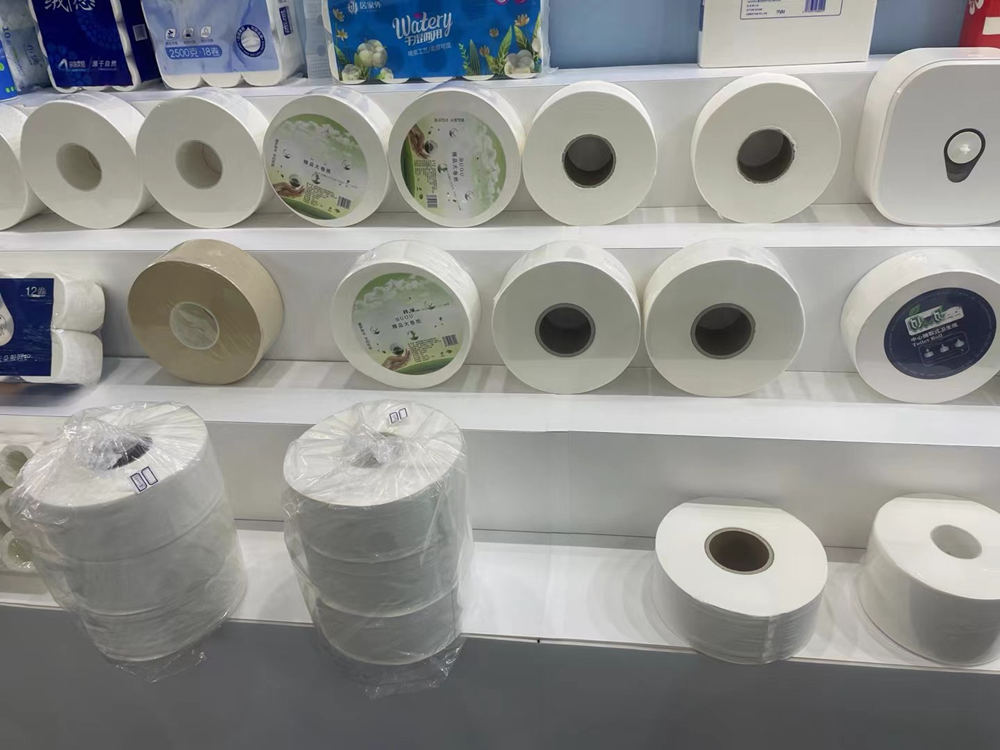
A 3.3-inch core consumes significant internal volume, creating a visual illusion that suggests a lower paper-to-air ratio. The surrounding paper layers appear thinner to the end-user, often leading to a perception of reduced value. Facility managers in 2026 prioritize rolls that look dense and full to maintain high guest satisfaction scores, as a “hollow” look often correlates with perceived cost-cutting.
Top Source Hygiene counteracts this optical effect by pairing larger cores with high GSM paper (up to 22g/m² per ply). This strategy ensures the roll maintains a substantial profile and a premium hand-feel. By focusing on fiber density rather than just outer diameter, we provide a product that looks and feels complete despite the larger center.
Dispenser Compatibility and Spindle Gap Issues
Mechanical alignment issues arise because most universal dispensers utilize a standard 3-inch spindle. Using a 3.3-inch core variant creates a 0.3-inch gap that causes the roll to wobble during rotation. This lack of precision leads to uneven paper tearing and increases the risk of rolls dislodging from the housing during peak usage hours.
Our 2026 manufacturing data confirms that precise core sizing remains critical for high-traffic venues like airports and shopping malls. A mismatched core-to-spindle ratio results in higher maintenance labor and unnecessary product waste. We prioritize exact specifications to ensure smooth rotation and clean perforation breaks, which are essential for professional environments.
Packaging Density and Shipping Inefficiencies
Wider cores increase the overall diameter of the finished product without providing additional usable paper length. This physical expansion directly impacts the bottom line by reducing the total roll count possible in a standard 40-foot high-cube (40HQ) container. Every millimeter added to the core radius translates to fewer units per shipment, raising the landed cost per roll for international buyers.
We optimize winding tension and utilize high-pressure ply-bonding to mitigate the “empty” look of the 3.3-inch core while maintaining logistical efficiency. This approach allows us to maximize the payload in 40HQ containers, typically reaching 7,000kg to 9,000kg. By balancing physical aesthetics with smart engineering, we protect distributor margins and ensure cost-effective global exports.
Surviving the Rewinder: Extreme Tension and Centrifugal Force
High-velocity winding requires exact tension management to prevent core collapse under the outward pressure generated during 2026 production cycles.
Centrifugal Dynamics in High-Speed Paper Conversion
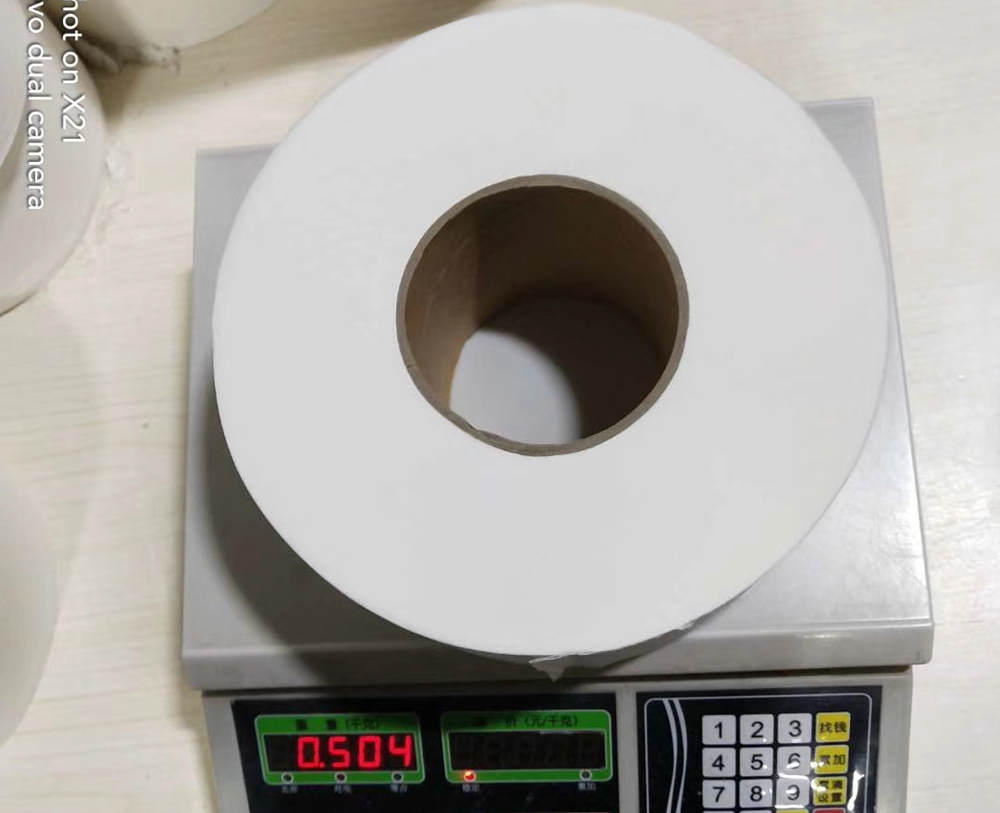
Rapid rotation in the rewinder generates significant outward pressure on the paper layers and the central core. We calibrate machine speeds to balance production efficiency with structural stability for all 2026 manufacturing cycles. Proper tension control prevents the paper from telescoping or shifting during the high-velocity winding process.
| Tension Variable | Standard Industry Specs | TSH Production Standard |
|---|---|---|
| Core Resistance | Basic recycled cardboard | High-density Kraft support |
| Tension Monitoring | Manual adjustment | Real-time sensor feedback |
| Monthly Capacity | Unspecified | 2,860 tons / stable output |
Core Stability and Mechanical Tension Control
The winding process subjects the core to crushing forces that require high-density Kraft paper for resistance. Top Source Hygiene uses reinforced core designs to handle the 2,860 tons of monthly production capacity safely. We monitor tension levels in real-time to ensure the paper binds tightly without collapsing the inner support structure.
Precision Engineering for 2026 Production Standards
Modern sensors in our two factories detect fluctuations in centrifugal force to prevent equipment strain. Automated braking systems maintain consistent winding density across toilet paper and jumbo roll lines. This mechanical precision reduces material waste and ensures every roll meets global compliance standards.
Premium Jumbo Rolls at Unbeatable Wholesale Prices
Spiral Winding: How Manufacturers Create High-Density Tubes
Industrial paper cores achieve structural dominance through the strategic overlapping of high-GSM kraft layers, creating a rigid cylindrical matrix capable of resisting several tons of vertical pressure.
Strategic Material Selection for Core Integrity
Engineers select specific high-GSM kraft paper strips to serve as the structural base for the spiral architecture. This material choice determines the core’s ability to resist ambient moisture and extreme vertical pressure during warehouse stacking. Production teams calibrate paper tension with precision to ensure consistent winding, eliminating gaps or overlaps that would create weak points in the tube’s wall.
The Multi-Ply Adhesive Bonding Process
The manufacturing sequence involves winding multiple plies of paper at precise angles around a stationary mandrel. We apply high-tack industrial adhesives between every layer to prevent delamination when the core encounters high-speed centrifugal forces. Constant pressure from the winding belts forces out trapped air, resulting in a solid, high-density wall that maintains its shape under the weight of premium 100% Virgin Wood Pulp rolls.
| Performance Metric | Standard Retail Core | TSH High-Density Core |
|---|---|---|
| Material Base | Mixed Recycled Fiber | Reinforced High-GSM Kraft |
| Bonding Method | Single-Point Adhesive | Multi-Ply High-Tack Lamination |
| Crush Resistance | Low (Susceptible to Stacking) | Extreme (Ocean Freight Grade) |
Automated Precision Cutting for Uniformity
Servo-driven flying saw systems track the movement of the continuous tube to execute perfectly square edges. This synchronization allows for exact lengths that match specific requirements for jumbo rolls or hotel-grade tissue products. The process maintains strict diameter tolerances, ensuring every core fits standard dispenser spindles without friction or rotation lag.
Load-Bearing Stress Tests and Quality Checks
Quality control technicians subject finished cores to vertical load tests to simulate the weight of heavy paper stacks in a 40HQ container. Testing equipment measures the exact force required to collapse the tube, ensuring the product exceeds safety margins for long-distance ocean freight. Regular audits in 2026 confirm that these high-density tubes protect the integrity of the paper during high-stacking logistics operations.
Preventing Core Crush During Ocean Freight and Pallet Stacking
Strategic reinforcement of internal paper cores and climate-controlled container management represent the difference between a high-yield delivery and a total loss in global hygiene logistics.
Vertical Load Resistance in High-Density Pallet Stacking
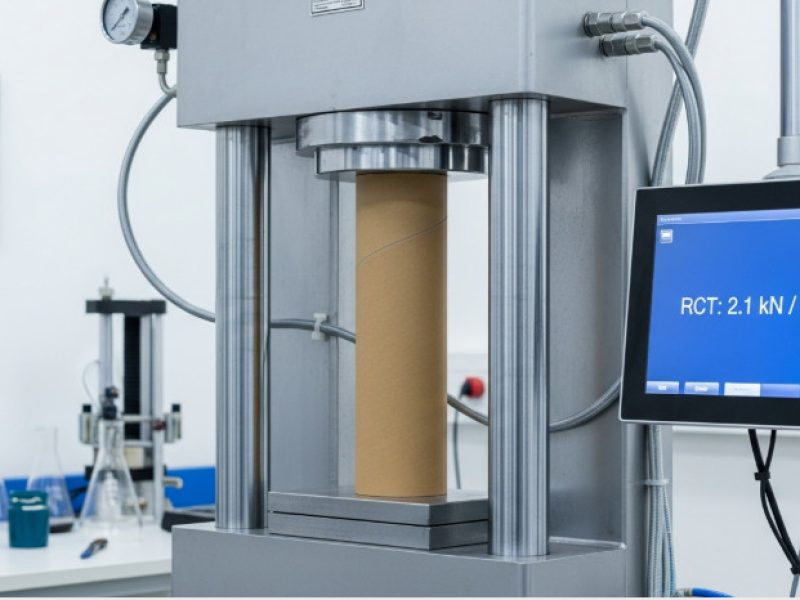
Heavy stacking in 40HQ containers places immense vertical pressure on the bottom layers. We use high-density spiral-wound cores with elevated Ring Crush Test (RCT) values to support up to nine tons of product without wall deformation. Aligning pallets precisely ensures that the cumulative weight distributes vertically through the core walls. This precision prevents the localized buckling that often occurs during long-term warehouse storage or multi-tier stacking operations.
| Performance Metric | Standard Industry Core | TSH Reinforced Core |
|---|---|---|
| Material Composition | Recycled Mixed Fiber | High-Density Kraft Paper |
| Crush Resistance (RCT) | Standard 1.2 kN | Enhanced 2.1 kN |
| Max Stacking Payload | Up to 5 Tons | 7-9 Tons (40HQ Optimized) |
Mitigating Humidity Impact During Ocean Transit
Ocean transit exposes paper products to fluctuating humidity and condensation. These conditions soften fibers and compromise structural integrity. We integrate moisture-resistant adhesives in our tube manufacturing to maintain rigidity throughout the 2026 global shipping season. Using desiccants and ensuring proper container ventilation stops moisture from penetrating the 5-ply export cartons, which keeps the paper-based goods dry and the cores stable during long-haul voyages.
Dynamic Force Stabilization in Container Logistics
Vibrations and lateral shifts during sea voyages create dynamic forces that crush the edges of jumbo rolls. We secure loads using edge protectors and tight shrink-wrapping to minimize internal movement within 40-foot high-cube containers. Anti-slip mats and dunnage bags fill remaining gaps to stop rolls from impacting each other during heavy sea conditions. This comprehensive stabilization ensures the product arrives with its circular core shape perfectly intact for dispenser compatibility.
The Role of the Core in Dispenser Spindle Rotation
Precision-engineered core diameters serve as the critical mechanical interface that dictates roll stability and dispensing efficiency in high-traffic commercial environments.
Standardizing Core Dimensions for 2026 Dispenser Systems
Top Source Hygiene designs core diameters to match global spindle specifications, ensuring a secure fit across diverse hardware platforms. This standardization eliminates common mechanical failures like roll rattling or excessive vibration during rapid paper retrieval. When the core fits the spindle perfectly, the entire dispensing system operates with significantly less mechanical stress.
- Precise measurements remove the gap between the core and spindle to stop uneven rotation.
- Universal sizing enables facility managers to utilize Top Source Hygiene products across various dispenser brands without adjusting hardware.
- Exact tolerances ensure the jumbo roll remains securely mounted throughout the entire usage cycle.
Balancing Friction and Rotational Smoothness
The interaction between the spindle surface and the inner core wall determines the ease of dispensing. We engineer internal surface textures to provide controlled resistance, which prevents the “free-wheeling” effect that leads to trailing paper and unnecessary waste in public restrooms. This balance ensures that the roll stops spinning the moment the user stops pulling.
- Engineered internal textures prevent excessive free-spinning that causes paper to trail on the floor.
- Controlled resistance levels provide a smooth, tactile feel for users in demanding commercial environments.
- Optimized friction prevents the paper from tearing prematurely due to spindle drag.
Maintaining Core Integrity Under Heavy Vertical Load
High-capacity jumbo rolls exert substantial downward pressure on the core. Our multi-layer kraft paper construction provides the structural rigidity required to resist compression, keeping the roll perfectly centered on the spindle even at maximum weight. This durability is essential for large-format rolls like the TSH-JRT08, which are designed for high-traffic airports and malls.
- Multi-layer kraft paper construction resists the heavy load of professional-grade paper materials.
- Durable core walls prevent the axis from shifting, which keeps the roll centered during rotation.
- Structural rigidity ensures the core does not collapse as the paper volume decreases, maintaining smooth rotation until the roll is empty.
The Shift Towards 100% Recycled Kraft Paper Cores
Top Source Hygiene’s transition to 100% recycled kraft cores for 2026 leverages advanced spiral winding to match the structural integrity of virgin fiber while meeting strict global ESG mandates.
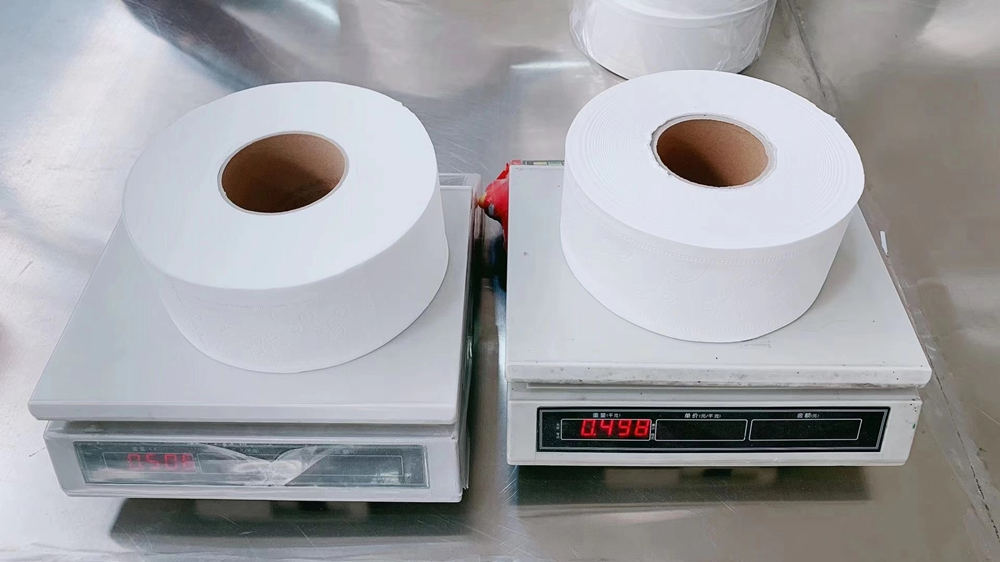
Our 2026 manufacturing roadmap prioritizes circular economy integration across our two primary tissue factories. We replace virgin wood pulp with 100% recycled kraft paper for all standard tissue cores, effectively reducing our environmental footprint without compromising roll stability. Our procurement teams source high-grade post-consumer waste, and this strategy ensures that industrial packaging materials remain part of a sustainable lifecycle. Management aims to eliminate all non-recyclable components from the core production process by the end of 2026.
2026 Sustainability Goals for Recycled Core Integration
Top Source Hygiene prioritizes eco-friendly transitions to support the sustainability targets of our global B2B partners. By moving away from virgin pulp in core production, we preserve primary timber resources for the actual tissue paper where softness is paramount.
- We use 100% recycled kraft paper for standard cores across our entire industrial production line.
- Our sourcing team verifies post-consumer waste quality to maintain material circularity.
- We aim to remove 100% of non-recyclable additives from our tube manufacturing by 2026.
Mechanical Adjustments for Recycled Fiber Strength
Recycled fibers are naturally shorter than virgin fibers, so our engineers modified our spiral winding techniques to maintain necessary tube density. Technicians calibrate winding machines to compensate for these physical properties, ensuring the resulting tubes remain rigid under pressure. We use specialized adhesives to guarantee these cores resist crushing during high-speed rewinding and pallet stacking in 40HQ containers. Our quality control teams verify that every recycled core withstands the extreme centrifugal forces generated during jumbo roll production.
Global Market Demand for Green Packaging Components
International clients in Europe and North America require sustainable core options to comply with regional environmental regulations. Recycled cores help these partners meet FSC and ISO sustainability benchmarks while providing a tangible reduction in their total waste metrics. This shift also removes the need for fluorescent whiteners in hidden product components, as the natural kraft finish aligns with the OBA-free safety standards of our premium tissue. We provide detailed waste reduction reports to hospitality clients to support their annual environmental reporting requirements.
Conclusion
Understanding the engineering behind high-density spiral-wound cores helps importers prevent product deformation during long-distance shipping and intensive pallet stacking. These reinforced tubes ensure that jumbo rolls maintain their structural integrity and rotate smoothly in commercial dispensers. Selecting the right core specifications protects your bulk investment while meeting international hygiene and transport standards.
You can evaluate your current JRT fleet requirements or request a technical manual for our 100% recycled kraft core specifications. Our factory provides detailed pre-shipment photos and videos to verify core strength before your container departs.
Frequently Asked Questions
Why is the cardboard core on jumbo toilet paper so thick?
The thickness of a jumbo roll core is engineered to provide structural integrity for high-volume paper quantities. Because these rolls can hold over 1,000 feet of tissue, the core must support significant weight and withstand the mechanical tension applied by industrial dispensers. The larger 3.3-inch diameter is also a standardized size that ensures compatibility with universal commercial spindle systems.
How are commercial toilet paper tubes made?
Commercial tubes are manufactured using a high-speed spiral winding process. Multiple plies of heavy-duty paperboard are coated with industrial adhesive and wound around a stationary mandrel at a specific angle. This creates a continuous, rigid cylinder that is then precision-cut to the required width for jumbo roll production.
What prevents a jumbo roll from crushing in transit?
The prevention of crushing is achieved through high-density “crush resistance” ratings of the spiral-wound core. When stacked on pallets, the vertical strength of the thick-walled cardboard prevents deforming under pressure. Additionally, the tight winding of the tissue itself creates a solid mass that distributes weight evenly, ensuring the roll remains perfectly circular for the dispenser.
Is a thick toilet paper core a scam?
No, the thick core is a functional industrial requirement rather than a deceptive practice. Commercial dispensers are built with large-diameter mounting brackets to accommodate high-capacity rolls, which reduce labor costs and maintenance frequency. While the core occupies more visual space, the total yardage of the roll is significantly higher than standard residential options.
Spiral wound cardboard tubes in paper manufacturing?
In paper manufacturing, spiral winding is the preferred method for creating cores because it offers superior dimensional stability and torque resistance. This technique allows manufacturers to adjust the number of paperboard layers (plies) to meet specific technical requirements, ensuring the core does not buckle during the high-speed winding and unwinding processes used in industrial paper mills.
Can you recycle the thick core of a commercial roll?
Yes, the thick cores of commercial jumbo rolls are typically made from 100% recycled paperboard and are fully recyclable. Due to their high density and high-quality fiber content, they are considered a premium material in the cardboard recycling stream. They should be placed in standard paper or cardboard recycling bins once the tissue is depleted.