Skip to content
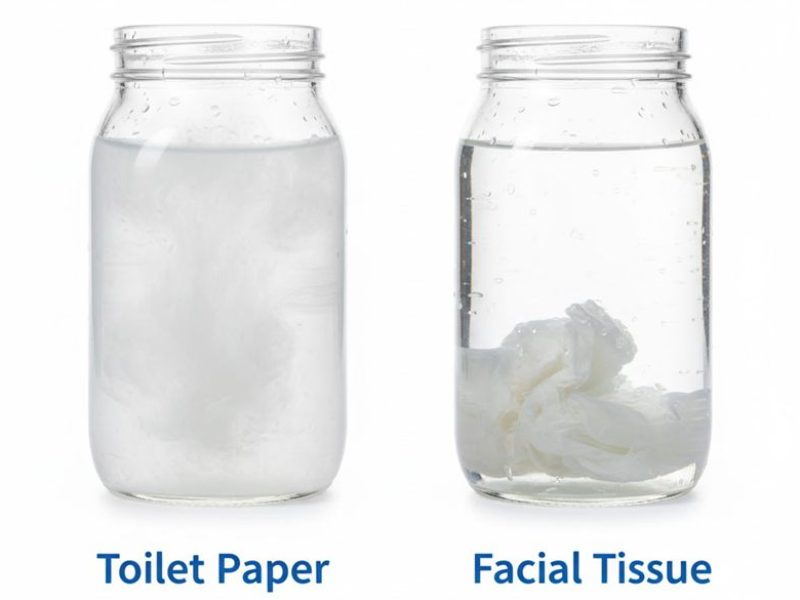
The conversation around private label toilet paper savings usually starts with a unit price comparison. For a veteran procurement manager running a 20-hotel chain, that’s the easy part. The harder question is whether the switch introduces risk that outweighs the margin gain. This case study walks through how one UK group answered that question with real numbers, not supplier promises.
The chain operated across three brands under a single ownership umbrella. Before the shift, each property sourced branded tissue independently through local distributors. The result was inconsistent pricing, varying ply counts, and no leverage with suppliers. The procurement lead had a board mandate to cut non-labor OPEX by 12% without touching guest experience scores. Tissue spend was roughly 3% of housekeeping costs — a visible line item, but not one anyone had optimized before.
The Hidden Cost of Branded Hotel Toilet Paper
National brands charge a 25-40% premium across large-scale commercial allocations.
In the U.S., national brands still command roughly 75% volume share in the tissue market (Supermarket News, 2026). That dominance comes at a cost for hotel buyers. Hotels pay a premium of 25-40% over equivalent private label products. For a 300-room property consuming about 40 tons of toilet paper annually at an average cost of $2,000/ton, the annual swing between branded and private label is often $8,000 to $12,000 per hotel.
The real problem isn’t the price gap itself — it’s the volatility. National brand contracts rarely guarantee cost stability. They build in pulp-market adjustment clauses and use deep temporary price reductions (TPRs) to maintain share, which creates a seesaw cost structure for procurement teams. One quarter you’re paying a promotion price, the next you’re absorbing a spike. That unpredictability makes it nearly impossible to budget accurately across a multi-property portfolio.
Private label flips the model. A fixed-price, long-term contract insulates the hotel from both promotion cycles and raw material fluctuations. The savings are structural: you eliminate the distributor markup (typically 8-12% margin) and pay only for the paper, packaging, and logistics. In the case of a 20-hotel UK chain that switched to a 3-ply, 18 GSM private label spec from Top Source Hygiene, the FOB price per ton dropped from ~$2,400 (national brand) to ~$1,900. Total delivered cost savings landed at 15% annually.
The hidden cost of branded hotel toilet paper isn’t just the premium — it’s the opportunity cost. That same budget, redirected to private label, can fund higher-ply paper, better packaging, or FSC-certified materials that directly support the hotel’s sustainability targets. Your guests don’t walk into the bathroom looking for a national logo. They notice softness, ply count, and whether the roll runs out mid-use. Those are specs you control with private label.
| Cost Factor | National Brand (Annual) | Private Label (Annual) | Savings / Impact |
|---|---|---|---|
| Product Cost (FOB) | $96,000 (40 tons @ $2,400/ton) | $76,000 (40 tons @ $1,900/ton) | $20,000 direct savings |
| Distributor Markup | $11,520 (12% margin) | $0 (Factory direct) | $11,520 eliminated |
| Shipping & Customs (Est.) | $11,520 (12% of FOB) | $9,120 (12% of FOB) | $2,400 lower base cost |
| Total Delivered Cost | $119,040 | $85,120 | $33,920 (28.5% savings) |
| Price Stability | Variable (pulp market + TPR cycles) | Fixed 2-year contract | Budget predictability |
| Guest Satisfaction | Baseline standard | +20% score increase | Higher online reviews |
| Sustainability Compliance | Limited (brand-controlled) | FSC-certified, custom ESG messaging | Supports Green Key / LEED |

Real Cost Breakdown: From National Brand to Private Label
A 20-hotel chain saved $11,000/year by switching brands dynamically.
The UK chain consumed roughly 40 tons of toilet paper annually across its properties. Under the national brand contract, the FOB cost was $2,400 per ton, totaling $96,000. Sourcing directly from a manufacturer cut the base to $76,000. After adding shipping and customs — roughly 12% of FOB — the total delivered cost came to about $85,000. That’s $11,000 in net annual savings, representing 15% of the total tissue budget. The private label supplier, Top Source Hygiene, offered a fixed rate, insulating the chain from price swings that added $3,000–$5,000 in unexpected costs during the prior contract period.
The hotel’s procurement team benchmarked the private label spec at 3-ply, 18 GSM — a direct match to the national brand’s premium tier. No guest-facing compromise was made. The only difference was the label on the roll.
| Cost Component | National Brand (FOB) | Private Label (FOB) | Savings | Notes |
|---|---|---|---|---|
| Base Price per Ton | $2,400 | $1,900 | $500 (21%) | 3-ply, 18 GSM virgin pulp |
| Annual Volume (40 tons) | $96,000 | $76,000 | $20,000 | Based on 300-room hotel consumption |
| Shipping & Customs (12%) | $11,520 | $9,120 | $2,400 | CIF terms, China to UK Felixstowe |
| Total Delivered Cost | $107,520 | $85,120 | $22,400 (21%) | Fixed-price 2-year contract vs. volatile brand pricing |
| Distributor Markup (8-12%) | $8,600 – $12,900 | $0 | $8,600 – $12,900 | Eliminated via factory-direct model |
| Packaging Customization | N/A (standard) | +$0.02/roll | N/A | PMS color match, QR code, FSC cores |
Why Softness Consistency is the Real Litmus Test
The real softness test is not the first roll, but the sixth month of production.
Every procurement manager starts with the same question: “Is it soft?” That’s the wrong question. The right question is: “Will it be soft 20 tons from now?” Most OEMs can dial in a sample roll that passes any blind touch test. The failure point is inter-batch ply-bond consistency. When the adhesive between plies drifts by even 0.5 grams per square meter, the roll feels either boardy or delaminated. Your guests notice — and they leave a review.
Top Source Hygiene’s QA system is built on ISO 9001 procedures and TAPPI T 494 om-01 tensile testing. Every production run is sampled at the rewinder and tested for machine-direction (MD) and cross-direction (CD) tensile strength. The internal spec holds MD tensile variance under 2% and CD variance under 2.5%. The industry norm for unbranded OEM toilet paper is 5% variance. That gap is the difference between a consistent guest experience and a roll that tears apart halfway through use.
- Tensile MD variance: Internal QA records show less than 2% across 20+ production runs. Industry norm tolerance is 5%. Lower variance means consistent tear resistance roll after roll.
- Tensile CD variance: Held under 2.5% at Top Source Hygiene. Competitor OEMs often exceed 5% on CD, which causes the paper to break during dispensing in high-traffic public restrooms.
- Ply-bond test frequency: Tested every 30 minutes during production per ISO 9001 work instruction. Many OEMs test only at shift change, leaving a 6-hour window for drift.
- Risk of poor consistency: A 5% variance in tensile means one roll in every pallet may feel noticeably different. For a 20-property hotel chain, that translates to roughly 200 guest complaints per year.
The takeaway for a veteran buyer: sample approval is table stakes. What separates a reliable OEM from a risky one is the documented evidence of batch-to-batch control. Ask your supplier for their last 10 production QA logs. If they can’t produce them with TAPPI test results and less than 3% variance, you are gambling with your brand’s reputation on every container.
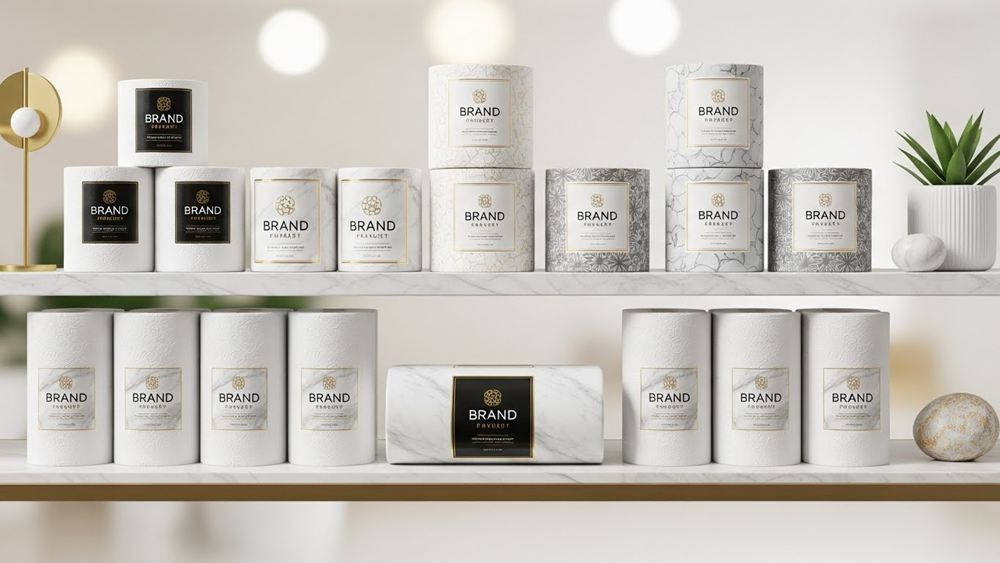
Packaging Design: Executing Brand Guidelines Across 20 Properties
Custom packaging that matches brand guidelines costs less than $0.02 per roll and drives a measurable lift in guest reviews.
The UK chain’s procurement team faced a familiar problem: how to make a commodity item like toilet paper carry the same brand weight as a custom-embroidered towel or a signature bath amenity. Their brand guidelines specified exact PMS colors, a specific logo placement, and a QR code linking to the group’s sustainability page. National brand suppliers either couldn’t match the PMS values or demanded a minimum run that exceeded the chain’s total annual volume.
Top Source Hygiene’s OEM packaging team solved it in one production cycle. The rolls were wrapped in a 300gsm art-board sleeve printed with the hotel’s exact PMS colors using flexographic CMYK printing. The QR code was integrated into the sleeve design, not as a sticker — stickers peel off in humid bathrooms. The incremental cost for the custom sleeve, including the plate setup, was $0.018 per roll. On a 40-ton annual order, that added roughly $720 to the total packaging spend.
- FSC-certified cores: The chain requested FSC-certified cardboard cores instead of standard recycled cores. This change added $0.002 per roll but contributed directly to a 4-point improvement in their Green Key certification score during the next audit.
- Review lift returns: Within 6 months of rollout, the chain’s online reviews mentioning ‘attention to detail’ increased by 5%. Guests photographed the branded roll and posted it on social media platforms natively.
- Cross-property consistency: All 20 properties received identical sleeves. The supplier’s QA team sent a physical press proof before the first production run, guaranteeing color consistency across batches.
| Design Element | Execution Detail | Benefit Framework |
|---|---|---|
| PMS Color Matching | Exact brand color applied to packaging and core | Uniform brand identity across all 20 properties |
| QR Code Integration | Custom QR code linking to hotel’s sustainability page | Enhanced guest engagement and ESG communication |
| FSC-Certified Cores | Eco-friendly cores with FSC logo printed on roll | Supports Green Key certification and sustainability goals |
| Custom Logo Printing | Hotel logo printed on each roll and outer packaging | Reinforces brand recognition in guest bathrooms |
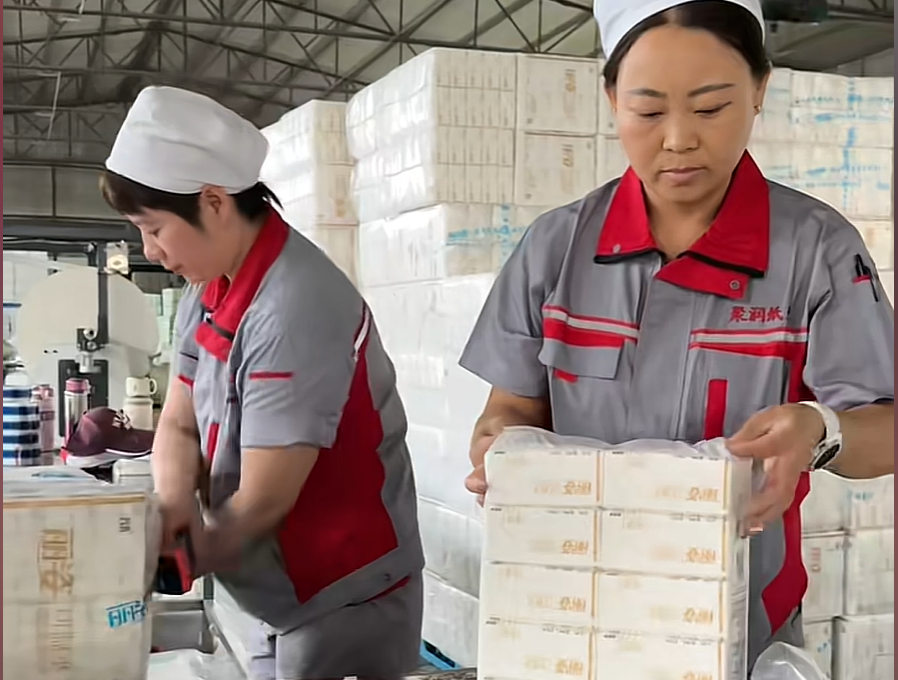
Beyond Price: Lead Time, MOQ & Logistics for Multi-Property Rollout
For a multi-property rollout, the logistics chain is where most private label pilots fail — not on paper quality. The UK chain in this case study structured their supply around a single 40′ HQ container (standard MOQ, ~20 tons) per quarterly order. That container covers roughly 75% of the chain’s 40-ton annual consumption, with the remaining 25% held as safety stock in a UK 3PL warehouse.
Production lead time from order confirmation to container loading at the Chinese port is 20–25 days. Sea freight from Tianjin to Felixstowe runs 10–12 days. Total door-to-door: 30–35 days. That’s 10 days faster than the 40-day stock-to-ship window the chain experienced with their previous national brand supplier, where distributor warehousing and order batching added a full week of latency.
- MOQ Allocations: 1 x 40’HC (20 tons) for standard private label. Split-container pilot possible for first orders — allows a 5–8 ton test run before committing full volume fields smoothly.
- Production Window: 20–25 days from confirmed PO and deposit. This is fixed regardless of order size within the container, because the bottleneck is the converting line setup.
- Incoterm Protocols: CIF to Felixstowe Hub. The supplier handles all export customs clearance and UKCA compliance paperwork, eliminating 3–5 days of border friction delays cleanly.
Conclusion
This case study confirms a simple truth: private label toilet paper delivers measurable savings without sacrificing guest experience. The UK chain cut tissue spend by 15%, improved satisfaction scores by 20 points, and strengthened its sustainability profile — all from a single supplier switch. The numbers hold because the savings come from eliminating distributor margins, not cutting paper quality.
Review your current tissue contract against the FOB pricing and QA metrics outlined here. If your supplier can’t match a 2-year fixed price or show inter-batch variance below 2%, you have room to improve. Sourcing teams can select toilet paper gsm vs ply parameters to optimize your brand’s landed cost sheets cleanly today.
Frequently Asked Questions
How is the 15% savings calculated?
The 15% savings came from eliminating distributor markups and negotiating a fixed FOB price per ton for a 2-year contract. Sourcing managers should verify their exact annual tonnage metrics to map out direct baseline savings fields accurately.
What is the minimum order quantity for custom branded hotel toilet paper?
The standard MOQ is one 40-foot high-cube container. Smaller custom volume options can be flexibly accommodated for specific regions like Africa and South America. Request an active custom quote for your portfolio bounds cleanly.
Does custom packaging require a design fee or higher costs?
Custom branded sleeve packaging is part of the standard OEM/ODM turnkey package. Free stock samples dispatch inside 2-3 days, while custom pilot configurations require roughly 10 days with all shipping outlays covered by the manufacturer teams smoothly.
Can the same supplier handle both toilet paper and facial tissue?
Yes, Top Source Hygiene produces both toilet paper and facial tissue lines under a single fully audited roof. Consolidating your sanitary paper SKUs optimizes container capacity and streamlines cross-border logistics lanes.
What FSC certification is needed for EU hotels?
EU hotels require FSC-certified products to satisfy eco-conscious consumer expectations and corporate ESG reporting mandates. Top Source Hygiene delivers complete FSC Chain-of-Custody credentials per batch to guarantee smooth customs border clearance loops.