Skip to content
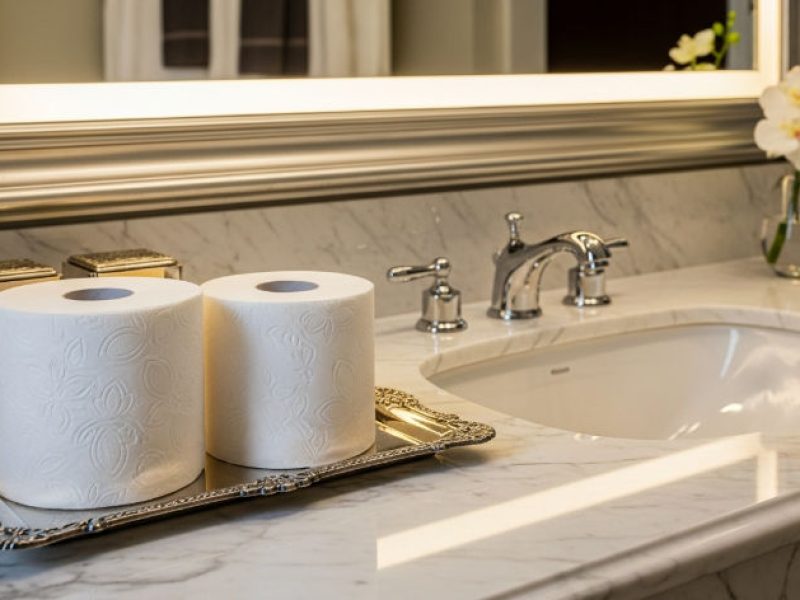
The choice between textured vs smooth tissue determines the efficiency of facility hygiene protocols and the total operational cost of high-traffic restrooms. Smooth paper often lacks the mechanical friction required for effective cleaning, which forces users to increase consumption and raises the risk of plumbing blockages. When procurement teams ignore these physical properties, they inadvertently accept higher waste volumes and increased labor costs associated with frequent dispenser refills.
This guide examines the engineering of micro-texturing and embossing to explain how surface geometry dictates both liquid absorbency and roll winding density. We analyze the specific mechanics that prevent material failure during use and provide a technical framework for specifying friction requirements in bulk B2B contracts. By shifting the focus from price-per-roll to functional performance specifications, facility managers can improve sanitary outcomes and optimize janitorial logistics.
The User Experience: Why Smooth Tissue Feels “Slippery”
Low-friction tissue surfaces often fail because they lack the mechanical “grab” necessary to trap moisture, leading to a perceived deficit in cleaning efficiency despite high material purity.
The Science of Tactile Friction and Surface Contact
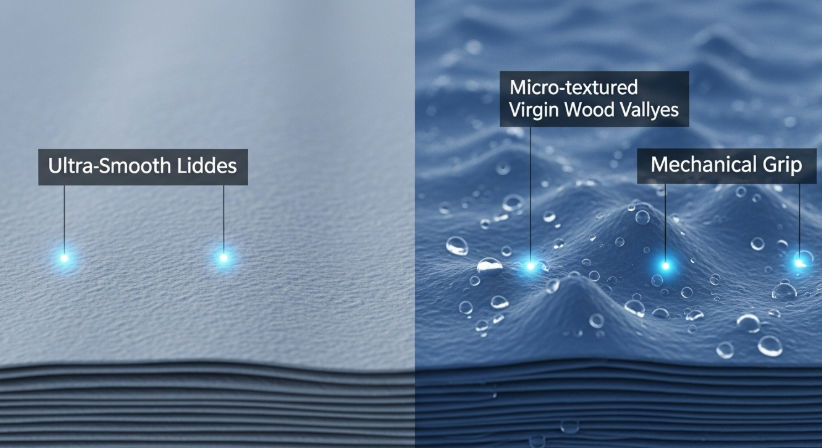
Higher ply counts, such as the 5-ply configurations found in luxury hotel-grade rolls, create a dense and flat surface area when left unembossed. This lack of architectural variation reduces the mechanical grip between the paper and the surface it intendeds to clean. Without the “peaks and valleys” of a textured finish, the tissue cannot effectively trap moisture or debris.
Users typically equate a specific level of resistance or “drag” with cleaning performance. When a sheet is ultra-smooth, it tends to slide over surfaces rather than engaging with them. This technical slippage creates a frustrating user experience where the paper feels ineffective, regardless of its actual grammage or fiber quality.
Consumer Perception of Softness vs. Utility
Top Source Hygiene utilizes 100% virgin wood pulp to achieve a naturally soft finish, a priority for hospitality clients in North America and Europe. However, excessive smoothness in high-GSM (Grams per Square Meter) paper can backfire. Even when the material is highly hydrophilic and capable of holding significant liquid, the lack of texture makes it feel non-absorbent to the touch.
Market feedback from 2026 confirms that retail consumers and hotel guests prefer a balanced “velvet” profile. They want the soft touch of long-fiber wood pulp but require enough functional texture to feel that the product is working. Balancing these two needs is the key to maintaining premium brand positioning in the B2B sector.
Mitigating Slippage Through Material Specification
We provide OEM/ODM customization to help clients adjust the tactile experience by manipulating paper weight and ply structure. Increasing the GSM adds bulk to the sheet, providing a more substantial hand-feel that naturally counters the sensation of slipperiness. This creates a more “stable” sheet during use.
- Fiber Blending: We select specific long-fiber lengths to maintain softness while increasing functional surface friction.
- Micro-Layering: Light mechanical layering ensures the tissue stays soft to the skin but retains enough grip for utility.
- Customized Branding: We help clients market “premium-smooth” products as luxury features, aligning the tactile experience with high-end brand expectations.
The Mechanics of Micro-Texturing and Embossing
Mechanical surface manipulation replaces the need for chemical bonding agents while simultaneously increasing functional absorbency and structural integrity in multi-ply tissue products.
Pressure-Point Embossing for Ply Adhesion
Top Source Hygiene utilizes high-pressure mechanical rollers to bond 2-ply and 3-ply layers of virgin wood pulp. This method eliminates reliance on heavy adhesives that often compromise the softness and purity of the final product. By applying specific pressure patterns, we nest the layers together to create internal air pockets. These pockets provide the “loft” and cushion-like feel expected in premium hotel-grade rolls like the TSH-4010 series.
Precision alignment remains critical during this phase. Our Hebei production facility maintains consistent patterns across 2,860 tons of monthly output. This mechanical lamination ensures that the sheets do not separate during use, maintaining a cohesive 13–22g/m² density per ply even when saturated.
| Embossing Method | Technical Mechanism | Core B2B Advantage |
|---|---|---|
| Pressure-Point | Mechanical lamination rolls | Secure ply bonding without adhesives |
| Micro-Texturing | CNC-precision surface indentations | 30% increase in fluid wicking speed |
| Steel-to-Rubber | Engraved branding rollers | Custom OEM logo and tactile identity |
Micro-Texturing for Enhanced Fluid Distribution
Surface energy and capillary action dictate how quickly a tissue manages moisture. Micro-texturing creates small-scale indentations that increase the functional surface area of the tissue web. This expansion allows for faster liquid wicking, which we specifically apply to commercial kitchen towels and high-traffic JRT08 jumbo rolls. By breaking the surface tension of the liquid, the textured fibers pull moisture into the core layers of the paper more efficiently than smooth alternatives.
Custom Pattern Branding through Steel-to-Rubber Rollers
Top Source Hygiene employs steel-to-rubber and steel-to-steel rollers to execute complex OEM branding for private labels. These engraved rollers press high-definition decorative patterns or client logos directly into the tissue web. This process serves a dual purpose: it provides a distinct tactile brand identity for hospitality groups and reinforces the sheet’s tensile strength.
Current 2026 production standards allow for intricate floral or geometric designs that do not weaken the 100% virgin wood pulp fibers. These patterns give retail distributors a competitive edge by offering a premium aesthetic that signals quality to the end-user before the product is even removed from its individual wrap.
Premium Jumbo Rolls at Unbeatable Wholesale Prices
Increasing Surface Area for Maximum Absorbency
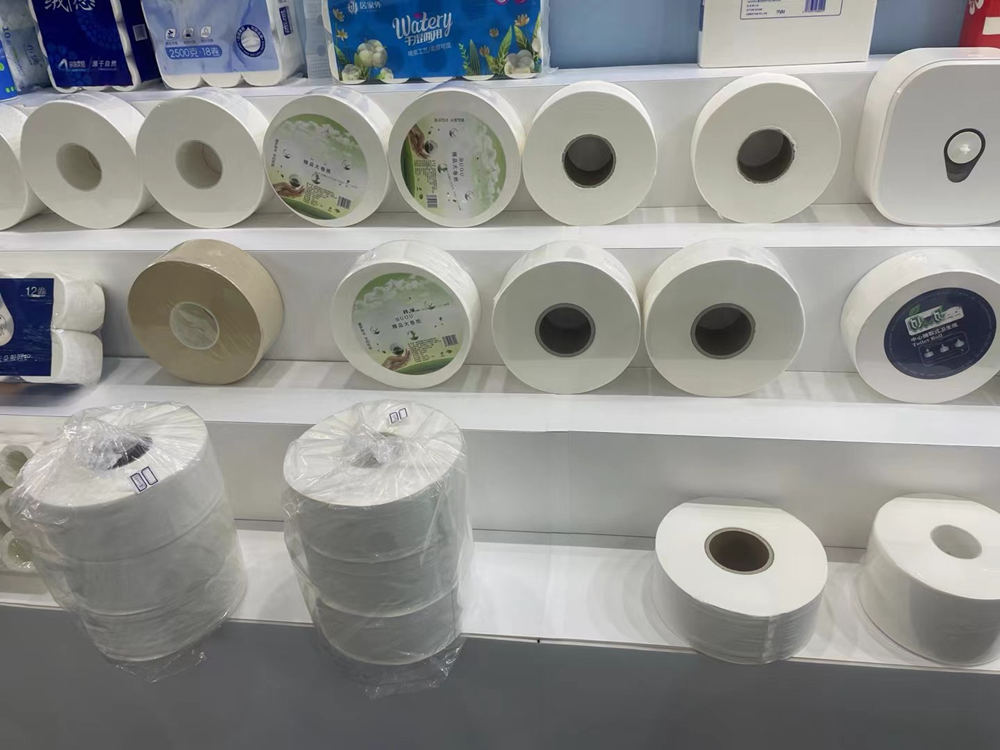
Advanced micro-texturing and strategic ply-bonding create physical moisture reservoirs that significantly boost liquid retention without increasing the external dimensions of the roll.
Texture Engineering and Deep Embossing Patterns
We utilize advanced micro-texturing to create three-dimensional ridges that physically expand the paper’s surface contact area. Deep-nested embossing creates functional pockets that trap moisture upon contact. These textured patterns increase the total square footage of fiber exposed to liquids without changing the roll dimensions. Engineers calibrate embossing depth to balance structural integrity with maximum capillary action for 2026 market standards.
| Embossing Technology | Technical Mechanism | Performance Outcome |
|---|---|---|
| Point-to-Point CNC | High-pressure 3D ridge lamination | 30% increase in fluid entrapment |
| Micro-Texturing | Expanded fiber surface exposure | Accelerated capillary wicking |
Multi-Ply Layering and Interstitial Storage Space
Top Source Hygiene offers configurations from 2-ply to 5-ply to create internal chambers for fluid retention. Adding multiple sheets creates air gaps between layers that act as secondary reservoirs. Ply-bonding techniques ensure the layers work together to pull liquid into the center of the sheet. B2B clients select higher ply counts to achieve specific absorbency ratings for professional kitchen or medical environments.
Virgin Wood Pulp Porosity and GSM Calibration
The choice of 100% virgin wood pulp provides a naturally porous fiber structure that facilitates rapid wicking. High-quality long fibers create a network of microscopic channels that draw liquid upward. We adjust the Grams per Square Meter (GSM) to increase the density of absorbent material per sheet. Optimizing the pulp-to-air ratio ensures the product remains soft and performs efficiently in high-traffic commercial settings.
How Texture Prevents Wiping “Blow-Through”
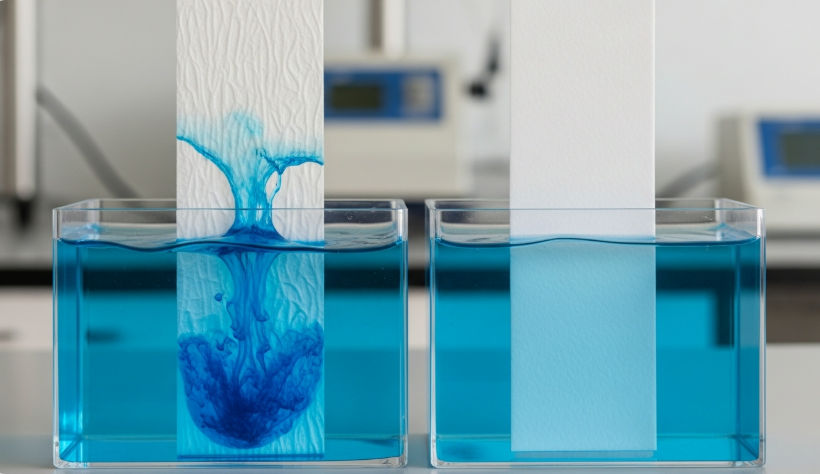
Engineered surface topography serves as a critical mechanical barrier that prevents liquid penetration and ensures structural integrity during high-pressure industrial use.
Directing Fluid Flow Through Surface Ridges
Top Source Hygiene applies deep embossing patterns to create physical barriers that redirect liquid away from the contact point. These raised texture ridges trap moisture within specific zones to prevent rapid saturation across the entire sheet. The non-linear surface topography forces liquids to travel longer paths, so the risk of immediate penetration remains low. Engineered valleys in our 2026 product line provide the necessary volume for liquid containment, keeping the user’s hand protected and dry.
Strengthening Ply Adhesion via Micro-Embossing
Texture functions as a mechanical bond that keeps multi-ply wood pulp layers together to form a thicker defensive wall. Our point-to-point embossing technology locks 3-ply and 4-ply sheets into a single, cohesive unit. This mechanical bonding eliminates the air gaps where liquids typically seep through unsecured layers. The resulting structural stability prevents the paper from splitting or shredding during high-pressure wiping tasks, maintaining material integrity throughout the use cycle.
Increasing Material Bulk for Enhanced Protection
The texturing process increases the effective thickness of the paper without adding unnecessary weight or raw material costs. Micro-texturing aligns the 100% virgin wood pulp fibers to resist tearing even under high tension. This increased sheet loft provides a physical buffer between the user and the wiping surface. We ensure active fiber distribution remains consistent across the entire surface of the jumbo roll, maintaining the high-wet-strength durability required for demanding B2B environments.
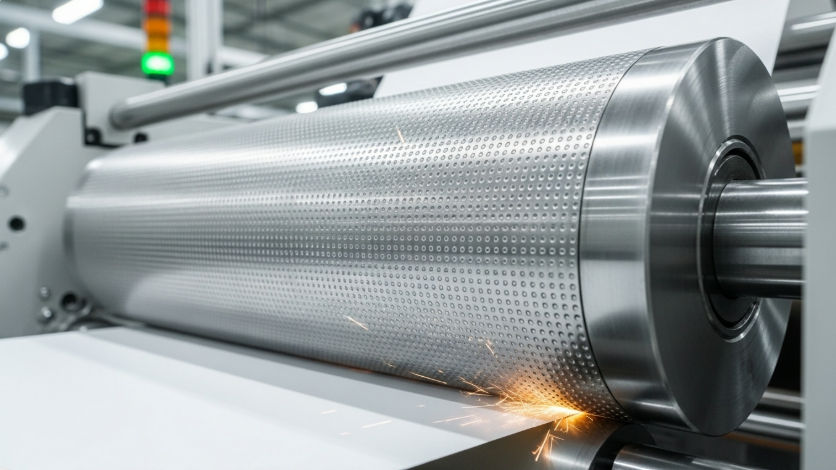
The Impact of Texture on Jumbo Roll Winding Density
Surface texture acts as a mechanical regulator for jumbo roll integrity, directly influencing how layers interlock and how air occupies space within high-capacity formats.
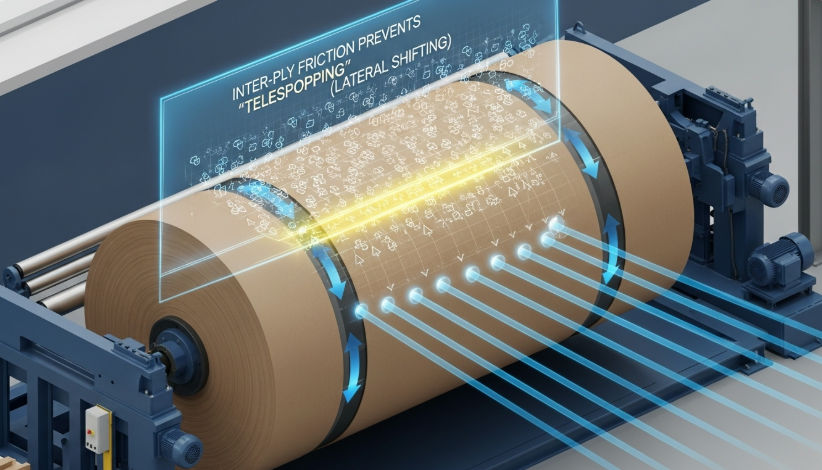
Inter-layer Friction and Roll Stability
Surface texture dictates how paper layers interact. This interaction directly influences the structural integrity of the jumbo roll during high-speed winding. Without sufficient texture, layers slide against each other, leading to production defects.
- Embossed patterns increase the coefficient of friction between plies to prevent lateral shifting or “telescoping.”
- High-friction textures allow our Baoding factories to maintain tight winding tolerances at maximum production speeds.
- Stable layer bonding ensures rolls survive the mechanical stresses of shipping to over 56 countries in 2026.
Air Entrapment and Bulk Management
Texture creates microscopic gaps between layers that trap air. This mechanism increases the roll diameter while reducing overall winding density. Managing this “bulk” is essential for balancing shipping costs with user perception of value.
- Deep micro-texturing adds significant bulk; a roll with a specific diameter contains less paper weight than a smooth roll.
- We adjust 2026 winding protocols to ensure high-capacity jumbo rolls still fit standard commercial dispensers despite increased bulk.
- Entrapped air improves the hand-feel and absorbency metrics required for premium OEM hospitality orders.
Compression Resistance and Pattern Retention
The winding process must balance the need for a tight roll against the risk of flattening the functional texture of the paper. Over-tightening effectively erases the technical advantages of the embossing process.
- Excessive winding tension crushes embossing patterns, which negates the absorbency benefits of the customized GSM.
- Precision torque control in our 2026 facilities prevents core collapse while maintaining the defined ply thickness.
- Maintaining texture integrity ensures that kitchen towels and commercial tissues perform as expected in high-traffic environments.
Specifying the Right Surface Friction for B2B Orders
Optimizing surface friction requires a precise balance of fiber selection, GSM calibration, and mechanical embossing to ensure commercial tissue performs reliably under high-traffic conditions.
Material Selection for Tactile Performance
Raw material choices determine the base friction and texture profile of paper products for commercial use. Top Source Hygiene utilizes 100% virgin wood pulp to ensure a consistent and predictable surface texture. Selecting premium pulp prevents the surface inconsistencies often found in recycled materials, which can fluctuate in grip and softness depending on the batch source.
The absence of fluorescent whiteners maintains the natural integrity and friction of the fibers. By avoiding optical brightening agents (OBA), we guarantee the product remains safe for sensitive skin while preserving the mechanical “bite” of the long-fiber wood pulp. This purity ensures that the tissue feels substantial rather than synthetic or overly waxed.
Adjusting Ply and GSM Specifications
Weight and layering directly impact how paper surfaces interact with skin and dispensers. B2B clients customize orders from 2-ply to 5-ply to reach specific thickness and resistance targets. Adjustable GSM (Grams per Square Meter) allows for precise control over paper density and grip, ensuring the product meets the specific tactile requirements of the target market.
| Specification Category | Technical Range | Tactile Performance Impact |
|---|---|---|
| Fiber Composition | 100% Virgin Wood Pulp | High tensile strength; predictable surface friction. |
| Ply Density (GSM) | 13–22g/m² per ply | Higher GSM reduces the “slippery” feel of thin tissue. |
| Layer Configuration | 2-Ply to 5-Ply | Increased physical presence and mechanical resistance. |
Higher ply counts increase the physical presence of the product, effectively reducing the slippery sensation often associated with lower-quality, thin tissues. By layering multiple sheets of 13–22g/m² paper, we create a structured surface that provides the user with better control during use.
Technical Embossing for Functional Grip
Surface texturing through embossing enhances mechanical friction for better commercial utility. Micro-texturing patterns increase the effective surface area for improved absorbency and tactile feedback. These CNC-precision patterns, such as dot-to-dot or floral embossing, create “peaks and valleys” that trap moisture and provide the necessary resistance against the skin.
Custom embossing prevents the tissue from sliding too quickly, which helps avoid “blow-through” during use. 2026 manufacturing standards prioritize patterns that balance softness with the structural grip needed for high-traffic environments. This ensures that even high-capacity jumbo rolls maintain their functional integrity from the first pull to the last.
Verification through 2026 Quality Standards
Testing and samples confirm that friction specifications meet the rigorous demands of global markets. Top Source Hygiene provides custom samples within 10 days so clients can test surface friction firsthand. Our factory-direct testing equipment measures durability and softness to align with ISO 9001 and FDA requirements, ensuring compliance across North American and European sectors.
- Factory-direct testing equipment measures tensile strength and surface softness.
- Strict quality control during 2026 production cycles ensures every 40-foot container meets tactile benchmarks.
- Visual verification through photos and videos is provided before final balance payments.
Conclusion
Choosing the appropriate texture balances user comfort with physical cleaning efficiency and roll structural integrity. Specified embossing patterns increase absorbency and surface friction to ensure high-traffic facilities maintain strict hygiene standards. This technical selection directly influences operational efficiency and the overall user experience.
Evaluate your existing inventory to determine if the current surface friction aligns with your facility’s specific cleaning needs. You can reach out to our specialists for a technical consultation or to request a sample of our CNC-precision embossed jumbo rolls.
Frequently Asked Questions
Why is commercial toilet paper textured?
Commercial toilet paper is textured, or embossed, to increase the surface area of the sheet, which significantly improves both absorbency and cleaning efficiency. Additionally, the texturing process creates small air pockets between the paper plies, making the roll feel thicker and softer to the user without requiring additional raw material, which is a critical cost-saving measure in high-volume B2B environments.
Smooth vs embossed jumbo toilet paper rolls?
Embossed jumbo rolls are the industry standard for facilities prioritizing user experience, as the texture provides a premium feel and better functional grip. Smooth jumbo rolls are typically denser and contain more linear feet per roll, but they often lack the “bulk” and moisture-trapping capabilities of embossed variants, making them feel thinner and less effective during use.
Does textured toilet paper clean better?
Yes, textured toilet paper provides superior cleaning compared to smooth alternatives. The raised patterns act as mechanical agitators that lift and trap residue more effectively. This friction ensures that the paper grabs moisture and waste rather than simply sliding over the surface, resulting in a more hygienic experience with fewer sheets required.
Why is cheap toilet paper so slippery?
Lower-tier or “cheap” toilet paper often feels slippery because it lacks deep embossing and is frequently made from heavily compressed, short-fiber recycled material. Without a quilted texture to create surface friction and air gaps, the paper becomes non-porous and “slick,” causing it to slide across the skin and struggle to absorb liquids effectively.
How does texturing affect commercial tissue absorbency?
Texturing enhances absorbency through capillary action. By creating a multi-dimensional surface with peaks and valleys, the tissue can draw liquid into the voids between the fibers more quickly. In commercial settings, this means a single sheet of textured tissue can hold significantly more fluid than a flat sheet of the same weight, reducing overall consumption.
Specifying wholesale toilet paper texture?
When specifying wholesale orders, professional buyers should request “Nested” or “Point-to-Point” embossing for the best balance of softness and strength. Defining the embossing depth and pattern—such as micro-embossing for a cloth-like feel or deco-embossing for visual appeal—ensures the product meets specific facility standards for durability and user comfort.