Skip to content
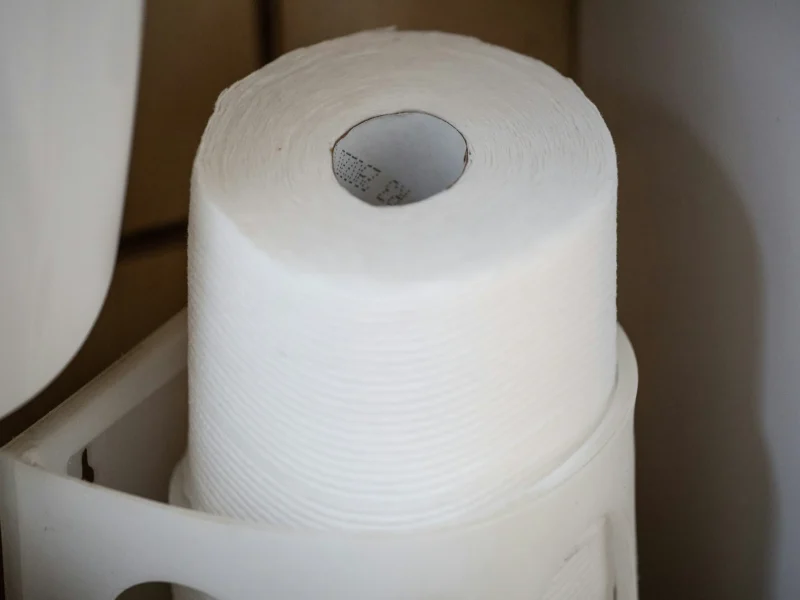
verify toilet paper gsm bulk is the first checkpoint buyers should lock before they approve a supplier, budget, or production slot. The spec sheet says 18 GSM, 2.8 cm³/g bulk, 3-ply. The container lands at 16.2 GSM and 2.3 cm³/g. That 10% drop in GSM adds roughly $300 in wasted fiber cost per 40-foot container at current pulp prices, and the lower bulk means the roll feels thin to the user — even if the ply count is correct. A missed sample approval stage or a quality tolerance clause that only checks ply count leaves you holding a product that doesn’t match the pre-production sample. For a public facility manager in Africa ordering jumbo rolls for schools or stations, that mismatch translates directly into shorter roll life and higher maintenance costs.
Bulk is actually more telling than GSM for perceived softness — a high-bulk tissue at 17 GSM can feel softer than a low-bulk one at 20 GSM. But here’s the trap: many Asian mills report bulk measured at 2 kPa pressure, while European and US buyers often test at 0.5 kPa. The same roll yields a different number under each condition. If you don’t specify test conditions when you agree on FOB pricing and sample approval, you’ll interpret the mill certificate wrong. This guide walks through the simple kit — die cutter, 0.01g scale, thickness gauge — you need to verify toilet paper GSM bulk on sample rolls before committing to a production run.
What Are GSM and Bulk and Why They Matter
Bulk determines perceived softness more than GSM.
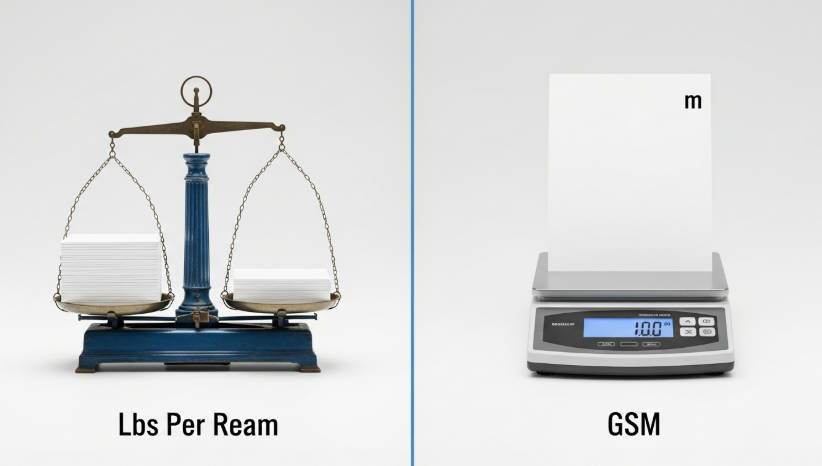
GSM (grams per square meter) per ISO 12625-3 is the weight of one square meter of tissue. Bulk, defined by ISO 12625-4, is specific volume in cm³/g under a defined pressure — commonly 2 kPa in Asian mills and 0.5 kPa in European specs. A standard 2‑ply hotel roll runs 17–20 GSM with a bulk of 2.5–3.5 cm³/g at 2 kPa. Always confirm which pressure is used; the same sheet will show a higher bulk number at 0.5 kPa.
- GSM & Cost Control: GSM drives fiber weight per roll. The industry tolerance is ±5 %. A drift upward of 1 GSM across a 40′ container adds roughly $200–400 in fiber cost at current pulp prices (~$700/ton). For a budget‑sensitive public‑facility buyer, that margin matters.
- Bulk & Softness Parameters: Bulk is the primary lever for perceived softness — a high‑bulk tissue feels plush even at lower GSM. However, if bulk deviates more than ±0.3 cm³/g from the target, converting line waste jumps 8–12 % as the rolls jam or tear. Always match the bulk spec to your converting equipment.
- Absorbency Interaction Grids: Higher bulk usually means more air between fibers, which initially speeds up liquid uptake. But ultra‑high bulk can reduce fiber‑to‑fiber contact, lowering total absorbency. The sweet spot for commercial toilet paper is 2.5–3.5 cm³/g at 2 kPa — sufficient absorbency without sacrificing roll firmness on the dispenser.

Tools Needed for In-House Testing
Pressure test condition can shift bulk by 1 cm³/g — specify yours.
For under $600, you can assemble a verification kit that prevents a container‑load of mis‑specified tissue. The core tools are a precision scale, a die cutter (or template), and a thickness gauge with a dead‑weight attachment. A micrometer adds single‑ply data if you want to spot creping inconsistencies before converting.
- Scale (0.01 g precision): Minimum 200 g capacity. A lab balance at 0.001 g is better but not essential for GSM checks. Calibrate weekly with a standard weight — an uncalibrated scale will add ±2 % error to your GSM calculation.
- Die Cutter Calibration: ISO 12625‑3 specifies a 100 cm² cutting die. Dies cost ~$80 and guarantee repeatable sample area. A steel rule template and razor works in a pinch, but area error from manual cutting often exceeds the 5 % GSM tolerance – not acceptable for a procurement decision.
- Thickness Gauge (Dead‑Weight Type): Bulk is measured under a defined pressure foot. Asian mills usually report at 2 kPa; European buyers require 0.5 kPa. The same tissue can show 3.0 cm³/g at 2 kPa and 4.2 cm³/g at 0.5 kPa. Buy a gauge with interchangeable weights so you can test at both pressures. Dial gauges with 0.01 mm resolution are fine.
- Micrometer (0.001 mm Resolution): Not required for bulk per ISO 12625‑4, but useful for checking single‑ply caliper on parent rolls. If the supplier claims 18 gsm at 0.12 mm per ply and you measure 0.10 mm, expect complaints about rough hand feel. A digital micrometer costs ~$50 and can catch density shifts that a thickness gauge misses.

Step-by-Step GSM Measurement
A 5% GSM drift can cost you $200–400 extra fiber per container.
For an in‑house verification you only need two tools: a die cutter that punches a 100 × 100 mm test piece (per ISO 12625‑3) and a scale that reads to 0.01 g. Avoid using scissors or a ruler – irregular edges inflate the weight and falsify the result. A proper die cutter set costs roughly $150–250 and eliminates that error source.
- Cutting Phase Guidelines: Take a full‑width sheet from the middle of the roll (avoid the outer wrap and core layers). Stack the plies exactly as they will be sold, then press the die cutter through all plies in one clean stroke. Discard any torn or compressed samples.
- Weighing Data Logging: Place the cut sample on the scale and record the mass in grams to three decimal places. Run at least three separate cuts from different positions on the roll and average the readings. One isolated number is not reliable.
- Formula Execution Matrix: Since your die cutter cut an area of exactly 0.01 m², just multiply the weight in grams by 100. For example, if the 100 × 100 mm sample weighs 0.185 g, the GSM is 18.5.
- Tolerance Threshold Checks: Industry allowance is ±5 % of the contract spec. If your order calls for 18 GSM, acceptable range is 17.1 – 18.9. Any result outside that window means the supplier deviated from the agreed basis weight – reject or renegotiate the price.

Step-by-Step Bulk Measurement
Bulk values are meaningless without the pressure specification – 2 kPa vs 0.5 kPa can double the number.
To measure bulk accurately, you must control the pressure applied to the tissue stack. A thickness gauge with a foot that exerts exactly 2 kPa (or your contract’s specified pressure) is required. Without pressure control, your measurements will be inconsistent and unusable for specification validation.
- Step 1 – Set Pressure: Use a thickness gauge calibrated to apply 2 kPa or 0.5 kPa as per your contract. Confirm with the supplier which pressure they test at – many Asian mills default to 2 kPa, while European buyers often require 0.5 kPa.
- Step 2 – Cut Samples: Cut at least 10 sheets of toilet paper (or 5 sheets for heavier tissues) into squares of known area, typically 10×10 cm.
- Step 3 – Measure Thickness: Place the stack under the presser foot and lower it gently. Wait 5 seconds for settling, then record the thickness in millimeters. Repeat on three different stacks and average.
- Step 4 – Weigh the Stack: Weigh the same stack on a scale accurate to 0.01g. Record weight in grams. Calculate GSM: weight (g) / total area (m²). For a 10×10 cm stack of 10 sheets, area = 0.01 m² per sheet, so total area = 0.1 m².
- Step 5 – Compute Bulk: Bulk (cm³/g) = (thickness in mm × 1000) / GSM. For standard hotel 2-ply (18 gsm, 2.8 cm³/g at 2 kPa), the compressed thickness should be about 0.050 mm per sheet.
Idvers side‑note: If a supplier quotes bulk without specifying test pressure, request the exact method. A reading at 0.5 kPa can be roughly double the value at 2 kPa for the same tissue – using the wrong pressure leads to false rejections or acceptance of off-spec rolls.
Interpreting Results: Acceptable Ranges
Bulk matters more than GSM for softness—but only if you know the test pressure.
The industry-accepted GSM tolerance is ±5% from your contract spec. For a 2-ply hotel roll spec’d at 18 gsm, an actual result between 17.1 and 18.9 gsm passes. Anything outside that range means the fiber weight is off — and at current pulp prices near $700/ton, a 5% GSM drift on a 40-foot container adds or loses roughly $200–400 in material cost alone.
- Premium 2-ply Bulk Targets: Commercial tissue should measure 2.5–3.5 cm³/g at 2 kPa pressure (or 3.5–4.5 cm³/g at 0.5 kPa). Higher numbers indicate better fluffiness and perceived softness.
- Denser 3-ply Density Floors: 3-ply typically achieves 15–20% lower bulk per gram than 2-ply at the same pressure, due to denser sheet bonding. Expect 2.0–2.8 cm³/g at 2 kPa for standard 3-ply.
- Converting Line Compressibility Risk: If bulk deviates more than ±0.3 cm³/g from your agreed spec, expect higher converting line waste (8–12% increase) because the parent roll’s compressibility changes, causing jams or uneven unwinding.
How Top Source Hygiene Provides Test Reports
Mill certificates confirm GSM and bulk per batch; third-party adds independent verification.
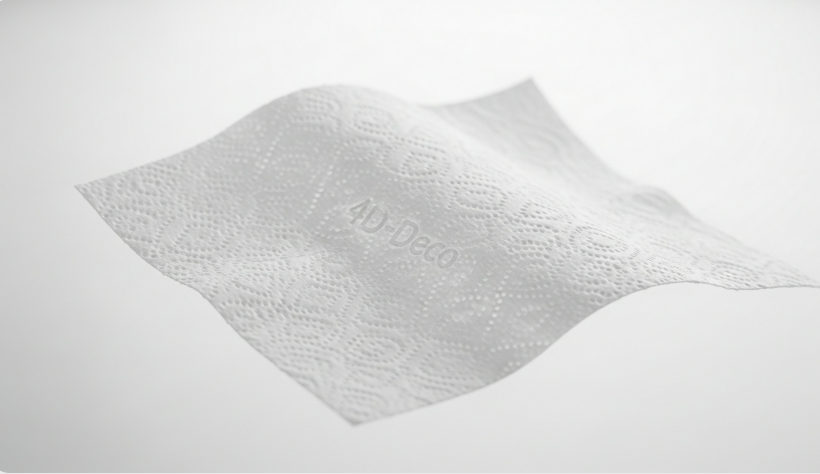
Every shipment from Top Source Hygiene leaves the factory with a mill test certificate. That certificate reports the actual GSM, bulk measured at 2 kPa, ply count, and tensile strength for the batch. If your contract specifies an 18 gsm 2-ply hotel roll with bulk of 2.8 cm³/g, the certificate shows the measured values — not just the target. This is your first line of defense against spec drift.
- Mill Certificate Disclosures: Issued per production batch. Covers GSM (per ISO 12625-3), bulk (per ISO 12625-4 at 2 kPa), ply bond, and moisture content. Allows you to verify compliance before the container leaves the port.
- Third-Party Assay Endorsements: Top Source Hygiene offers optional SGS or Intertek inspection per container at buyer’s request. Cost typically $300–$600 per container. Useful for high-stakes orders where ±5% GSM tolerance is critical for your converting line.
- Ironclad Compliance Pedigree: Factory holds ISO 9001, FDA registration, and FSC chain-of-custody. For buyers in Africa, the mill cert provides the documentation needed for customs clearance and quality assurance audits.
For buyers who want full transparency before committing to a container, request a pre-shipment third-party test. Top Source Hygiene will arrange it. The test report becomes your benchmark. When the container arrives, you can run the same tests and compare. That is how you close the loop on ‘spec spec mismatch after shipment’. It is procurement hygiene, not extra expense.
Conclusion
You now have the tools to catch a 5% GSM drift before it lands in your container. That tolerance alone can add $200 to $400 in fiber cost per 40-foot box at current pulp prices. The final detail that separates consistent programs from spec-sheet fiction is the test pressure. Asian mills default to 2 kPa for bulk measurement; European and US buyers often use 0.5 kPa. If you don’t specify which condition your report matches, you’re comparing apples to oranges.
Apply these checks during sample approval. Ask the supplier for mill certificates that list bulk at both pressures and the GSM with its quality tolerance. When you review proposals, note whether the bulk figure aligns with your converting line’s tolerance — a ±0.3 cm³/g variance can waste 8–12% of your jumbo roll inventory. Top Source Hygiene publishes their standard 2‑ply hotel roll at 18 gsm and 2.8 cm³/g at 2 kPa, and they offer third-party testing through SGS or Intertek per container. That kind of transparency lets you sign off on a pilot order with real confidence.
Frequently Asked Questions
What is GSM on a toilet paper spec sheet?
For standard commercial 2-ply toilet paper, a GSM of 16–20 is typical, while 3-ply often runs 14–18 per ply. The ideal GSM balances softness, strength, and cost. Always match your incoming GSM specs to your required ply count and target performance boundaries flawlessly.
Is GSM more important than ply count?
Ply count and GSM serve different roles—ply determines layering, GSM measures total fiber weight; neither is inherently more important. Bulk, not GSM, is the strongest predictor of perceived softness. Sourcing leads check GSM, ply count, and bulk parameters as a combined spec block seamlessly.
How do I check bulk without a thickness gauge?
You can estimate bulk by comparing roll diameter and weight against a known standard, but this method is indirect and imprecise. For accurate bulk verification, a dead-weight thickness gauge is the only reliable tool. Investing in a basic thickness gauge is worth the investment to secure contract margins cleanly.
What is the difference between bulk tested at 2 kPa vs 0.5 kPa?
Testing at 0.5 kPa yields a higher bulk value (often about 1 cm³/g more) because the paper is less compressed than at 2 kPa. Always specify the test pressure when comparing bulk specs across offshore mills. Use the exact same pressure parameters as your supplier’s test report fields flawlessly.
How often should I test incoming toilet paper rolls?
Test every incoming container for GSM and bulk during initial orders and supplier validation stages. Once consistency is confirmed, spot-check every third container or quarterly to catch density drifts before they affect cost or performance variables. Start with full testing protocols, then comfortably shift to periodic spot checks.