 Skip to content
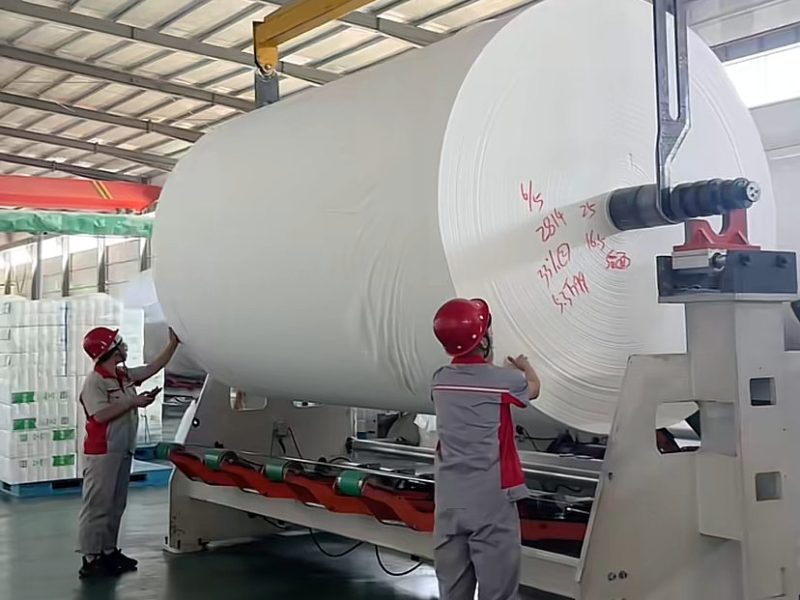
toilet paper manufacturing process is the first checkpoint buyers should lock before they approve a supplier, budget, or production slot. A 50,000 USD order of custom toilet paper for a 12-hotel chain went sideways because the pre-production sample was 4-ply and the production run came in at 3-ply. The buyer didn’t catch it because the sample approval process skipped a density check. That gap — a single ply difference — turned a premium guest experience into a guest complaint pattern that took six months to fix. The real cost wasn’t the container; it was the dispenser jams, the maintenance calls, and the 20-point drop in satisfaction scores the hotel had just gained by switching to a custom brand.
That story repeats in different forms across hospitality, retail, and public facilities. A 13 GSM spec written as “standard” becomes 11 GSM after the mill adjusts its Yankee dryer speed. A 3-ply roll feels like 2-ply when the creping angle drifts by 2 degrees. The toilet paper manufacturing process — from pulping to rewinding — has more control points than most buyers realize. Understanding where those points live is the difference between getting exactly what you paid for and managing a callback after the container clears customs.
Before you approve the next sample or sign off on a jumbo roll order, ask your supplier three yes/no questions. One: Did your production batch match the ply count and GSM stated on the approved sample, within a written quality tolerance of +/-0.5 ply and +/-1 GSM? Two: Can you provide a certificate of analysis for OBA-free claim, including a UV fluorescence test result from the batch? Three: Is the rewinding perforation depth set to match the dispenser model specified in the order, and has it been verified on a test run of 50 rolls? If the answer to any of these is that the supplier will check, ask for it in writing before the production line starts.
Why Manufacturing Process Dictates Quality & Cost
Your $50K order fails if the creping blade angle is off by 2 degrees.
Most buyers focus on price and ply count, but the real cost drivers hide in the manufacturing steps. Inconsistent pulping, creping, or slitting creates roll density variations that feel different from one box to the next. In a hotel or airport restroom, that means frequent dispenser jams, wasted paper, and extra labor for maintenance staff. Understanding these process controls lets you specify the correct ply, GSM, and roll dimensions for your actual usage pattern, not just what looks good on a spec sheet.
- Pulping Precision Controls: Fiber slurry consistency directly determines GSM uniformity. A ±1 g/m² swing can shift a 14 GSM specification to 13 or 15, altering absorbency and tensile strength.
- Creping Doctor Blade Wear: The Yankee dryer and creping blade create the micro-folds that give toilet paper its softness and stretch. A worn blade reduces creping uniformity, increasing lint and dispenser dust deposits.
- Slitting Width Tolerances: Jumbo rolls must be slit to exact widths for dispensers. A 2 mm error in slitting causes rolls to bind or slip, adding up to 15% more maintenance visits. Settle tolerances strictly at ±1 mm.
| Feature | Quality Dimension | Cost Lever | Example/Outcome |
|---|---|---|---|
| Raw Material (Virgin vs Recycled) | Softness, Tensile Strength, Brightness (OBA-free) | Virgin costs 20-30% more; blended plies reduce fiber cost by 15% | Premium hospitality rolls achieve 20% higher guest satisfaction |
| Pulping & De-inking Method | Chemical residue, OBA compliance, brightness (85-92%) | Enzymatic de-inking cuts sludge and aligns with EU/North America regulations | FDA-compliant tissue for healthcare without hidden bleaching costs |
| Yankee Dryer & Creping Process | Softness (micro-folds), stretch, absorbency | Creping angle and blade pressure affect yield and energy consumption | Correct creping reduces dispenser jams, lowering maintenance visits by 15% |
| Rewinding, Slitting & Perforation | Roll density consistency, perforation tear strength | Precise slitting minimizes waste; perforation depth matches dispenser mechanics | High-capacity jumbo rolls cut replacement frequency, saving labor costs |
| Customization (Ply, GSM, Embossing) | Perceived luxury, durability, branding impact | Standard MOQ 1x40HQ container; flexible terms for small trials | Custom logo rolls boost brand cohesion and customer return rates by 10% |
Raw Materials: Virgin Wood Pulp vs Recycled Fiber
Virgin wood pulp delivers 85-92% brightness; recycled fiber cuts energy use by 70%.
The material choice defines both your product’s feel and its cost structure. Virgin wood pulp uses long fibers (typically 2–4 mm from softwoods) that give high tensile strength and a smooth, lint-free surface. Recycled fiber has shorter fibers (under 1 mm after de-inking), which reduces tear resistance but slashes energy and water consumption by 70% and 35% respectively. For high‑traffic facilities like hotels or airports, the virgin fiber’s strength means fewer dispenser jams and less maintenance—a 15% reduction in maintenance costs is documented in real‑world facilities.
- Fiber Length Distributions: Virgin wood provides long softwood webs for robust tensile performance. Recycled configurations map short fibers that require intensive ply bonding safeguards.
- Natural Brightness Profiles: Virgin structures achieve 85–92% brightness without optical brighteners (OBA). Recycled fibers utilize multi-stage de-inking arrays to suppress chemical shadows safely.
- Resource Conservation Matrices: Recycled processing yields 70% less energy and 35% less water draw. Top Source Hygiene locks active OBA-free compliance arrays across all product groups.
- Blended Furnish Hybrid Trends: Combining premium virgin outer plies with recycled inner sheets lowers total fiber expenditure by up to 15% without sacrificing critical sheet softness limits.
One warning: if a supplier claims OBA‑free on recycled paper but uses chemical de‑inking, pull out a UV lamp. Any fluorescence means residual optical brighteners. Low‑cost recycled rolls that appear ‘bright white’ often contain OBAs that can cause skin irritation in sensitive environments like healthcare. Always ask for the certificate of analysis and a UV test result during sample approval.
| Aspect | Virgin Wood Pulp | Recycled Fiber |
|---|---|---|
| Fiber Source | Long fibers from fresh wood (sustainably sourced) | Short fibers from post-consumer waste |
| Cost | 20-30% higher than recycled | Lower material cost; reduces overall production expense |
| Softness & Strength | Superior tensile strength and plush feel; reduces dispenser jams | Shorter fibers yield slightly lower softness; suitable for bulk use |
| Environmental Impact | FSC-certified options; OBA-free natural brightness | Uses 70% less energy and 35% less water; enzymatic de-inking reduces sludge |
| Brightness & Safety | 85-92% natural brightness; OBA-free (no fluorescent whiteners) | Requires advanced de-inking to meet FDA/EU compliance; OBA-free achievable |
Pulping and De-Inking: What Buyers Miss
The de-inking stage is where most hidden compliance failures start.
Mechanical pulping breaks down the raw material—either virgin wood chips or recycled fiber—into a water-based slurry. For recycled content, this is where contaminants like adhesives, inks, and coatings enter the mix. The fiber source directly determines the difficulty level: virgin pulp requires minimal cleaning, while recycled fiber demands a multi-stage separation process. If your supplier skips proper screening at this stage, you’ll get paper that fails brightness tests or, worse, contains chemical residues that violate FDA or EU safety limits.
Most commodity producers rely on chemical bleaching to whiten the pulp and mask contaminants. That approach adds optical brightening agents (OBAs) that fluoresce under UV light. The alternative—enzymatic de-inking—uses biological catalysts to break down ink particles and adhesives without harsh chlorine or bleach. This method reduces sludge output by roughly 40% and cuts wastewater treatment costs. It also preserves fiber length better than chemical treatments, which matters for tensile strength in high-traffic jumbo rolls. For buyers targeting North America or Europe, enzymatic de-inking is the only reliable path to OBA-free certification without sacrificing brightness.
- Froth flotation Filtration: Slurry aeration systems loft sticky particulates and heavy ink residues to surface skimming lines, removing 95%+ of contaminants flawlessly.
- Centrifugal Cleaning Cylinders: Centrifugal hydrocyclones extract heavy sand debris and fiber nodes, insulating downstream conversion lines from tearing and dispenser binding errors.
- Standardized Brightness Targets: Natural unbleached wood cells sustain an 85-92% reflectance floor, matching corporate FDA and European regulatory benchmarks cleanly.
Compliance link:If a supplier claims OBA-free but can’t provide a UV lamp test result or a certificate of analysis showing brightness below 92% with no fluorescence, your container could be rejected at customs for non-compliance. Orders of $50K have been held at Rotterdam for three weeks over missing OBA documentation.
The Yankee Dryer and Creping: Softness Secrets
The creping blade’s angle determines whether your guests feel luxury or lint.
The Yankee dryer is a massive steam-heated drum that evaporates the wet tissue web down to about 5% moisture. As the sheet exits, a creping blade scrapes it off the drum surface, creating millions of microscopic folds — this is what gives toilet paper its stretch and softness. Without these micro-folds, the tissue would be stiff and brittle, completely unsuitable for hospitality or retail use.
For buyers targeting the 20% guest satisfaction improvement seen in Top Source Hospitality clients, creping parameters are non-negotiable. A sharper blade angle increases softness but reduces tensile strength. In high-traffic dispensers, the balance is critical: too soft causes tearing mid-pull; too stiff leads to guest complaints. Adjusting creping angle and blade pressure also affects ply adhesion — multi-ply rolls can delaminate if parameters aren’t matched to the ply-bonding adhesive.
- Doctor Blade Bevel Angles: Operating lines maintain a strict 70° to 85° scraping approach corridor, modulating micro-fold frequencies within a ±15% feel index.
- Mechanical Linear Pressures: Balancing cross-drum load bars (0.8–2.0 kN/m) shields complex multi-ply runs from sheet delamination or slitting dust overruns.
Rewinding, Slitting, and Perforation: Commercial Roll Specs
Perforation tolerance of ±0.5mm prevents dispenser jams in high-traffic facilities.
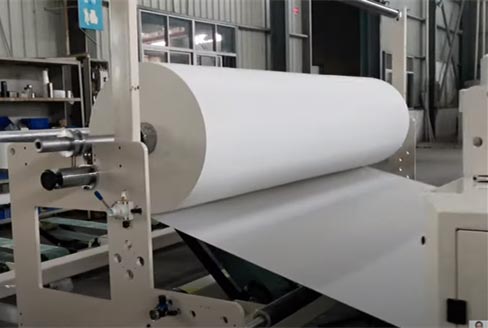
After the Yankee dryer and creping, the parent jumbo roll—up to 3,000 meters of continuous tissue—goes to the rewinding station. This is where the roll is converted into the final commercial format. The rewinder unwinds the parent roll, applies the correct tension, and re-rolls it to the target diameter. If tension is uneven, the finished roll will be too tight or too loose, causing feeding problems in automatic dispensers.
Next, slitting knives cut the wide web into standard widths. For commercial toilet paper, the common slit width is 10 cm (3.9 inches) to fit North American and European wall-mounted dispensers. Some markets require 9.2 cm or 11.4 cm widths, so the slitter setup must match the target dispenser model precisely. A mismatch means the roll won’t fit—wasted material and rework.
- Perforation Spacing Profiles: Adjust layout boundaries (60–140 mm intervals) strictly to mirror clutch hardware mechanics, securing crisp consumer tearing actions.
- Perforation Depth Baselines: Penetrate 60–80% of sheet thickness parameters uniformly, eliminating zig-zag sheet shedding defects.
A production facility running at 2,860 tons per month cannot afford to sacrifice this step. At Top Source Hygiene, each slitting and perforation setup is verified against the client’s dispenser specification before production starts. We send a sample approval with full width, core diameter, and perforation measurements documented.
Custom Toilet Paper: OEM Options and MOQ
95% of quality failures trace to skipped sample approval thresholds.
Custom toilet paper begins with your spec sheet: ply count (2 to 5), GSM (13–18 g/m²), embossing pattern, and private-label packaging. These variables directly affect dispenser performance, guest perception, and per-unit cost. A hotel chain that moves from 2-ply to 3-ply at 15 GSM typically sees a 20% drop in dispenser jams, but the material cost increases roughly 18% — the trade-off favors guest satisfaction in premium segments.
- Ply Tier Scalings: 2-ply for value avenues, 3-ply for hospitality contracts, and heavy 4–5 ply configurations for luxury medical or clinical wings.
- GSM Range Windows: 13–14 GSM for entry lots, 15–16 GSM for structural equilibrium, and 17–18 GSM for premium high-density outputs.
- FCL Cargo Constraints: Standard MOQ targets a 1x40HQ FCL container (~23-28 pallets). Flexible partial 20GP loads are negotiable for African and South American trial contracts.
Free stock samples ship in 2–3 days. Custom samples matching your exact ply/GSM/embossing require 10 days. Production for a full container takes 20–25 days from sample approval. Global shipping adds 7–14 days to North America/Europe, 10–20 to Asia/Oceania, and 15–25 to Africa/South America. Insider warning: if you skip custom sample approval and go straight to mass production, expect 15–20% variation in roll density and perforation tear strength — enough to cause complaints in high‑volume dispensers.
Conclusion
Knowing the manufacturing process—from raw fiber choice to creping pressure—equips you to specify the exact ply, GSM, and roll dimensions that match your facility’s traffic and dispenser mechanics. That reduces maintenance callouts and keeps guest satisfaction scores where they need to be.
The difference between a good order and a failed one often comes down to a single detail: whether the manufacturer can hold the same quality tolerance across the entire production run. Ask for a sample approval protocol that ties creping angle, roll density, and OBA-free brightness to the final FOB pricing. A supplier that locks those specs repeatably is worth the premium. Request a custom sample from Top Source Hygiene to verify the match before committing to a container.
Frequently Asked Questions
What is the difference between virgin and recycled toilet paper?
Virgin wood pulp offers higher tensile strength and is naturally OBA-free, ideal for premium hospitality use. Recycled fiber cuts energy use by 70% and water by 35% but requires advanced multi-stage flotation processing. Choose virgin for softness and strength; recycled for cost and sustainability goals.
How long does it take to produce a container of toilet paper?
Production for a standard 40-foot container takes 20–25 days after order confirmation. This does not include shipping time, which varies by destination. Add 7–25 days for shipping depending on your region.
What is the minimum order quantity for custom toilet paper?
The standard MOQ is one 40-foot high-cube container. Smaller orders may be accommodated for markets like Africa and South America on a case-by-case basis. Confirm MOQ after your spec and customization level are finalized.
How can I verify OBA-free claims?
Request a third-party lab test report for fluorescent whitening agents, or ask for the supplier’s internal OBA-free certification documentation. Reputable manufacturers should provide a signed guarantee and raw material traceability records. Always test a production sample before approving the full order.
What certifications should a toilet paper manufacturer have?
Key certifications include ISO 9001 for quality management, FDA registration for North American markets, and FSC certification for eco-friendly fiber sourcing. Compliance with EU regulations and Oceania hygiene standards is highly critical for international bids. Ask for copies of current certificates dated within the last 12 months.
