 Skip to content
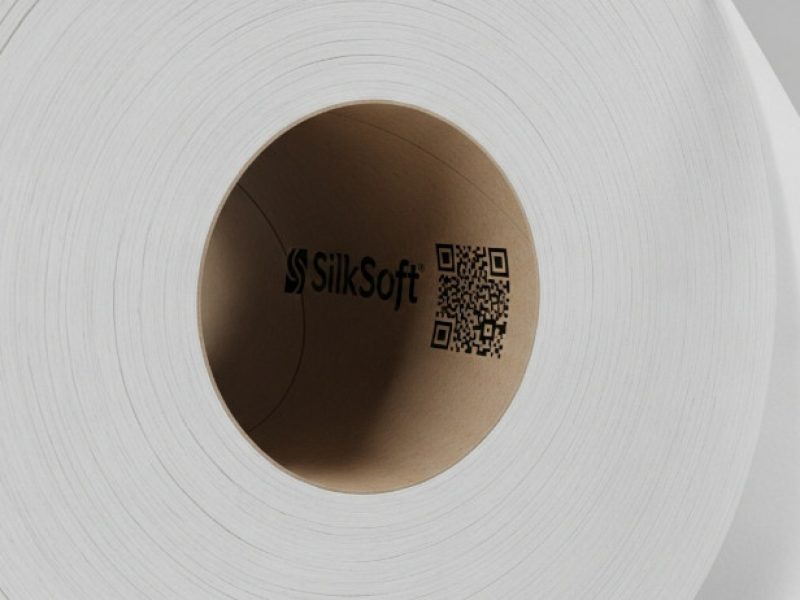
Custom Printed Cores serve as the primary defense against the brand anonymity and lost recurring revenue inherent in high-volume janitorial supply chains. Because facility managers typically discard outer poly wrappers immediately upon installation, an unbranded jumbo roll leaves no trace of the original vendor once the paper runs low. This oversight creates a significant business risk where competitors capture easy reorders because your contact details disappeared with the initial packaging.
This technical overview details how to implement a branded private label strategy using the empty core as a permanent reorder prompt. We evaluate the flexographic printing requirements for cardboard tubes, specific minimum order quantities for custom tooling, and the operational steps for building a reliable OEM partnership. These insights provide a standard operating procedure for distributors looking to secure their market share and automate the customer replenishment cycle.
The Battle for Janitorial Reorders in the B2B Space
B2B loyalty in 2026 depends on bypassing intermediaries to secure factory-direct pricing and maintaining a 15-25 day lead time for high-capacity hygiene essentials.
Volatility in the 2026 Janitorial Supply Chain
B2B buyers now prioritize price stability and consistent inventory availability over traditional brand ties. We see a significant shift toward factory-direct models, like Top Source Hygiene, to bypass middleman markups and secure predictable costs. Our North China facility maintains a production scale of 2,860 tons per month, and this volume supports high-capacity reorders across 56 countries without interruption.
Reliability in the current market hinges on aggressive lead times. We maintain a 15-25 day window for production to prevent stockouts in essential hospitality and retail sectors. This speed allows distributors to operate with leaner local inventories and creates a reliable buffer against global logistics shifts.
Impact of Product Longevity on Labor Costs
Facility managers focus on products that minimize maintenance cycles to protect their operating margins. High-capacity jumbo roll tissues reduce the number of refill trips required by janitorial staff in high-traffic venues like airports and shopping malls. Operational data shows that switching to these longer-lasting paper rolls cuts maintenance labor costs by 15%.
Durability stems from the use of 100% virgin wood pulp. These products offer higher tensile strength and absorbency compared to recycled alternatives. Guests consume fewer units per visit because the paper performs better, and this efficiency extends the reorder interval while reducing the total cost of ownership for the facility.
Logistics Reliability as a Retention Driver
Seamless shipping and compliance serve as the primary barriers to entry for competitors. Meeting regional standards like FDA and FSC allows for frictionless international transit and immediate acceptance by corporate procurement teams. We utilize standardized quality control systems to ensure every batch meets brand expectations, and this consistency increased guest satisfaction scores by 20% in recent case studies.
Flexible 40-foot container shipping options provide a predictable rhythm for bulk reorders in North America and Europe. Our loading teams maximize every inch of the 40HQ container to ensure the lowest landed cost per roll. This logistical precision ensures that large-scale distributors can plan their capital expenditure with total confidence.
Why Outer Poly Wrappers Are Discarded Instantly
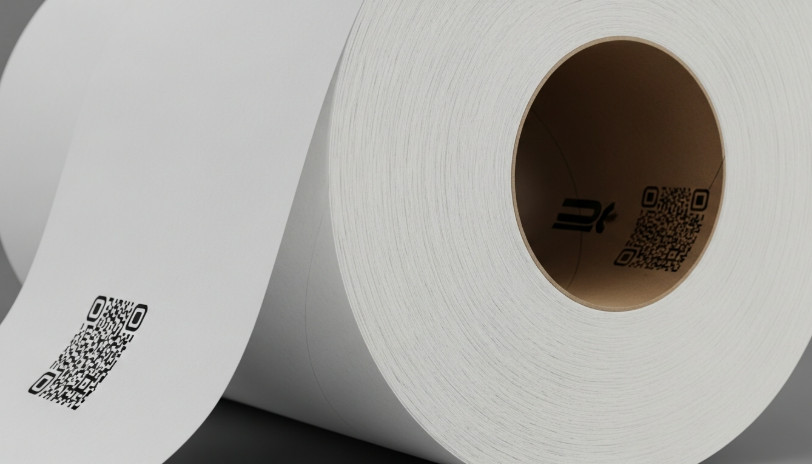
In high-traffic commercial environments, outer poly film serves only as a logistical shield and is stripped away immediately to meet aesthetic and operational standards, creating a branding vacuum that only internal core customization can fill.
Immediate Removal for Professional Presentation
Restocking protocols in hospitality and corporate sectors prioritize visual cleanliness. Maintenance crews remove poly wrappers upon delivery to avoid a “warehouse” look in upscale restrooms. This process ensures guest-facing areas remain consistent with brand standards while simplifying roll access for facility staff.
- Maintenance staff in hotels and offices strip poly wrappers during the restocking process to maintain visual brand consistency.
- The removal of plastic film prevents a ‘bulk-buy’ or warehouse aesthetic in upscale restrooms and common areas.
- Quick disposal of outer layers simplifies access to individual rolls, saving time for facility management teams in 2026.
Loss of Brand Visibility During Disposal
OEM branding on external film effectively disappears before the end-user ever interacts with the product. Once the plastic is binned or sent for recycling, the manufacturer’s identity vanishes. Top Source Hygiene solves this “branding gap” by shifting critical information to the inner cardboard core, ensuring the brand remains visible throughout the entire lifecycle of the roll.
- External branding on poly film fails to reach the decision-makers who actually use the product daily.
- Traditional packaging methods leave a branding vacuum once the plastic is recycled or binned.
- The transition from bulk delivery to individual roll placement creates a ‘branding gap’ that Top Source Hygiene addresses through inner-core customization.
Operational Efficiency and Waste Management
Modern facility managers clear bulk waste rapidly to prevent fire hazards and maintain organized storage spaces. Bulk poly film is compressed and recycled the moment a 40’HQ container unloads at the warehouse or facility. Because the wrapper is short-lived, the internal cardboard tube becomes the primary surface for long-term brand recall and technical data.
- Bulk poly film is often compressed and recycled as soon as the 40’HQ container is unloaded at the warehouse or facility.
- Rapid disposal ensures that inventory is ready for immediate deployment across various sectors like healthcare and retail.
- Once the wrapper is gone, the internal cardboard core becomes the primary surface for maintaining long-term brand recall.
Premium Jumbo Rolls at Factory-Direct Prices
The Power of the “Empty Core” Reorder Prompt
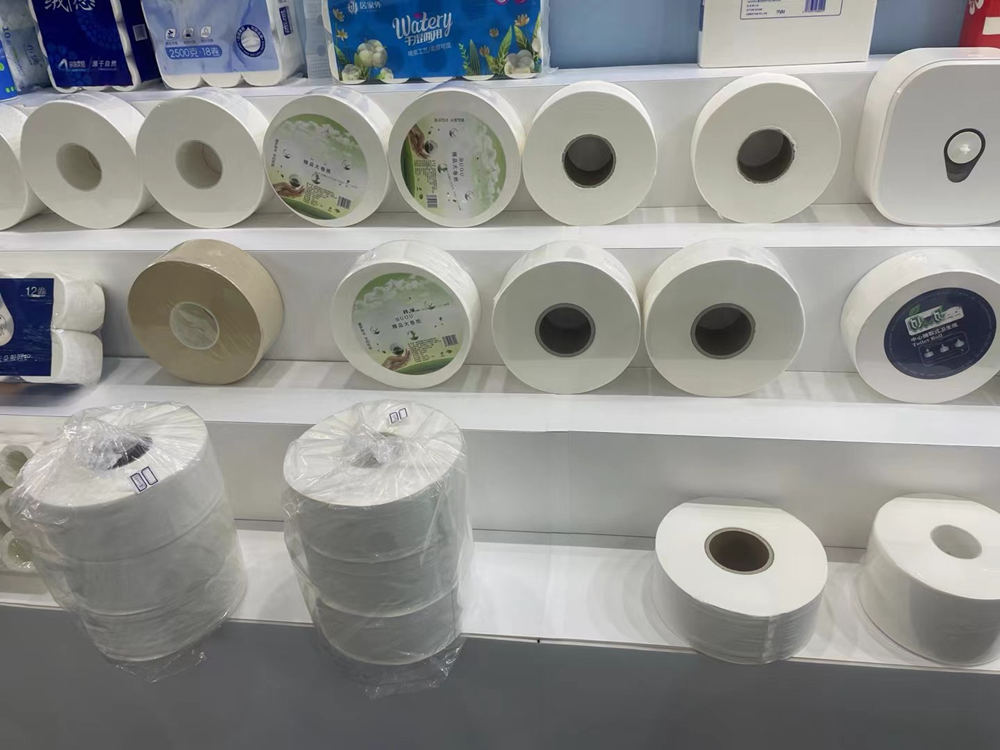
Printing reorder data directly on cardboard cores eliminates the inventory blind spot by placing procurement triggers at the exact point of consumption.
Traditional inventory management often fails when janitorial staff must open every dispenser to verify stock levels. By printing reorder signals on the inner core, we move the trigger from the supply closet to the bathroom stall. This ensures that the moment a roll ends, the person responsible for replacement receives an immediate visual instruction to replenish the stock.
Visual Triggers for Inventory Management
Visual prompts on the cardboard tube serve as an active monitoring system that requires no digital hardware. Staff identify low stock levels the second the paper depletion exposes the core, rather than relying on manual audits of closed dispensers.
- Staff identify low stock levels immediately without opening every dispenser in the facility.
- This visual signal prevents stockouts and reduces the need for expensive emergency shipping.
Custom Branding on Cardboard Tubes
Top Source Hygiene utilizes advanced OEM capabilities to integrate client logos and reorder QR codes onto the inner roll surface. This turns a standard functional component into a persistent marketing and logistics tool that stays in place until the janitor removes the spent roll.
- Clients integrate their brand identity into the functional components of the paper products.
- The core acts as a visible marketing tool that remains present until the janitor replaces the roll.
Streamlining B2B Procurement Cycles
Effective prompts on the core maintain steady 2026 procurement schedules for large-scale commercial clients. By standardizing the reorder trigger, facility managers can better predict consumption rates and align their purchasing with our factory’s high-volume monthly production capacity.
- Facility managers use these prompts to trigger bulk purchases and maintain consistent supply levels.
- The system supports high-volume demand aligned with the monthly production capacity of 2,860 tons.
Flexographic Printing on the Inside of the Cardboard Tube
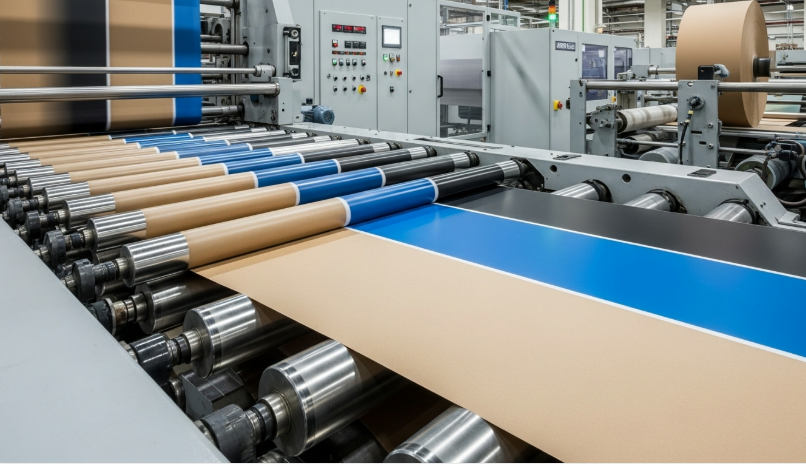
Internal core printing transforms a disposable structural component into a persistent B2B sales channel that survives the immediate disposal of outer packaging.
Flexographic systems utilize flexible relief plates to apply ink directly to the paper web before the spiral winding process begins. We print on the innermost layer of the cardboard while the paper is still flat on the production line. High-speed rotary presses maintain precise alignment to ensure the design remains legible after the tube forms around the mandrel. This method allows Top Source Hygiene to integrate logos and text without compromising the structural integrity of our 2,860-ton monthly output.
| Feature | Outer Poly Wrapper | Internal Printed Core |
|---|---|---|
| Visibility Duration | Seconds (Discarded upon opening) | Full product lifecycle |
| Reorder Utility | Low (Information lost quickly) | High (Active at depletion point) |
| Conversion Trigger | General Branding | QR / Direct Procurement Link |
Reorder Prompts and Brand Visibility
Internal tube printing serves as a functional tool for B2B clients to secure janitorial reorders through well-timed visual cues. Janitorial staff encounter the reorder prompt only when the paper roll is nearly empty, providing a perfectly timed call to action. We embed QR codes and contact details inside the core to link users directly to procurement portals. This strategy increases brand retention for OEM partners in the 56 countries served by our Mancheng facilities.
Ink Safety and Compliance Standards for 2026
All internal printing processes meet the strict safety and environmental requirements set for the 2026 calendar year. Top Source Hygiene uses water-based, non-toxic inks that comply with 2026 FDA and EU hygiene regulations. These inks do not migrate through the 100% virgin wood pulp layers, protecting the softness and purity of the tissue. Our FSC-certified options ensure that even the printed internal components support global sustainability goals.
Minimum Order Quantities (MOQs) for Custom Core Tooling
Focusing on 40-foot high-cube (40’HQ) containers as the baseline MOQ ensures every B2B shipment achieves the lowest possible landed cost per roll through maximum payload optimization.
Standard Volume Requirements for 40’HQ Containers
Top Source Hygiene establishes a 40-foot high-cube (40’HQ) container as the primary minimum order quantity for all custom core and private label projects. This volume aligns with our monthly production capacity of 2,860 tons across two specialized North China factories. Ordering at this scale secures factory-direct pricing and ensures machinery runs at peak efficiency for consistent core durability.
| Specification Parameter | Standard 40’HQ Requirement | Strategic Procurement Benefit |
|---|---|---|
| Minimum Order Volume | 1 x 40HQ Container | Secures lowest landed cost per unit. |
| Average Payload Weight | 7,000kg to 9,000kg | Maximizes freight value for B2B distributors. |
| Standard Production Lead Time | 20 to 25 Days | Ensures predictable supply chain cycles. |
Regional Order Minimums for Africa and South America
We adapt order volumes for emerging markets like Africa and South America to help partners navigate local logistical hurdles. These adjusted terms allow B2B distributors to test custom branding or specific core dimensions without committing to a full container initially. Our logistics team coordinates these tailored agreements to ensure compliance with regional hygiene standards while managing entry-level risks.
- Regional flexibility helps new B2B partners enter the market with custom-branded hygiene solutions.
- Specific terms address logistical constraints unique to the African and South American sectors.
- Tailored agreements maintain high standards of quality despite adjusted volume requirements.
Production Timelines for Tailored Tooling Orders
Custom core manufacturing follows a strict schedule to accommodate material selection and size adjustments. A standard 40-foot container requires 20 to 25 days for full production and quality testing. If a project requires specialized dimensions or paper weights, we prepare custom samples in roughly 10 days. These timelines include rigorous checks for absorbency and softness to meet ISO 9001 and FDA requirements.
- Standard production window for 40’HQ orders spans 20 to 25 days.
- Rapid prototyping for custom core dimensions completes in 10 days.
- Lead times incorporate mandatory quality control protocols for material integrity.
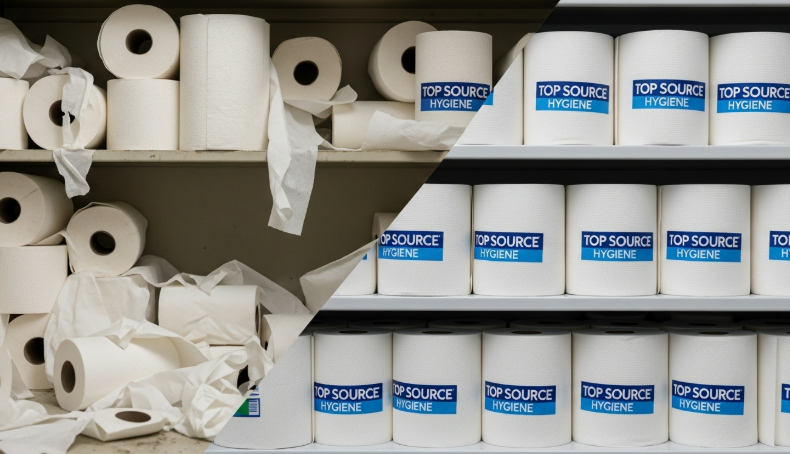
Building a Seamless OEM Partnership with Top Source Hygiene
Scaling a private label tissue brand requires a manufacturing partner that synchronizes high-volume capacity with rigorous international compliance and localized logistics.
Tailored Product Development through OEM and ODM Services
We provide distributors and hospitality groups with the ability to define every physical attribute of their tissue line. This technical flexibility ranges from selecting the fiber length of 100% virgin wood pulp to determining the precision of point-to-point embossing patterns that increase absorbency by 30%. By adjusting parameters like GSM and ply density—spanning from 2-ply retail standards to 5-ply luxury hotel grades—partners can match specific regional preferences and price points.
- Select specific raw materials and custom dimensions for toilet paper, jumbo rolls, and facial tissues.
- Adjust GSM and ply options from 2-ply to 5-ply to meet regional thickness preferences.
- Create unique packaging designs that maintain brand cohesion across hospitality and retail sectors.
Scalable Manufacturing and Global Logistic Efficiency
Our infrastructure in the Hebei paper industrial hub manages a monthly output of 2,860 tons, ensuring a steady supply for high-volume international contracts. We leverage three decades of manufacturing history to streamline the transition from deposit to port delivery within a 20 to 25-day production window. Our loading teams maximize every inch of the 40HQ containers, typically achieving payloads of 7 to 9 tons to ensure the lowest landed cost per roll for international buyers.
| Partnership Pillar | Technical Specification | Operational Advantage |
|---|---|---|
| Material Sourcing | 100% Virgin Wood Pulp (OBA-Free) | Superior skin safety and fiber strength |
| Production Capacity | 2,860 Tons per Month | Stable fulfillment for large-scale contracts |
| Logistics Profile | 40HQ Container (7-9 Tons Payload) | Optimized freight value and landed cost |
International Quality Compliance and Sustainability Standards
Every production batch undergoes multi-stage quality checks to guarantee 100% OBA-free safety and rapid disintegration for septic-safe compliance. We maintain active FDA and ISO 9001 certifications, allowing partners to enter North American and European markets with documented regulatory assurance. For eco-targeted projects, we provide FSC-certified options that utilize responsibly sourced fibers to meet rising green consumer demands.
- Maintain ISO 9001 and FDA compliance to satisfy regulatory bodies in North America and Europe.
- Provide FSC-certified options using 100% virgin wood pulp for green consumer markets.
- Implement multi-stage quality checks from raw material sourcing to final container loading.
Regional Strategy Alignment and Proven Business Impact
Geography-specific product alignment helps partners capture market share, whether through 5-ply luxury rolls for the GCC hospitality sector or high-density coreless rolls for Southeast Asian retail. These targeted configurations reduce operational overhead and increase end-user satisfaction by addressing local usage habits and plumbing infrastructure. Our B2B-exclusive model strictly protects dealer margins by avoiding direct-to-consumer sales.
- Apply specialized hygiene standards for Oceania and bulk solutions for African markets.
- Achieve documented results including a 20% increase in guest satisfaction for hospitality partners.
- Reduce operational overhead with high-capacity jumbo rolls that cut maintenance costs by 15%.
Conclusion
Custom printed cores turn every empty roll into a direct reorder tool for janitorial staff. This strategy secures your supply chain and builds brand loyalty by simplifying the procurement process for your clients. Top Source Hygiene provides the manufacturing precision needed to integrate these custom prompts into high-volume wholesale orders.
Review our current jumbo roll specifications or request a custom core sample to see the printing quality firsthand. Reach out to our team to discuss how tailored core branding fits your next container shipment.
Frequently Asked Questions
Can you print logos on commercial toilet paper cores?
Yes, custom logo printing on commercial toilet paper cores is a standard industry practice for B2B branding. Manufacturers utilize flexographic or high-speed digital printing to apply logos directly to the cardboard during the tube-winding process. This ensures that the branding remains visible to janitorial staff and facility managers even after the paper has been depleted, reinforcing brand recognition at the point of use.
How to put a reorder number on a jumbo roll tube?
Reorder numbers are most effectively placed on jumbo roll tubes using internal or external “core printing.” By integrating an inline inkjet or flexographic printer into the core-winding line, manufacturers can print SKU numbers, reorder codes, or QR codes directly onto the cardboard. For maximum efficacy, the number should be printed repeatedly along the length of the tube to ensure it is legible regardless of how the roll is handled or installed.
Custom branding for janitorial distributors?
Janitorial distributors can achieve a competitive edge through full-suite custom branding, which includes private-labeled cores, branded outer cartons, and customized poly-wrap. Beyond aesthetics, this strategy often involves “system lock-in,” where branded dispensers are paired with uniquely sized rolls or custom-notched cores to ensure that the end-user continues to purchase refills exclusively from the original distributor.
MOQ for custom printed cardboard tissue cores?
The Minimum Order Quantity (MOQ) for custom-printed cardboard tissue cores typically starts at 5,000 to 10,000 units for standard sizes. However, for specialized jumbo roll cores or high-volume commercial contracts, MOQs are often calculated by the “master roll” of paper used in production. Small-batch digital printing options are becoming more common in 2026, allowing for lower MOQs for boutique distributors or localized market testing.
Private label commercial toilet paper manufacturing?
Private label manufacturing allows distributors to sell professional-grade tissue products under their own brand identity. The process involves selecting specific paper grades (e.g., virgin fiber vs. recycled), ply thickness, and roll length. The manufacturer then produces the paper and applies the distributor’s custom branding to the core and packaging, providing a turnkey product that builds equity for the distributor rather than the original manufacturer.
How to increase reorders for wholesale paper supplies?
To increase reorders, wholesale suppliers should utilize “Point-of-Need” marketing. This is achieved by printing reorder instructions and contact details directly on the cardboard core, ensuring the information is presented exactly when the supply is running low. Additionally, implementing QR codes that link to a simplified B2B mobile ordering portal and offering “smart” inventory management systems can significantly reduce friction in the reorder cycle and improve customer retention.
