Skip to content

Inefficient warehouse storage for bulk paper products often leads to significant inventory loss and unsalable stock due to environmental exposure. When handling pallets of jumbo rolls, even minor oversights in placement or protection create hidden costs that erode profit margins. Facilities must treat these high-volume janitorial supplies with the same precision as fragile goods to prevent moisture damage and physical deformation.
This guide establishes a technical standard operating procedure for managing paper-based inventory. We cover critical stacking limits to prevent crushing, humidity controls to stop odor absorption, and strict floor clearance protocols. Implementing these specific methods ensures your facility maintains a clean, rodent-free supply chain while adhering to first-in, first-out inventory principles.
The Vulnerability of Paper Products in Industrial Warehousing
Industrial storage environments present unique physical and atmospheric threats to the structural integrity and hygiene of bulk paper shipments.
Atmospheric Moisture and Fiber Integrity
High-absorbency products like facial tissues and kitchen towels stay highly sensitive to warehouse humidity levels. Virgin wood pulp fibers swell when they encounter humid air, and this reaction ruins the premium texture of the paper. Moisture also weakens the adhesive bonds in cardboard cores. We often see this lead to the structural collapse of jumbo rolls during long-term storage.
2026 storage protocols require climate-controlled zones to prevent mildew growth within bulk paper shipments. If environmental controls fail, the high-purity long fibers in premium tissue lose their tensile strength, resulting in a product that feels damp and lacks the “cloud-like” softness expected by high-end hospitality clients.
- Hygroscopic wood pulp fibers swell and lose their quilted texture in high-humidity zones.
- Adhesive degradation in center tubes causes rolls to deform, making them incompatible with standard dispensers.
- Mildew risks increase exponentially when moisture gets trapped between tightly packed pallets.
Stacking Pressure on Multi-Ply Products
Vertical pressure in large-scale warehouses compromises the GSM and ply separation of soft paper goods. Excessive weight from high-cube container stacking flattens the delicate embossing on 4-ply and 5-ply toilet paper. This compression reduces the air pockets between layers, which effectively kills the absorbency and loft of the product.
Warehouse managers calculate load-bearing limits based on the grams per square meter (GSM) of specific product lines to prevent crushing. Improper palletization creates mechanical stress that tears the outer packaging of household tissue boxes. We recommend using reinforced 5-ply export cartons to protect the ply-bonding integrity during high-stacking maneuvers.
- Point-to-point embossing patterns collapse under excessive vertical weight, reducing product performance.
- Incorrect stacking heights lead to “edge-crushing” where the bottom rolls lose their circular shape.
- Packaging failure at the base of a stack often results from ignoring the specific GSM density of the paper.
Hygiene Standards and Environmental Purity
Maintaining international quality certifications requires protecting products from warehouse-borne contaminants and odors. Paper products act as a sponge for industrial odors and volatile organic compounds found in busy logistics hubs. A pallet stored too close to chemical cleaning supplies or diesel exhaust will absorb those scents, rendering it unsellable to medical or luxury hotel accounts.
Dust accumulation on unwrapped pallets violates the hygiene requirements for global hospitality and healthcare clients. Strict floor clearance protocols ensure that ground-level moisture and concrete-borne pollutants do not seep into the inventory base. Using secondary protection like master poly bundles is the only way to guarantee the 100% OBA-Free purity of the paper remains intact from factory to end-user.
- Porous paper fibers readily absorb airborne contaminants and chemical smells from surrounding inventory.
- Direct contact with concrete floors allows moisture wicking, which promotes rapid bacterial growth.
- Exposed inventory violates ISO 9001 and EU hygiene standards necessary for professional distribution.
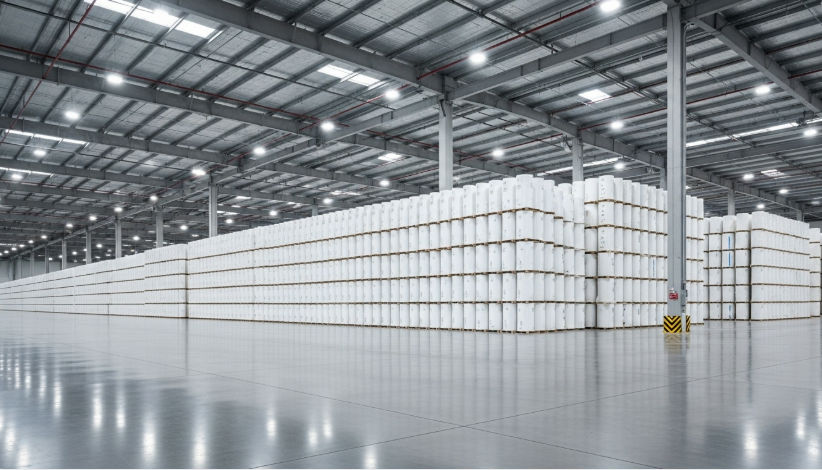
Humidity Control: Preventing Mildew and Odor Absorption
Maintaining strict climate parameters is the difference between premium 100% virgin wood pulp and unsellable, moisture-degraded stock.
Optimal Humidity Ranges for Tissue Integrity
Warehouse managers maintain precise relative humidity levels to prevent paper fibers from softening. This loss of tensile strength ruins the performance of multi-ply products like the TSH-2559 series. We aim for a relative humidity between 45% and 55% to protect the structural integrity of jumbo rolls and toilet paper. Excessive moisture in 2026 storage facilities leads to clumping in facial tissues and reduces the absorbency of kitchen towels.
| Storage Variable | Target Threshold | Impact on Fiber Integrity |
|---|---|---|
| Relative Humidity (RH) | 45% – 55% | Maintains 100% Virgin Wood Pulp tensile strength and prevents fiber softening. |
| Air Exchange Rate | High-Volume Cycles | Eliminates condensation on PE packaging to block fungal spore germination. |
| Proximity to Pollutants | Isolated Zone | Prevents porous paper fibers from absorbing chemical odors or loading dock exhaust. |
Ventilation Strategies to Block Mildew Formation
Stagnant air allows condensation to form on plastic packaging, creating a breeding ground for mildew. Logistics teams in our Hebei paper industrial hub use high-volume fans and ventilation cycles to keep air moving through deep storage racks. Consistent airflow prevents moisture from settling on paper surfaces. This keeps the product OBA-free and safe for sensitive skin by ensuring no fungal spores can germinate during long-haul storage.
Segregation Protocols for Odor-Free Products
Paper products act as natural absorbers, so they require isolation from strong chemical or environmental scents. Storage zones keep Top Source Hygiene products away from loading docks and chemical storage to avoid scent contamination. Managers keep pallets sealed until dispatch to ensure toilet paper and napkins arrive at the client with a neutral profile. This protocol is vital for luxury hospitality clients using the TSH-4010 series who demand a scent-neutral guest experience.
Premium Jumbo Rolls at Unbeatable Wholesale Prices
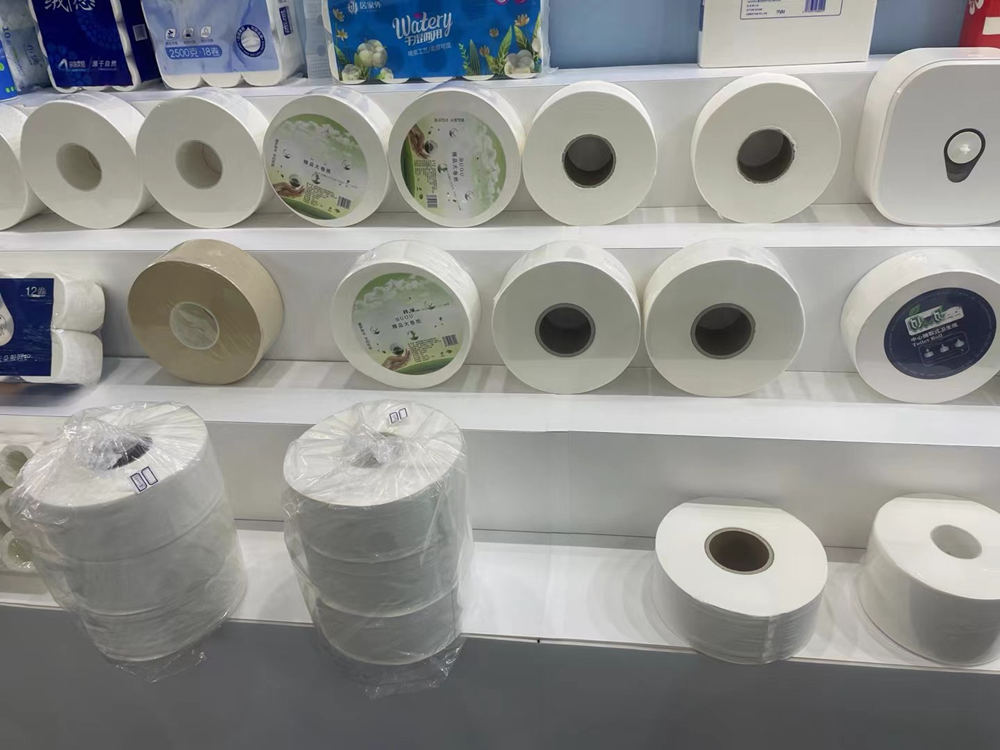
The “Three Pallets High” Stacking Limit Rule
Limiting vertical accumulation to three units prevents structural collapse of the bottom-tier cores and maintains roll integrity for automated dispensing systems.
Load-Bearing Limits of Lightweight Paper Goods
Lightweight tissue and towel products possess specific vertical pressure boundaries that warehouse managers must respect. Excessive weight from upper pallets compresses the bottom layer, resulting in permanent product flattening. A three-unit maximum keeps the cumulative weight of top tiers below the crush strength of the lowest cardboard cores. Adhering to this limit ensures rolls maintain their roundness, which is essential for standard commercial dispensers.
| Stacking Parameter | Standard Industry Risk | TSH Technical Solution |
|---|---|---|
| Structural Integrity | Core crushing under 4+ units | Reinforced 5-ply export cartons |
| Volumetric Stability | Tipping from roll bulk/shifting | Mechanical compression bagging |
| Roll Circularity | Flattened cores causing jams | High-density 100% Virgin Wood Pulp |
Vertical Stability and Workplace Safety
Warehouse safety protocols prioritize a low center of gravity to eliminate tipping accidents. Stacking beyond three pallets creates a top-heavy structure vulnerable to forklift vibrations and uneven industrial flooring. Lower stacks reduce the risk of falling debris and protect warehouse personnel in high-traffic loading zones. Modern safety standards require these height restrictions to maintain a secure environment during rapid distribution cycles.
Preventing Core Deformation for Automated Systems
Maintaining roll integrity is vital for the functionality of customer dispensing equipment. Heavy vertical pressure deforms the hollow centers of jumbo rolls and high-capacity toilet paper. Flattened cores cause jamming in automated dispensers and increase maintenance calls for end-users. The stacking limit preserves the factory-fresh shape of the product from the initial warehouse receipt to the final stall installation.
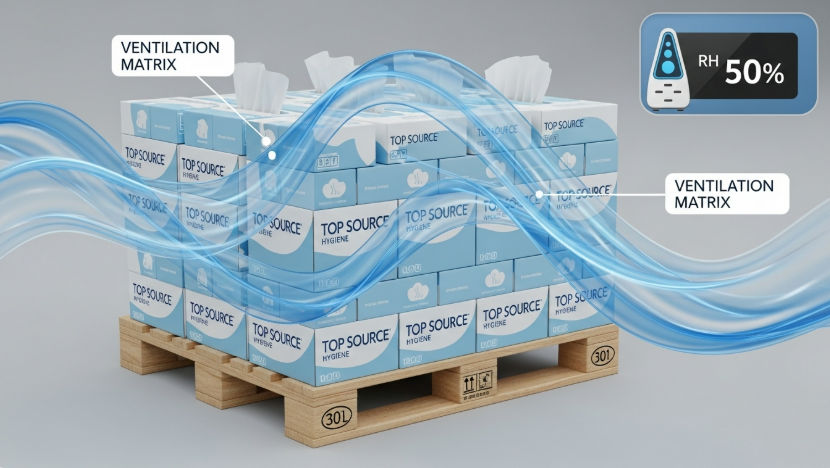
Floor Clearance: Why Paper Can Never Touch the Concrete
Direct contact between bulk paper inventory and concrete subfloors triggers capillary moisture transfer, which destroys fiber integrity and violates international hygiene standards.
Moisture Migration and Capillary Action
Concrete subfloors naturally release moisture through capillary action, which paper products absorb instantly through direct contact. Concrete acts as a porous material that pulls groundwater upward and releases it as vapor. We prevent dampness from weakening the 2026 production batches by enforcing a strict pallet-only rule across our Hebei manufacturing hub. Moisture absorption leads to base-layer warping and compromises the softness of our premium 100% virgin wood pulp fibers.
Maintaining Structural Stability of Bulk Rolls
Standard storage protocols for the 2026 fiscal year require elevation to protect the physical shape of heavy jumbo rolls. Absorbed moisture softens the paper at the base, causing heavy rolls to sag or flatten under their own weight. Top Source Hygiene utilizes pallet systems to ensure jumbo rolls, such as the TSH-3396 and TSH-JRT08 models, remain perfectly circular for high-speed commercial dispensers. Elevated storage preserves the GSM consistency and prevents the bottom-most units from becoming unusable waste.
Hygiene Compliance and Pest Management
Floor clearance serves as a primary defense against environmental contaminants and rodents in global manufacturing facilities. Clearance zones allow facility teams to clean floors effectively without risking water damage to the paper stock. Airflow beneath the pallets discourages rodents from nesting in the cardboard cores of the rolls. Top Source Hygiene maintains ISO 9001 and FDA compliance by keeping all finished tissues in a contamination-free, elevated zone to ensure 100% OBA-free material safety.
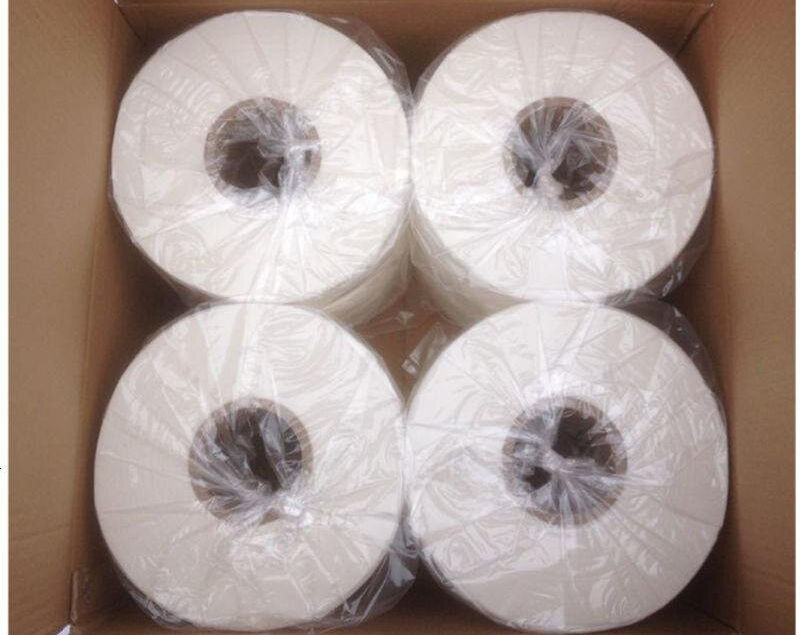
Pest Control: Defending Cardboard Cores from Rodents
Rodents view the cardboard cores of toilet paper rolls as ideal nesting environments, so physical exclusion and visual monitoring serve as the primary defenses for maintaining industrial hygiene standards.
Sealing Facility Perimeters to Prevent Intrusion
We secure our two manufacturing factories in Mancheng to block rodent access to raw material storage areas. Maintenance teams seal structural gaps and utility entry points with industrial-grade metal mesh to stop rodents from entering the warehouse. These physical barriers represent the first line of defense in a high-volume paper production environment.
Facility exteriors require constant management to eliminate habitat opportunities. Our teams clear vegetation and debris within the immediate perimeter of the warehouse to remove potential nesting sites. By maintaining a clean “sterile zone” around the building, we significantly reduce the likelihood of pest pressure on the loading docks.
Implementing Pallet Spacing and Monitoring Protocols
Our storage strategy creates clear visibility throughout the warehouse, making it easier to detect and manage pest activity. We enforce strict spacing between pallet rows to allow for thorough inspections of cardboard cores and packaging integrity. This layout ensures that no hidden corners exist where activity could go unnoticed during routine floor checks.
Staff use non-toxic tracking and monitoring stations to identify rodent movement without contaminating hygiene products. We avoid toxic baits in storage areas to prevent chemical cross-contamination with 100% virgin wood pulp products. These monitoring protocols provide empirical data on facility health and allow for rapid response if we detect any intrusion.
Safeguarding Virgin Wood Pulp Integrity
We protect the core quality of our toilet paper and jumbo rolls to meet ISO 9001 and FDA hygiene standards. Applying industrial-grade shrink wrap to exposed cardboard cores deters gnawing and nesting during the storage phase. This barrier maintains the structural integrity of the roll, which is critical for high-speed automated dispensers in commercial settings.
Quality control teams inspect every 40-foot container before loading to ensure shipments remain pest-free for global delivery. We verify that the container seals are intact and that the interior environment is clean before releasing goods for transport. This final check ensures that our B2B partners receive products that meet the highest professional care standards.
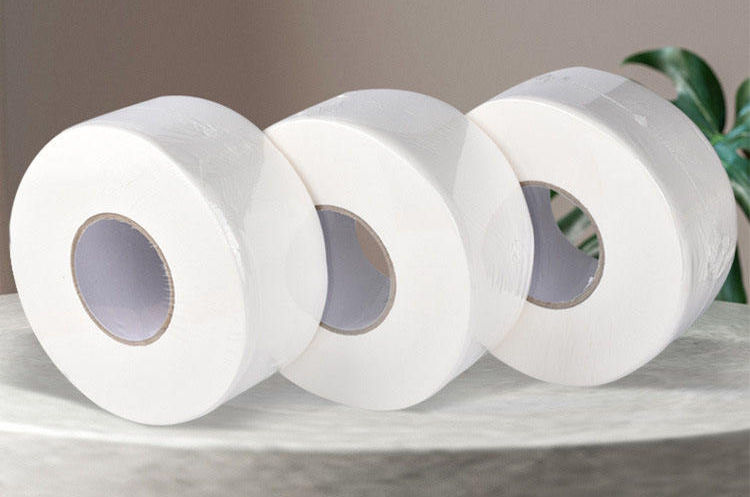
Implementing a Strict FIFO (First-In, First-Out) Inventory System
Strict inventory rotation prevents cellulose fiber degradation, ensuring that 100% virgin wood pulp products reach the end-user with maximum tensile strength and zero moisture-related brittleness.
Protecting Product Integrity Through Systematic Rotation
We move inventory based on production dates to prevent paper from becoming brittle or yellowing over time. Our 2026 warehouse protocols ensure that every roll of the 2,860-ton monthly output stays within its optimal shelf life. Rotating stock reduces the risk of long-term exposure to warehouse humidity, which can compromise paper strength.
- Production date tracking eliminates the risk of fiber aging in long-term storage.
- Regular turnover maintains the natural 85-92% brightness level of our 100% virgin wood pulp rolls.
- Automated logs prevent the accumulation of older batches in deep-storage corners.
Optimizing Warehouse Layout for Efficient Batch Access
Designated loading zones allow teams to access the first-in pallets without moving newer inventory. Clear labeling systems identify production batches, helping loaders maintain a 15-25 day lead time for global shipments. Our logistics team uses these layout strategies to handle high-capacity orders for clients in 56+ countries.
| Inventory Metric | Standard Storage | TSH FIFO Protocol |
|---|---|---|
| Rotation Logic | LIFO (Last-In, First-Out) | Strict FIFO (First-In, First-Out) |
| Stock Age Risk | High (Yellowing/Brittleness) | Minimal (15-25 Day Lead Time) |
| Loading Efficiency | Obstructed Access | Dedicated Batch Lanes |
Maintaining Compliance Standards for International Markets
We track batch numbers to guarantee that FDA and FSC-certified products arrive at their destination with full documentation. Precise inventory management helps us meet the strict delivery windows required for retail and hospitality sectors. Our 2026 quality control measures integrate FIFO data to provide clients with consistent, high-performing paper supplies.
Maintaining this cycle protects the profit margins of our B2B partners. By ensuring that no stock expires or degrades, we minimize waste and guarantee that every 40HQ container loaded at our Hebei facility meets global hygiene standards.
Conclusion
Effective warehousing protects the integrity of bulk paper products and prevents financial loss from moisture or pests. These protocols maintain compliance with international hygiene standards and maximize floor space efficiency. Sticking to these rules ensures every jumbo roll remains lint-free and ready for high-traffic environments.
Review your current storage layout to ensure it meets these technical requirements for high-density paper. Reach out to Top Source Hygiene for a technical catalog or to request samples for your next procurement cycle.
Frequently Asked Questions
How to store pallets of commercial toilet paper?
Pallets should be stored in a cool, dry, and well-ventilated warehouse environment. It is critical to keep the product on elevated pallet racking or heavy-duty plastic/wood pallets to prevent ground-level moisture absorption. Additionally, store paper products away from cleaning chemicals or liquids with strong odors, as paper is highly porous and will absorb ambient scents and volatile organic compounds (VOCs).
Does toilet paper expire or go bad?
Toilet paper does not have a technical expiration date and can last indefinitely if stored correctly. However, it is susceptible to environmental degradation. Excessive humidity can lead to mold and mildew growth, while prolonged exposure to dust and air can cause the outer layers to yellow or become brittle. As long as the paper remains dry and is kept in its original protective packaging, it remains fully functional for years.
How high can you stack pallets of jumbo rolls?
For floor stacking, the industry standard is typically two pallets high, provided that pallet protectors or plywood sheets are used to distribute weight. Stacking higher than this without specialized racking can lead to “stacking collapse” or crushing the bottom rolls, compromising the product’s core integrity. When using industrial pallet racks, you can stack as high as your facility’s vertical clearance and rack weight ratings allow, provided each pallet is independently supported.
Preventing moisture damage in wholesale paper storage?
To prevent moisture damage, maintain a warehouse humidity level below 60% using industrial dehumidifiers and proper HVAC systems. Ensure all pallets are shrink-wrapped to provide a secondary barrier against condensation and minor leaks. It is also vital to maintain a “flue space” between pallet rows to allow for consistent airflow, which prevents the buildup of stagnant, moist air that can weaken cardboard packaging.
How to keep mice out of warehouse toilet paper?
Rodent prevention requires an Integrated Pest Management (IPM) approach. Seal all building entry points with steel wool or metal flashing and maintain a clean 18-inch “white line” inspection zone around the interior perimeter of the warehouse. Since mice view paper as ideal nesting material, frequent stock rotation and professional-grade bait stations located outside the main storage area are essential to deterring infestations before they reach the inventory.
What is FIFO inventory for janitorial supplies?
FIFO stands for First-In, First-Out. In janitorial supply management, this means utilizing or shipping the oldest stock before the newest arrivals. This system is crucial for paper products to prevent “dead stock” where bottom or back pallets accumulate dust, suffer from packaging degradation, or lose their structural integrity over time. Implementing FIFO ensures that the inventory remains fresh and that the paper’s absorbency and softness are preserved for the end-user.