Skip to content
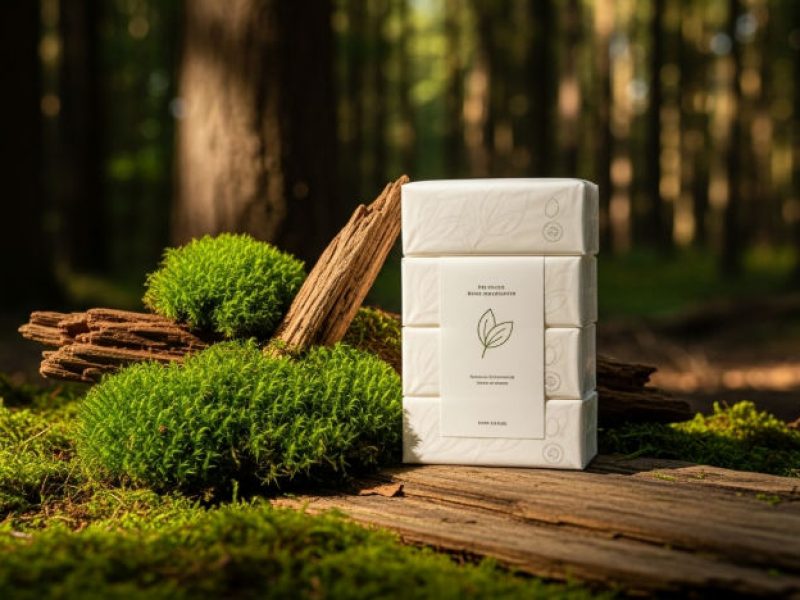
Choosing between recycled vs virgin pulp involves a direct trade-off between sustainability targets and the guest satisfaction metrics that drive repeat business in the hospitality sector. While procurement teams face increasing pressure to adopt 100% recycled paper products, the hidden operational risk lies in the physical degradation of the tissue quality. A scratchy, lint-heavy facial tissue does more than save a few cents per unit; it actively erodes the premium brand perception that luxury hotels and Class-A office spaces spend millions to cultivate.
This technical breakdown examines the structural mechanics of paper fiber degradation during the recycling process and explains why reclaimed materials often struggle with softness and dust shedding. We provide a standard operating procedure for balancing environmental responsibility with user comfort, specifically focusing on why FSC-certified virgin pulp serves as a necessary middle ground for facilities that cannot afford to compromise on the tactile experience of their guests.
The Push for 100% Recycled Commercial Paper
Adopting 100% recycled paper allows commercial entities to meet 2026 ESG benchmarks through circular economy practices, though it requires a calculated trade-off between environmental mandates and physical fiber performance.
Corporate Sustainability Targets and Green Mandates
Global commercial sectors are rapidly integrating strict sustainability protocols to reach 2026 environmental milestones. Many organizations now mandate the use of 100% recycled content to satisfy internal Environmental, Social, and Governance (ESG) reporting requirements. This shift moves beyond simple brand image; it aligns with regulatory incentives in Europe and North America that reward businesses for transitioning away from virgin wood pulp.
Large-scale entities utilize recycled paper as a tangible demonstration of their commitment to the circular economy. By sourcing post-consumer waste, these facilities reduce their reliance on new timber and lower the demand for land-intensive forestry. This transition often serves as the cornerstone of a broader waste-reduction strategy within high-traffic commercial environments.
Supply Chain Challenges and Material Sourcing
The logistics of supplying 100% recycled paper involve significant hurdles regarding the quality and consistency of raw materials. Manufacturers must secure stable streams of high-quality post-consumer waste to ensure the finished product retains the tensile strength necessary for standard commercial dispensers. When the scrap paper market fluctuates, price stability often suffers, making recycled rolls more volatile in cost than their virgin pulp counterparts.
Advanced processing facilities are essential to remove contaminants, adhesives, and inks from the source material. While recycling saves trees, the energy-intensive nature of de-inking and cleaning impacts the initial carbon footprint of the facility. Sourcing teams must audit these facilities to ensure the environmental gain isn’t lost during the complex mechanical recovery of the fibers.
Balancing Eco-Goals with Functional Performance
Commercial users must weigh environmental benefits against the reality of product durability and hygiene. 100% recycled paper typically consists of shorter fibers that have been processed multiple times. This results in lower absorbency and a higher tendency to produce lint, which can be problematic in high-traffic restrooms or sensitive office environments.
Recent technological shifts in 2026 have introduced sophisticated embossing techniques that help recycled paper mimic the softness of virgin fibers. Facilities managers now focus on the total cost of ownership rather than just the price per roll. Lower-quality recycled options often lead to increased consumption rates, as users pull more sheets to compensate for reduced performance, potentially negating the original eco-savings.
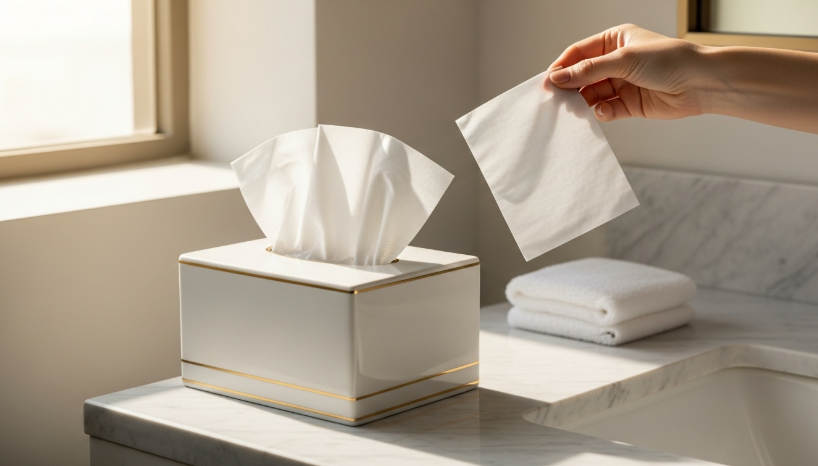
The Mechanics of Recycling: Shortening the Paper Fibers
Recycled tissue production faces a physical ceiling because cellulose fibers lose structural integrity and length with every mechanical processing cycle, eventually resulting in brittle, low-performance sheets.
Fiber Fragmentation During the Pulper Stage
Mechanical processing in 2026 facilities relies on heavy agitation to transform recovered paper into a usable slurry. This pulping stage requires aggressive friction to strip inks and hydrate the sheets, but the process physically degrades the cellulose. Long, flexible virgin fibers frequently snap into smaller fragments during this stage. These shortened fibers offer significantly fewer bonding sites, which directly compromises the tensile strength and “cloth-like” feel of the finished tissue.
| Fiber Characteristic | 100% Virgin Wood Pulp | Recycled Fiber (3+ Cycles) |
|---|---|---|
| Average Fiber Length | Long (3.0mm – 4.5mm) | Short (< 1.5mm) |
| Tensile Strength | High; resists tearing when wet | Low; prone to shredding |
| Surface Texture | Smooth, lint-free “cloth” feel | Rough, high-dusting profile |
The Finite Lifecycle of Cellulose Strands
Wood fibers cannot undergo infinite recycling loops. Industry data confirms that most cellulose strands survive only five to seven cycles before they become “fines”—particles too small to bridge the gaps in a paper web. As these fibers shorten, the resulting paper becomes increasingly brittle and loses the ability to hold complex embossed patterns. Top Source Hygiene maintains product integrity by prioritizing 100% virgin wood pulp, ensuring the long-fiber matrix provides the “Aslike Cloth Tough” durability that recycled batches lack.
Impact on Absorbency and Structural Integrity
The transition from flexible virgin fibers to stiff fragments alters how tissue interacts with moisture. Short fibers pack tightly together, which eliminates the capillary space needed for rapid water absorption. Furthermore, the lack of natural fiber interlocking leads to higher dusting and linting, as small particles easily dislodge during use. While some 2026 manufacturers use chemical strengthening agents to mimic durability, these additives cannot replicate the natural wet-strength of the long fibers found in premium virgin pulp.
Scale Your Brand With Expert Manufacturing
)
Why Recycled Tissues Feel Rougher and Shed More Lint
Recycled tissue production fundamentally compromises fiber length and bonding capacity, resulting in a tactile trade-off between environmental sustainability and user comfort.
Fiber Degradation from Repeated Processing
Mechanical recycling physically breaks down cellulose fibers during every cycle of pulping and washing. High-quality virgin wood pulp, like the long-fiber stock Top Source Hygiene uses for the TSH-6125 Mother & Baby series, features intact, elongated fibers that create a smooth, velvety surface. In contrast, recycled pulp consists of shortened, splintered fibers that lack flexibility. These rigid fragments stand up from the paper’s surface, creating a prickly or “scratchy” texture that sensitive skin can immediately detect.
| Performance Metric | 100% Virgin Wood Pulp | Recycled Fiber Pulp |
|---|---|---|
| Fiber Length | Long, flexible strands | Short, brittle fragments |
| Surface Texture | Cloth-like / Velvety | Coarse / Abrasive |
| Lint Generation | Near-Zero (lint-free) | High (dusting/pilling) |
The reduction in structural integrity also affects the paper’s tensile strength. While virgin wood pulp allows for high-density 4-ply or 5-ply construction—such as our TSH-6705-2 hanging packs—recycled alternatives often feel brittle. This lack of “give” means the tissue is more likely to snap under tension rather than stretching, leading to a poorer experience in high-traffic commercial environments.
Bonding Strength and Lint Generation
Linting occurs when fibers break free from the paper matrix because they aren’t securely anchored. Shorter recycled fibers offer significantly less surface area for hydrogen bonding compared to the high-purity virgin fibers we source. This weak cohesion leads to “dusting” or pilling during use. For clinical environments or cosmetic applications, this shedding is a critical failure, as it leaves microscopic paper scraps on the face or equipment.
- Short fibers lack the “anchoring” depth to stay embedded in the sheet.
- Weak hydrogen bonds cause the tissue to pill when moisture is applied.
- Mechanical cutting and folding release higher volumes of “paper dust” in recycled formats.
Chemical and Contaminant Influence
Recycling necessitates intensive de-inking and cleaning processes to remove adhesives, dyes, and fillers from the waste stream. These harsh treatments strip away natural hemicelluloses that contribute to a soft hand-feel. Furthermore, because recycled material sources vary, the final sheet often lacks the uniformity of a 100% wood pulp product. Top Source Hygiene avoids this by utilizing 100% OBA-free virgin pulp, ensuring a naturally bright and consistent finish without the abrasive chemical residues often found in low-tier recycled alternatives.
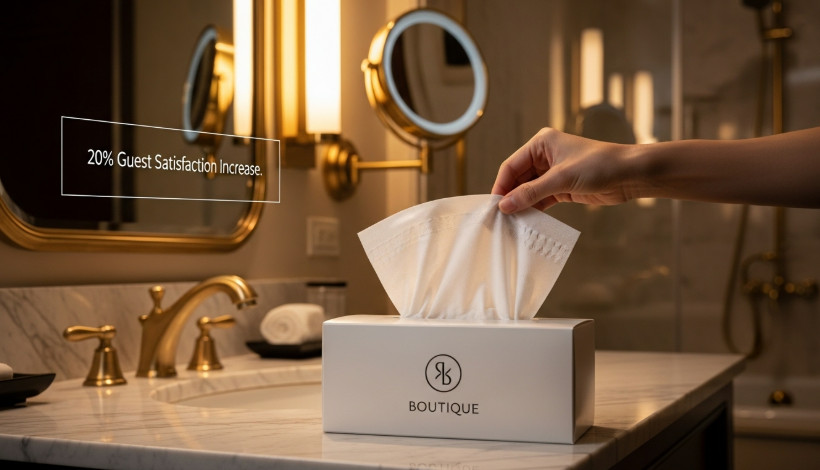
The Guest Experience Penalty of Cheap Eco-Paper
Substandard recycled paper products create a negative feedback loop where poor tactile quality and high shedding rates undermine brand prestige and increase facility maintenance overhead.
Perception of Value and Brand Image Damage
Poor paper quality directly correlates with how guests perceive the service standards of a facility. Inconsistent textures and rough surfaces in cheap eco-paper often signal a lack of attention to detail in premium settings like luxury hotels or high-end corporate offices. When a guest encounters coarse tissue, the perceived value of the entire establishment drops.
Top Source Hygiene data shows that upgrading to custom-branded, high-quality tissue can increase guest satisfaction scores by 20%. Visible lint and shedding from low-grade recycled fibers create a perception of an unclean or dusty environment, even if the restroom has just been sanitized. This “dusty” effect is particularly detrimental in hospitality, where cleanliness is the primary metric for guest loyalty.
Functional Failures: Absorbency and Durability
The mechanical limitations of short-fiber recycled paper lead to practical issues for the end user. Low-ply eco-paper often lacks the structural integrity to remain intact when wet, causing frustration during use. When fibers are shortened through multiple recycling cycles, the resulting paper becomes brittle and prone to tearing.
Lower GSM (grams per square meter) in budget products results in poor absorbency. This forces guests to use more product to achieve the same result, negating any perceived environmental or cost savings. Frequent tearing in commercial dispensers further compounds the issue, leading to waste and perceived product failure at the point of use.
The Hidden Costs of Low-Quality Maintenance
Choosing cheaper paper products often results in higher operational overhead despite a lower initial price point. Increased linting from cheap recycled paper requires more frequent cleaning of surfaces and restroom fixtures. Maintenance teams spend more time dusting mirrors, counters, and floors due to the microscopic debris shed by low-integrity fibers.
- Higher consumption rates due to poor absorbency lead to more frequent refill cycles for maintenance staff.
- Optimized solutions, like those provided by Top Source Hygiene, can reduce maintenance costs by up to 15% through high-capacity and durable roll designs.
- Using 100% Virgin Wood Pulp, such as in model TSH-2059, ensures a lint-free experience that protects the aesthetic of high-traffic restrooms.
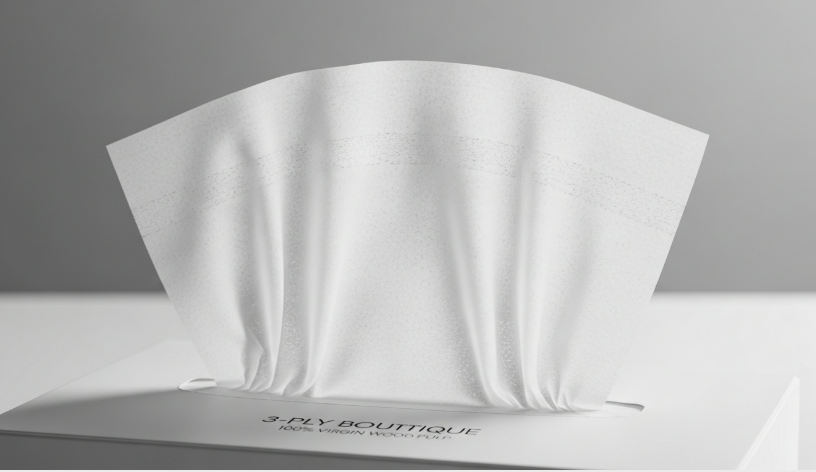
The Ultimate Compromise: FSC-Certified Virgin Pulp
FSC-certified virgin pulp provides the necessary bridge between high-performance hygiene standards and ethical forestry, ensuring product integrity without the technical degradation found in recycled fibers.
Virgin pulp remains the primary choice for brands that cannot compromise on strength, brightness, or texture. While 100% recycled fibers often struggle with consistency, virgin wood pulp utilizes long-fiber structures to deliver a soft, “cloth-like” feel. Top Source Hygiene utilizes this material to satisfy the 2026 premium hospitality and retail markets, where users expect a lint-free experience and high tensile strength.
FSC (Forest Stewardship Council) certification changes the narrative around virgin pulp by guaranteeing that the wood fibers originate from responsibly managed forests. This system tracks the material from the forest to the final project through a strict chain-of-custody process. It ensures that harvesting practices protect water quality, biodiversity, and the rights of local communities, making it a strategic middle ground for environmentally conscious distributors.
| Performance Metric | Standard Recycled Pulp | TSH FSC-Virgin Pulp |
|---|---|---|
| Fiber Integrity | Short, brittle fibers (High shedding) | Long, flexible fibers (Lint-free) |
| Wet Strength | Low (Disintegrates when wet) | High (Washcloth-like durability) |
| Chemical Safety | Requires de-inking/bleaching agents | 100% OBA-Free (Safe for skin) |
Technical Advantages Over Recycled Alternatives
Virgin fibers maintain structural integrity far better than recycled alternatives because they have not undergone the mechanical degradation inherent in re-pulping cycles. Every time paper is recycled, the cellulose fibers shorten, leading to weaker hydrogen bonds and increased linting. By using long-fiber virgin pulp, we minimize shedding and dust, which is a critical requirement for facial tissues used in medical or cosmetic settings.
The inherent absorbency of virgin pulp allows us to engineer thinner, more efficient sheets without losing performance. This high-density construction means a 3-ply or 4-ply virgin tissue often outperforms a bulkier recycled version, potentially reducing the total volume of material consumed. Furthermore, our FSC-certified products skip the harsh chemical de-inking processes necessary for processing low-grade post-consumer waste.
Meeting Global Compliance and Sustainability Goals
Corporate sustainability commitments drive the modern demand for transparent sourcing. Top Source Hygiene provides FSC-certified options specifically for European and North American clients who must navigate strict green consumer demands and ESG (Environmental, Social, and Governance) targets. These verified supply chains offer the data transparency that modern importers require for regulatory compliance.
Product safety remains a top priority, particularly for healthcare and infant care lines. Using 100% virgin wood pulp that is free from fluorescent whiteners (OBA-free) ensures hypoallergenic properties. Commercial clients can meet their sustainability goals and protect the guest experience by choosing responsibly sourced materials that do not sacrifice the soft texture or structural strength users demand.
Conclusion
Selecting the right facial tissue involves balancing environmental goals with the practical needs of the user experience. While recycled fibers offer an eco-friendly narrative, 100% virgin wood pulp provides the lint-free strength and softness required for premium hospitality and retail standards. Maintaining this quality ensures guests receive a reliable, OBA-free product that reflects your brand’s commitment to hygiene.
Review our catalog of 4-ply and 5-ply virgin pulp tissues to find the right configuration for your bulk procurement needs. Contact our team to request samples or discuss private label options for your next container shipment.
Frequently Asked Questions
Recycled vs virgin pulp facial tissue?
Virgin pulp facial tissues are made from newly harvested wood fibers, resulting in longer, stronger fibers that provide superior softness and absorbency. Recycled pulp tissues are manufactured from post-consumer or post-industrial waste. While recycled options significantly reduce environmental impact by saving trees and water, they typically have shorter fibers, which can result in a slightly less plush feel compared to premium virgin products.
Why are recycled tissues rough?
The perceived roughness of recycled tissues is due to the mechanical and chemical processing required to break down used paper. Each time paper is recycled, the cellulose fibers become shorter and stiffer. Unlike the long, flexible fibers found in virgin wood pulp that create a “silky” texture, these shorter recycled fibers create a denser, less compressible paper surface that feels less soft against sensitive skin.
Is FSC certified paper eco friendly?
Yes, FSC (Forest Stewardship Council) certification is a gold standard for eco-friendly paper. It ensures that the wood used in production is harvested from responsibly managed forests that provide environmental, social, and economic benefits. Choosing FSC-certified products prevents deforestation, protects animal habitats, and ensures fair labor practices, making it a sustainable choice for virgin fiber products.
Sustainable facial tissue wholesale?
Wholesale buyers seeking sustainable facial tissues should prioritize products labeled as 100% Post-Consumer Recycled (PCR) or those made from rapidly renewable alternatives like bamboo. To ensure high sustainability standards at scale, look for suppliers with third-party certifications such as Green Seal, UL EcoLogo, or FSC. Bulk purchasing these items reduces the carbon footprint associated with shipping and packaging.
Does recycled toilet paper shed dust?
Recycled toilet paper can sometimes produce more “paper dust” or lint than virgin fiber options. This occurs because the shorter, recycled fibers are more prone to breaking away from the paper web during use. However, modern manufacturing techniques and embossing patterns have significantly improved the structural integrity of recycled tissue, making high-quality recycled brands nearly indistinguishable from virgin brands in terms of linting.