Skip to content

High-volume custom box printing serves as the primary touchpoint for hotel guests, yet many brands risk significant capital losses when technical production errors lead to off-spec color matching or structural failure. Inconsistent branding on high-visibility amenities like facial tissues often results in batch rejections and costly supply chain delays that erode profit margins.
This technical overview details the OEM manufacturing sequence, focusing on the mechanical differences between offset and flexographic applications on cardboard stock. We examine the calibration required for Pantone accuracy, the precision of die-cutting and gluing systems, and the final integration of dispensing films to ensure every unit meets industrial durability standards and private label specifications.
The Shift Toward Private Label Hotel Amenities
Hospitality leaders in 2026 are transitioning to private label amenities to capture brand loyalty and operational efficiencies that generic bulk supplies cannot match.
Brand Recognition through Daily Use Items
Hotels now view daily essentials like facial tissues and toilet paper as critical touchpoints rather than mere commodities. Custom-branded paper products reinforce the hotel identity throughout a guest’s stay, creating a cohesive brand experience. Data from partners like Coastal Elegance Hotels indicates that implementing private label paper amenities contributes to a 20% increase in guest satisfaction scores.
By utilizing customized boxed tissue like the TSH-2059 series, boutique and luxury chains demonstrate an attention to detail that generic bulk products lack. These premium 4-ply tissues, made from 100% virgin wood pulp, offer a “cloth-like” texture that aligns with the high-end expectations of modern travelers in the Middle East and North American markets.
Sustainability Standards for the 2026 Market
Environmental compliance has become a prerequisite for hospitality groups securing long-term contracts. Travelers in Europe and North America increasingly demand FSC-certified and eco-friendly paper options. Transitioning to sustainable private labels has driven a 30% increase in guest approval for hotel retail and amenity programs, proving that green initiatives carry significant commercial weight.
- 100% Virgin Wood Pulp ensures a lint-free experience and high tensile strength.
- OBA-Free (Optical Brightening Agent) materials guarantee safety for sensitive skin and infant care.
- Natural bamboo pulp options provide unbleached, sustainable alternatives for eco-conscious brands.
Operational Benefits of High-Capacity Solutions
The private label shift includes technical specifications designed to improve facility management. High-capacity solutions, such as the TSH-6705-2 hanging packs with up to 1600 sheets, reduce the frequency of staff refills and maintenance cycles. This efficiency is particularly valuable in high-traffic commercial areas where labor costs represent a significant portion of the operational budget.
Facilities managers report up to a 15% reduction in overall maintenance costs by switching to high-capacity, durable private label rolls. By customizing the GSM (grams per square meter) and ply, hotels can match the paper quality to their specific luxury tier while strictly controlling material waste and cost-per-sheet.
Supply Chain Stability via Direct OEM Partnerships
Hotels are bypassing traditional distributors to work directly with source factories like Top Source Hygiene. This direct model eliminates middleman markups and offers flexible payment terms, such as the 30% deposit and 70% balance before shipment standard. Working with a Hebei-based manufacturer provides a direct price advantage and ensures that production stays on schedule.
Standardized production lead times of 20-25 days for a 40HQ container ensure that high-occupancy seasons do not lead to inventory shortages. Established global shipping routes allow for consistent delivery across Southeast Asia, North America, and Europe within 7 to 20 days. This logistical transparency, backed by pre-shipment visual verification, protects the importer’s cash flow and inventory health.
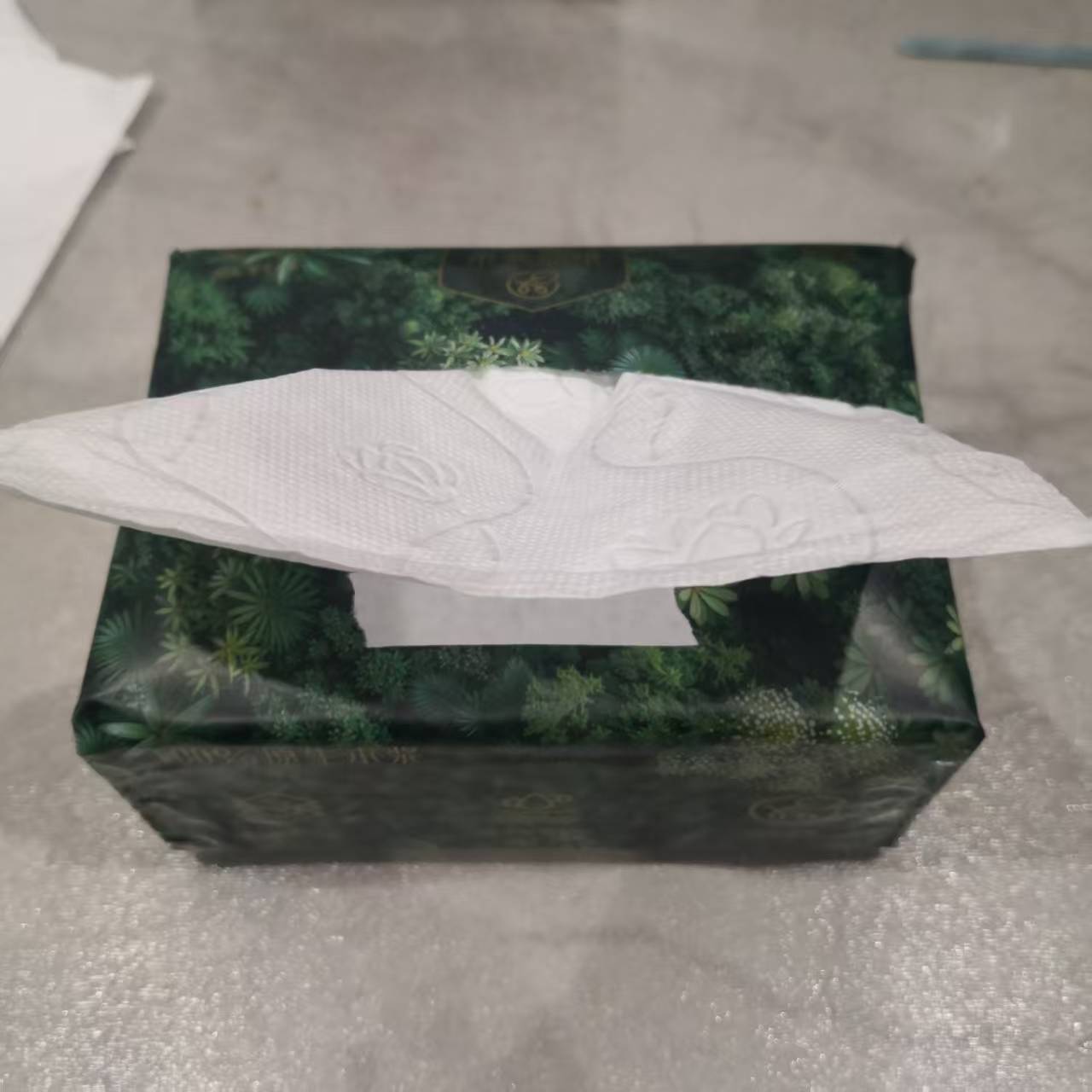
Offset vs Flexographic Printing on Cardboard Cartons
Deciding between offset and flexographic printing determines the visual fidelity and unit cost of tissue packaging, directly impacting brand positioning in premium hospitality and high-volume retail markets.
Image Resolution and Graphic Precision
Offset technology provides the high level of detail required for premium facial tissue boxes. By transferring ink via a rubber blanket from aluminum plates, we achieve photographic-quality results on smooth paperboard. This precision allows for complex gradients and fine text that stay sharp on 5-ply tissue retail packaging. Brands choosing Top Source Hygiene for high-end hospitality facial tissues rely on offset printing to maintain intricate logo details and vibrant brand colors.
High-Volume Production and Cost Efficiency
Flexographic printing offers significant speed advantages for large-scale orders of corrugated shipping containers and bulk tissue cartons. Flexo utilizes flexible relief plates and fast-drying inks, which supports our monthly output of 2,860 tons. Lower setup costs per unit make flexography the standard for large-volume jumbo roll cartons and shipping boxes. Modern flexo presses handle varied thicknesses of cardboard without sacrificing the durability of the printed branding.
| Printing Parameter | Offset Printing | Flexographic Printing |
|---|---|---|
| Primary Application | Retail & Luxury Boxed Tissue | Bulk Cartons & Shipping Boxes |
| Image Resolution | Superior (Photographic) | High (Standard Graphics) |
| Lead Time Alignment | 20-25 Day Production Window | Rapid Bulk Setup |
Substrate Versatility and Ink Durability
The choice between printing methods often depends on the texture of the cardboard and the environment the package will face. Flexography excels on the porous surfaces of corrugated cardboard used for global shipping to North America and Europe. Offset printing requires a smoother surface, typically found on the high-GSM paperboard used for branded kitchen towel wraps or premium tissue dispensers. Water-based inks used in 2026 flexo processes align with FSC-certified sustainability requirements and environmental regulations, ensuring safety for all consumer segments.
Turnaround Times and Customization Flexibility
Meeting the 15-25 day production lead time requires choosing a printing method that balances setup speed with order volume. Flexographic plates are produced quickly, allowing for faster start times on urgent bulk orders for public facilities. Offset printing requires more intensive preparation, so we utilize it for long-term private label projects where visual impact is the priority. Automated color matching systems ensure both methods maintain brand consistency across different packaging formats, from small pop-up packs to large hanging facial tissues.
Build Your Premium Toilet Paper Brand
Color Matching: CMYK and Pantone Consistency
Precise color reproduction in facial tissue packaging relies on a hybrid approach that balances the efficiency of CMYK with the surgical accuracy of Pantone spot colors to maintain brand integrity across high-volume 40HQ production runs.
Production workflows for premium tissue products require a strategic choice between process and spot color systems. We use CMYK four-color process printing to handle complex graphics and photographic elements on facial tissue boxes, ensuring vibrant visual depth. However, for corporate logos and solid brand colors that define a private label’s identity, Pantone Matching System (PMS) spot colors provide the exact ink formulations needed. Engineers calibrate press settings to minimize delta-E variance, ensuring the physical box matches the digital design within strict industrial tolerances.
| Feature | CMYK Process Printing | Pantone Spot Colors (PMS) |
|---|---|---|
| Primary Use Case | Multi-color graphics & photography | Strict brand logos & solid backgrounds |
| Color Consistency | Variable across different presses | High; pre-mixed ink formulations |
| Substrate Impact | Sensitive to paper brightness/yellowing | More opaque; better coverage on darker pulp |
Substrate Variations and Ink Absorption
The physical properties of paper fibers significantly influence how ink reflects and settles. Virgin wood pulp and recycled fibers absorb ink differently, which directly alters final saturation and hue. We utilize coated cardboard for our boxed facial tissues because it holds ink on the surface, resulting in sharper detail and higher gloss compared to uncoated stocks.
- Testing phases account for the base paper brightness to prevent underlying tones from shifting the color.
- Adjusting ink viscosity ensures consistent results across different raw material batches.
- Coated surfaces prevent the “bleeding” effect common in low-grade cardboard manufacturing.
Color Measurement Tools for Batch-to-Batch Consistency
Maintaining identical branding across millions of units requires objective measurement. Production teams use spectrophotometers to measure light reflection, verifying that every production run stays within tight tolerance limits. Digital color libraries allow our quality control teams to compare current output against approved master samples stored in the cloud instantly.
To eliminate manual errors during the setup of large 40’HQ container orders, we employ automated ink dispensing systems. These systems mix pigments with high precision, ensuring that a box produced in January matches a box produced in June. Strict quality control logs document color readings at the start, middle, and end of every printing session to guarantee total transparency for our wholesale partners.
Prototyping and Digital Proof Approval
A structured approval process prevents costly errors in large-scale OEM and ODM projects. Before full-scale manufacturing begins, clients receive physical color drawdowns on the actual paper stock. This allows brand owners to see exactly how the ink performs on the cardboard under various lighting conditions.
- High-resolution digital proofs verify layout and text before final plates are created.
- Our 10-day custom sample period allows for iterative adjustments to color density.
- Final physical samples serve as the legal quality standard for all subsequent shipments.
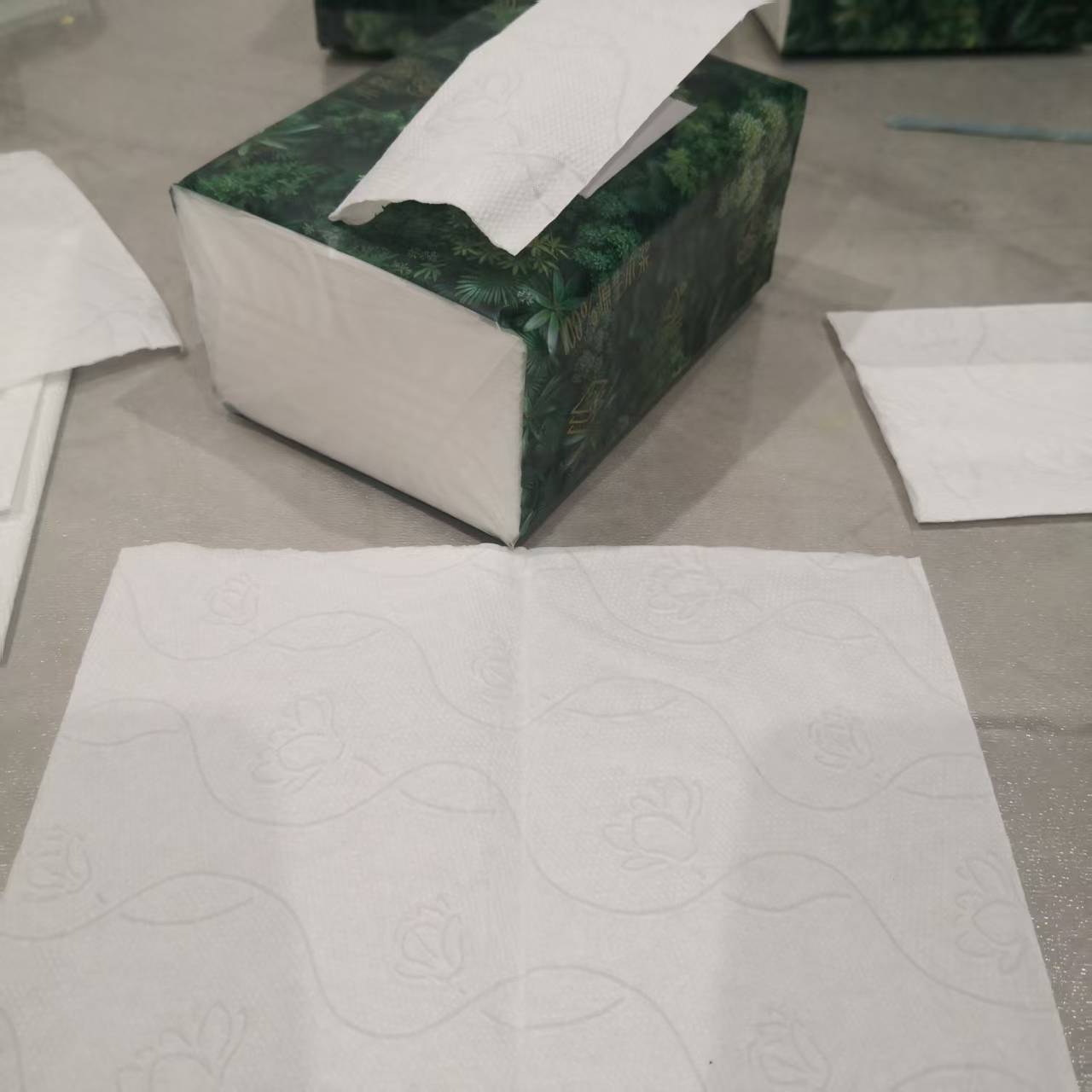
Die-Cutting and Gluing the Custom Tissue Box
Precision conversion through automated die-cutting and high-tack adhesive bonding ensures that custom-printed cartons maintain their structural geometry during high-speed loading and long-haul maritime transport.
Precision Die-Cutting for Consistent Box Dimensions
Modern manufacturing in 2026 relies on automated die-cutting to translate flat printed paperboard into ready-to-assemble tissue box structures. Factories utilize steel-rule dies to stamp out the specific geometry of the tissue box, including the perforated top opening. This stage determines the final physical quality of the product, as clean edges prevent paper snags during the interfolding pull process.
Top Source Hygiene maintains strict tolerances to ensure every box matches the client’s custom size specifications without edge fraying. Automated waste stripping removes excess cardboard immediately after the cut to maintain a clean production environment. This prevents dust and scrap contamination from entering the internal cavity where 100% virgin wood pulp tissues are eventually housed.
High-Speed Folding and Adhesive Application
The transition from a flat blank to a functional container occurs during the folding and gluing phase, where speed meets structural accuracy. High-speed folder-gluer machines process thousands of units per hour, applying precise lines of adhesive to side seams and bottom flaps. We utilize food-safe, high-tack glues that withstand temperature fluctuations during international shipping, particularly for GCC and African markets where high humidity and heat can compromise standard adhesives.
| Conversion Metric | Legacy Methods | Top Source Hygiene Standard |
|---|---|---|
| Die-Cutting Tolerance | ±1.5mm | ±0.5mm (High-Precision Steel Rule) |
| Adhesive Performance | Standard Water-Based | Food-Safe High-Tack (Climatic Resistant) |
| Waste Management | Manual Stripping | Automated Inline Vacuum Stripping |
Sensors monitor the glue volume on each unit to prevent leaks or unbonded surfaces that could compromise the box’s integrity. For premium models like the TSH-2059 luxury hospitality boxed tissue, the adhesive must bond perfectly with UV-coated or glossy finishes, requiring specific tack profiles that prevent peeling over time.
Structural Testing for Commercial Durability
Finished boxes undergo stress tests to ensure the adhesive bonds remain secure under the weight of high-ply tissues. Quality control teams perform compression tests to verify that the glued seams do not burst during palletized stacking in 40HQ containers. We match the selection of adhesive specifically to the paperboard finish, ensuring a permanent bond on both matte and gloss-coated surfaces.
- Edge-to-edge bonding ensures corner strength for 5-ply export carton consolidation.
- Final inspections verify that the dispensing slot aligns perfectly with internal interfolded tissues for snag-free operation.
- Load-bearing assessments confirm that boxes remain uncrushed when stacked 6 to 12 units deep in master poly bundles.
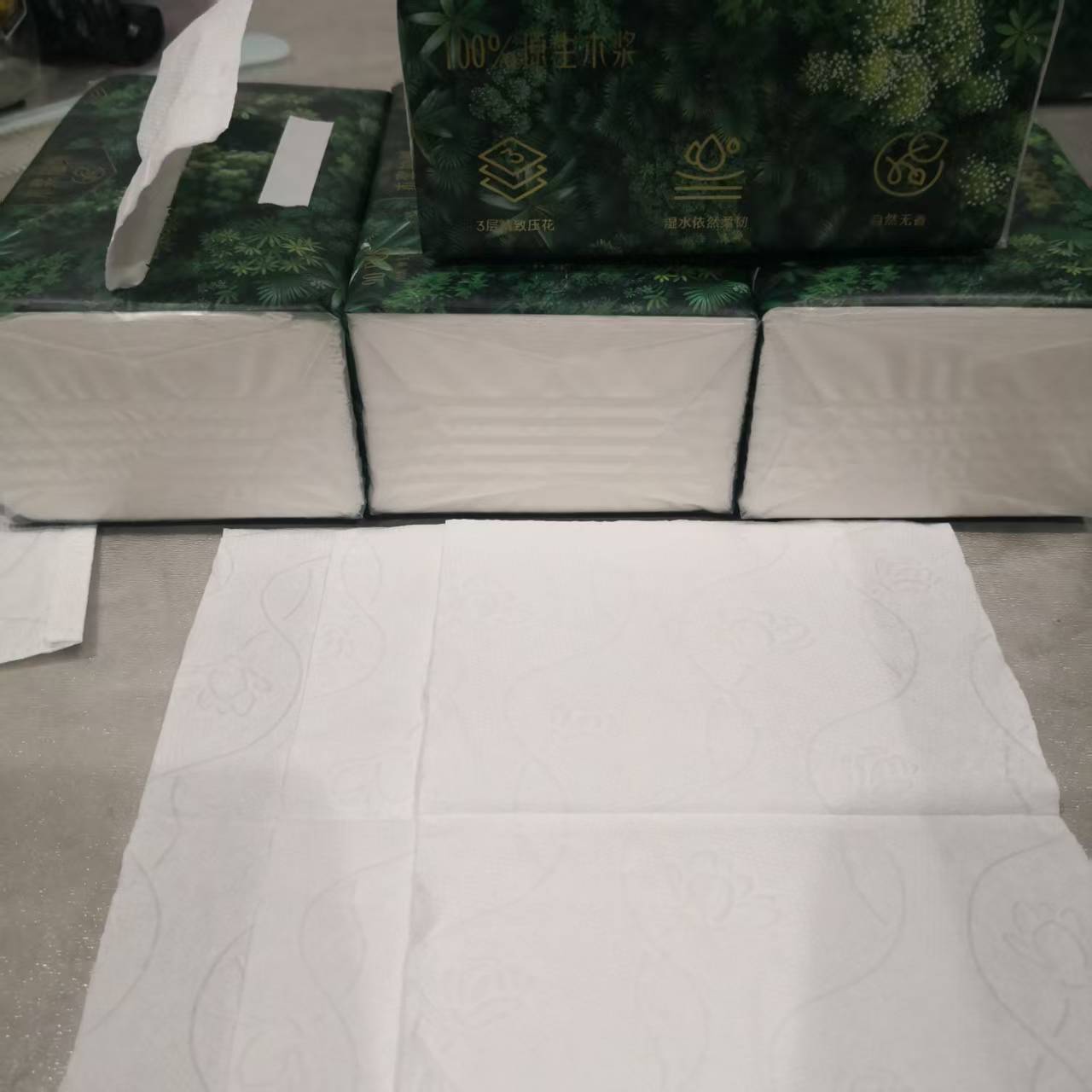
Integrating the Plastic or Paper Dispensing Film
Dispensing film integration determines the final user experience by balancing tissue extraction tension with sustainable material compliance to meet 2026 global packaging mandates.
Material Selection for Dispensing Windows
Material choice for the dispensing window directly impacts both shelf appeal and environmental certification. High-clarity, thin-gauge polyethylene (PE) remains the standard for retail facial tissue boxes due to its superior visibility and cost-efficiency. Top Source Hygiene evaluates these substrates to ensure they provide the necessary flexibility for smooth tissue pulls without compromising the structural integrity of the carton opening.
- Utilization of thin-gauge polyethylene (PE) for high-clarity windows in retail facial tissue boxes.
- Transitioning to glassine or FSC-certified paper films to meet European plastic-free packaging regulations.
- Selecting anti-static materials to prevent tissue sticking during high-speed extraction.
Automated Film Patching and In-Line Integration
High-speed manufacturing facilities utilize specialized patching machines to secure the dispensing film to the interior of the cardboard blank. This process occurs before the final folding and gluing phase, requiring precise synchronization to maintain production speeds. We use food-grade adhesives to ensure the film remains bonded to the 100% virgin wood pulp carton, even when subjected to the humidity fluctuations common in international shipping.
- Applying food-grade adhesives to ensure the film remains secure under varied temperature and humidity conditions.
- Precision die-cutting of the film slit to ensure consistent pull-force for every tissue.
- Integrating the film patching process directly into the folding and gluing line to maintain a production capacity of 2,860 tons per month.
Quality Testing for Extraction Reliability
Technical teams perform rigorous pull-tests to verify that the dispensing film provides enough tension to hold the next tissue in a “ready-to-pull” position without tearing the delicate fibers. This mechanical balance is vital for premium hotel and household products. We also examine the smoothness of the slit edges to prevent lint buildup, which is essential for maintaining the lint-free promise of our high-quality wood pulp tissues.
- Testing the bond strength between the film and the cardboard to prevent detachment during consumer use.
- Evaluating the smoothness of the slit edges to avoid lint buildup or product snagging.
- Verifying compliance with North American and Oceania hygiene standards for material safety.
Conclusion
High-quality printing and precise die-cutting ensure your brand stands out while maintaining the structural integrity of the facial tissue box. Managing color consistency through Pantone matching and choosing the right printing method protects your visual identity across global markets. These manufacturing standards help deliver a premium product that meets both aesthetic and functional retail requirements.
Review your current packaging specifications to see how customized printing can enhance your product line. Contact our team to request a technical catalog or discuss a prototype for your next private label project.
Frequently Asked Questions
How to customize facial tissue boxes?
Customizing facial tissue boxes begins with selecting the box dimensions—standard rectangular or boutique cube. You can then specify the paperboard thickness (typically 300gsm to 400gsm) and choose between finishes such as matte lamination, high-gloss UV, or soft-touch coatings. Branding is integrated through custom die-cuts for the dispensing window and high-fidelity graphics that reflect your brand identity.
Printing process for tissue packaging?
The most common printing process for tissue packaging is high-speed offset lithography, which provides the highest resolution and color consistency for large production runs. For smaller batches or promotional items, digital printing is used. Advanced techniques like foil stamping and aqueous coating are often added to enhance the premium feel of the packaging while protecting the ink from moisture and friction.
Private label tissue box manufacturing?
Private label manufacturing offers a turnkey solution where the manufacturer handles the sourcing of tissue paper (choosing between 2-ply or 3-ply virgin pulp or recycled fibers) and the assembly of the boxes. This process allows brands to market a professional, fully branded product without maintaining their own production facilities, with options to customize everything from the sheet count to the perforation style.
Pantone color matching for tissue boxes?
To ensure brand consistency across different production batches, the Pantone Matching System (PMS) is utilized. This is superior to standard CMYK printing as it uses specific ink formulas to achieve an exact color match. This is particularly crucial for corporate and luxury hospitality brands where logo colors must be identical across all guest room amenities.
OEM facial tissue packaging options?
OEM options are diverse and include standard cardboard dispensers, eco-friendly kraft paper boxes, and travel-sized soft packs. Additional features include plastic-free tissue dispensers to meet sustainability goals, “pop-up” folding mechanisms for easy extraction, and specialized box designs for car cup holders or wall-mounted brackets in commercial settings.