Skip to content

Strategic pulp sourcing determines whether a facial tissue production line yields a premium product or a batch of brittle, abrasive sheets that drive up consumer return rates and damage brand reputation. Manufacturers face constant pressure to balance the high costs of raw materials with the physical performance requirements needed to compete in a saturated market. Choosing an incorrect fiber profile can lead to excessive dust on the line, increased machine downtime, and a finished product that fails to meet basic tensile strength standards.
This guide breaks down the structural differences between hardwood and softwood cellulose fibers and explains how their physical properties influence final tissue quality. We analyze why specific blending ratios, particularly the 70/30 industry standard, allow producers to optimize softness without sacrificing durability. From the mechanics of long and short fibers to the specific sourcing advantages of eucalyptus, these technical specifications serve as an operational roadmap for optimizing tissue manufacturing workflows.
The Anatomy of Cellulose Wood Fibers
The structural integrity and tactile performance of premium facial tissue rely entirely on the molecular orientation and chemical purity of the virgin cellulose fibers we select.
Chemical Components: Cellulose, Hemicellulose, and Lignin
The performance of Top Source Hygiene products in 2026 hinges on the precise chemical composition of our virgin wood pulp. Cellulose serves as the primary structural polymer, providing the long-chain molecules that give paper its fundamental strength. Without high-purity cellulose, tissue fails to maintain the “Aslike Cloth Tough” durability required for dry and wet applications. Hemicellulose complements this by acting as a natural biological binder, facilitating the initial cohesion between fibers during the critical stages of the papermaking process.
- Cellulose acts as the primary structural polymer, providing the long-chain molecules that give paper its fundamental strength.
- Hemicellulose serves as a natural biological binder, facilitating the initial cohesion between fibers during the papermaking process.
- Lignin removal remains a priority in 2026 manufacturing to prevent yellowing and maintain the high brightness levels required for premium facial tissues.
Structural Layers of the Fiber Cell Wall
We analyze the microscopic layers of wood fibers to determine which pulps offer superior softness or durability. The fiber cell wall is not a single layer but a complex architecture consisting of a primary wall and a multi-layered secondary wall. The primary wall forms the outer envelope, while the secondary wall contains the bulk of the cellulose material. Top Source Hygiene selects fibers with optimized wall thickness to balance the need for high absorbency with the requirement for physical tear resistance.
- The primary wall forms the outer envelope of the fiber, while the secondary wall contains the bulk of the cellulose material.
- Microfibrils within these layers align in specific patterns that determine how much the fiber can stretch before breaking.
- Top Source Hygiene selects fibers with optimized wall thickness to balance the need for absorbency with the requirement for physical tear resistance.
Hydrogen Bonding and Inter-Fiber Cohesion
The strength of a paper towel or toilet roll comes from molecular attractions between individual fibers rather than just physical entanglement. Hydroxyl groups on the surface of cellulose fibers form hydrogen bonds as the paper web dries during production. The density of these bonds dictates whether a tissue feels stiff or remains pliable and soft against the skin. We use advanced refining techniques to increase the surface area of fibers, allowing for more bonding points without the need for added chemical adhesives.
- Hydroxyl groups on the surface of cellulose fibers form hydrogen bonds as the paper web dries during production.
- The density of these bonds dictates whether a tissue feels stiff or remains pliable and soft against the skin.
- Advanced refining techniques in 2026 increase the surface area of fibers, allowing for more bonding points without adding chemical adhesives.
Softwood Pulp: The Secret to Tensile Strength
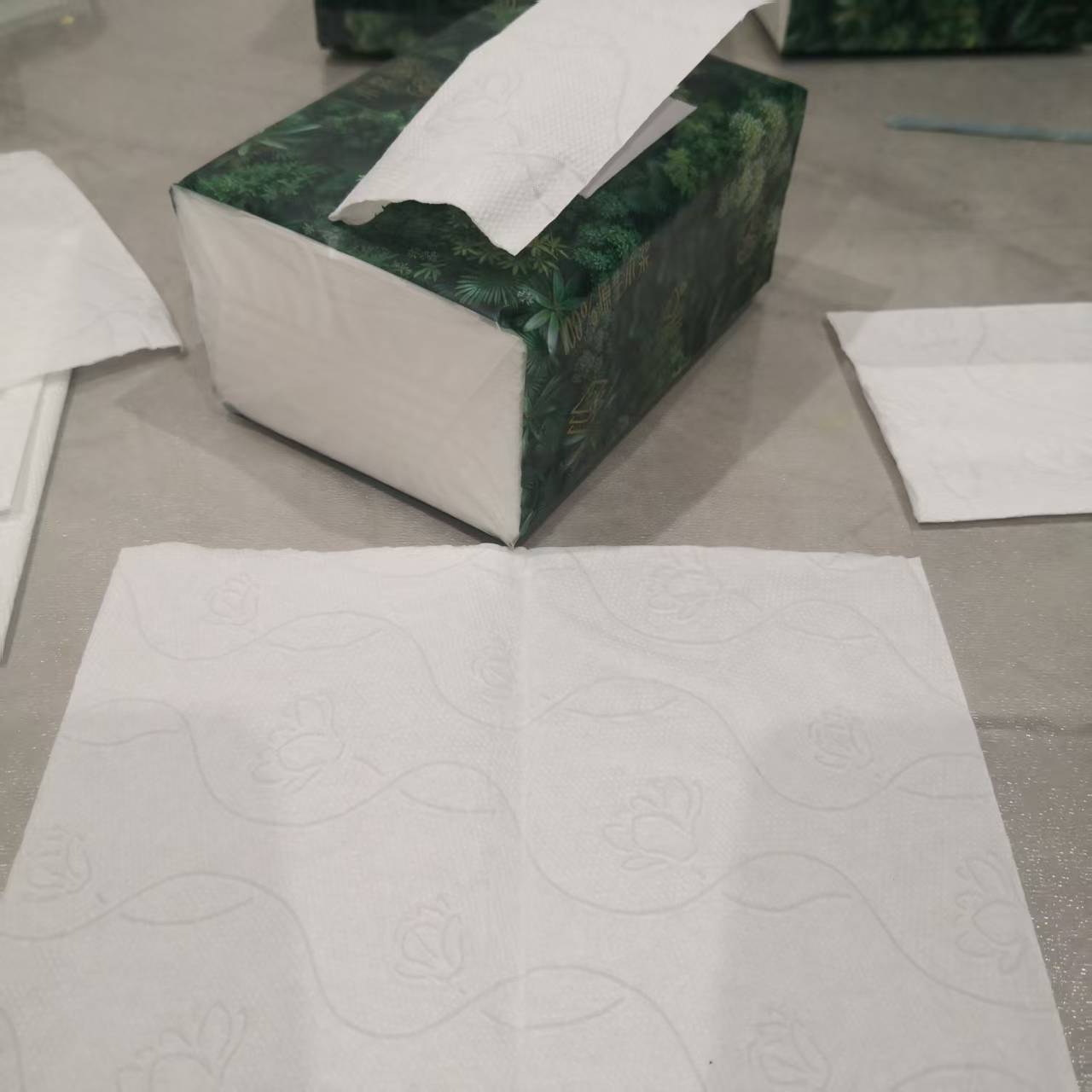
Softwood pulp serves as the high-tensile structural framework in professional-grade tissue, utilizing long-fiber morphology to ensure product integrity under both dry and saturated conditions.
Softwood pulp, derived from coniferous trees like pine and spruce, consists of longer fibers that act as the structural “skeleton” of paper products. These long fibers create a robust interlocking network that prevents the paper from tearing easily under tension. Top Source Hygiene utilizes this fiber length to maintain the physical stability of 2,860 tons of monthly production, ensuring every batch meets the rigors of global logistics and end-user demand.
| Fiber Characteristic | Softwood (Coniferous) | Hardwood (Deciduous) |
|---|---|---|
| Average Fiber Length | 2.5 mm – 3.5 mm | 0.65 mm – 1.2 mm |
| Primary Function | Tensile & Tear Strength | Softness & Opacity |
| Application Context | Reinforcement Skeleton | Surface Finishing |
Industrial Durability in High-Traffic Tissue Products
Tensile strength is a critical performance metric for commercial paper goods designed for airports, malls, and public facilities. Jumbo roll tissues require high softwood content to withstand the mechanical stress of industrial dispensers. At Top Source Hygiene, we prioritize increased tensile resistance to ensure that kitchen towels and hand towels remain intact even when fully saturated with liquid. Meeting the 2026 global hygiene standards requires a precise softwood balance to reduce waste caused by premature product failure.
- Higher aspect ratios in softwood fibers provide necessary reinforcement for high-ply products like our 4-ply and 5-ply lines.
- Enhanced wet-strength technology relies on the fiber-to-fiber bonding characteristic of virgin softwood.
- Robust interlocking networks minimize lint and dust during the conversion process.
Optimizing Machine Runnability and Production Speed
The tensile strength provided by softwood pulp is essential for maintaining efficient manufacturing speeds in modern factories. High softwood content reduces the frequency of paper breaks on the production line, which allows us to guarantee a consistent 20-25 day lead time for 40’HQ containers. Strengthened paper webs also enable faster embossing and perforation processes without compromising the integrity of the finished roll. Reliable fiber strength supports the automated high-speed packaging systems used in our Hebei manufacturing facilities, ensuring that every TSH-series product reaches the distributor in pristine condition.
Build Your Premium Tissue Brand Today
Hardwood Pulp: Delivering Ultimate Surface Softness
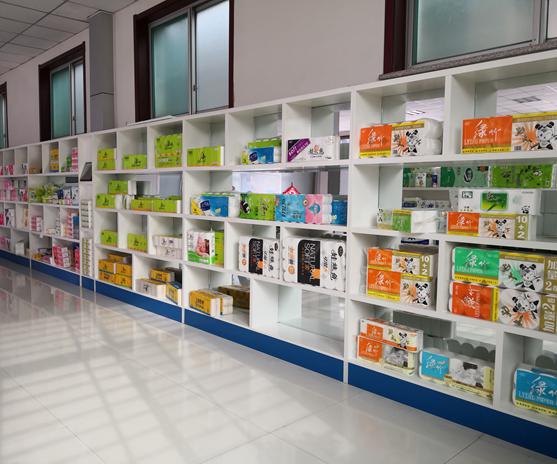
Hardwood pulp provides the essential short-fiber density required to achieve a lint-free, velvet-textured finish across premium 4-ply and 5-ply facial tissue lines.
Short Fiber Morphology and Texture Profile
Hardwood pulp consists of shorter, thinner fibers that fill the gaps between larger softwood strands, creating a level and consistent surface. The physical structure of these fibers—typically measuring between 0.65mm and 1.0mm—allows for a denser fiber count per gram. This density results in a velvet-like texture that minimizes skin irritation, making it the primary choice for facial tissue and premium toilet paper.
| Fiber Property | Hardwood (Eucalyptus) | Softwood (Pine/Spruce) |
|---|---|---|
| Average Length | 0.65 mm – 1.0 mm | 2.5 mm – 4.0 mm |
| Primary Function | Surface Softness & Opacity | Tensile & Tear Strength |
| Tactile Feel | Smooth, Silk-like finish | Strong, Coarser bond |
Production standards in 2026 utilize these short fibers to achieve a lint-free finish. This ensures that no paper scraps or dust remain on the skin after use, a critical requirement for cosmetic applications. By maintaining a narrow fiber length distribution, we produce paper with uniform formation and high opacity, ensuring consistent quality across high-volume production runs.
Strategic Outer-Layer Application
We optimize the placement of hardwood pulp within multi-ply structures to maximize the tactile experience. In 3-ply and 4-ply tissue products, we position 100% hardwood pulp on the outer layers to ensure only the softest material contacts the skin. This layering technique allows Top Source Hygiene to meet high softness ratings required by hospitality and retail brands without sacrificing the overall tensile strength of the sheet.
- The inner core utilizes softwood fibers to provide a structural framework for the tissue.
- Hardwood exteriors deliver the “Cloud-Like” luxury feel essential for premium markets like the Middle East and Europe.
- Ply-bonding technology secures these layers together, preventing separation during use.
Enhancing Embossing Clarity and Brand Aesthetics
The fine texture of hardwood fibers provides a superior canvas for custom branding and decorative patterns. Because hardwood fibers are shorter and more flexible, they respond better to embossing tools. This results in sharper, more defined patterns for private label clients who require distinct visual differentiation on their retail packaging.
A smoother surface also improves the adhesion of lotions or scents. Many 2026 consumer brands use these additives to differentiate their product lines, and the uniform fiber distribution of hardwood ensures that these treatments are absorbed evenly. Furthermore, the high opacity of hardwood pulp ensures that custom-printed logos appear professional and clear on facial tissues and napkins, maintaining brand integrity for boutique hotels and high-end distributors.

The Optimal 70/30 B2B Blending Ratio
Engineered for the 2026 commercial landscape, the 70/30 ratio of hardwood to softwood pulp serves as the technical benchmark for balancing tactile luxury with the structural resilience required for high-speed industrial conversion.
Balancing Short and Long Fiber Characteristics
Top Source Hygiene implements a precise 70/30 ratio to harmonize the physical properties of divergent pulp types. This formulation ensures that every jumbo roll leaving the facility meets strict commercial standards for both immediate comfort and long-term durability. By prioritizing hardwood as the majority component, we achieve a specific density that mimics high-end textiles.
- We utilize 70% hardwood fibers to provide the necessary surface softness and bulk required for premium facial tissues and multi-ply toilet paper.
- The remaining 30% consists of long softwood fibers that create a structural matrix, providing the tensile strength needed to prevent tearing during use.
- This specific blend allows our 2,860-ton monthly output to maintain consistent quality across various product tiers, from 2-ply to 5-ply options.
| Fiber Type / Ratio | Primary Functional Role | Impact on 2026 Standards |
|---|---|---|
| Hardwood (70%) | Tactile Softness & Opacity | Delivers the “cloud-like” feel required for mother and baby care products. |
| Softwood (30%) | Tensile Strength & Integrity | Ensures the “Dry & Wet Using” series performs like a washcloth without shredding. |
| Standard 70/30 Blend | Optimized Hybrid Matrix | Maximizes 40HQ container payload by maintaining sheet bulk without excess weight. |
Impact on High-Speed Manufacturing and Ply Integrity
The 70/30 blend optimizes the production process within our modern 2026 facilities in Hebei. High-speed conversion lines require a material that can withstand intense tension during the winding, embossing, and interfolding stages. This ratio provides the necessary “give” without compromising the integrity of the paper web, which is vital for maintaining high uptime in the factory.
- The ratio ensures the paper web survives high-speed winding and embossing processes in the Mancheng factories, reducing mechanical downtime.
- A 70/30 split supports better ply bonding, which is essential for the 4-ply and 5-ply products increasingly requested by luxury hospitality clients.
- This blending standard facilitates the production of jumbo rolls that remain stable under the high-tension dispensing environments of airports and malls.
B2B Procurement and 2026 Quality Standards
Standardizing the 70/30 ratio provides B2B clients with a reliable benchmark for product performance and cost-efficiency. In the competitive private label sector, consistency in the pulp blend means that the tissue’s GSM (grams per square meter) remains within profitable margins while still delivering the thickness and absorbency consumers expect.
- Standardized blending helps maintain the 15-25 day production lead time by streamlining raw material sourcing and preparation.
- Clients in North America and Europe utilize this ratio to meet 2026 hygiene compliance standards while keeping product weights within profitable margins.
- The use of 100% virgin wood pulp in this ratio eliminates the need for fluorescent whiteners, aligning with global sustainability and safety requirements.
Sourcing Premium Eucalyptus Hardwood
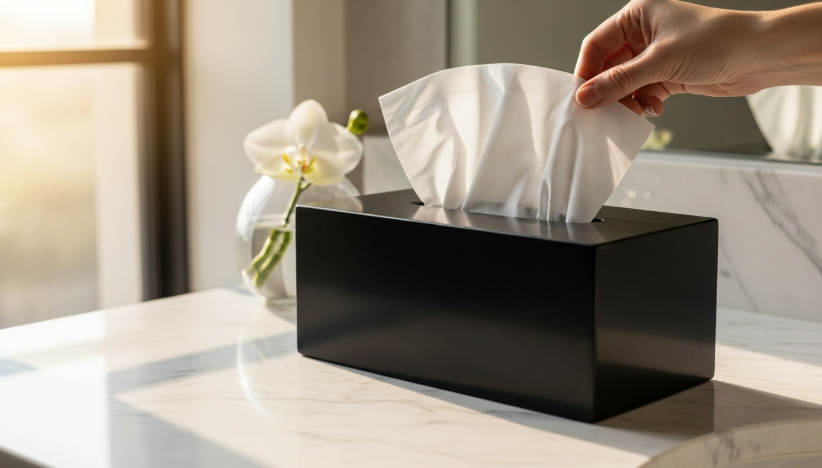
Top Source Hygiene utilizes high-density eucalyptus varieties to achieve the specific fiber bonding and surface smoothness required for high-ply luxury tissue products.
Selection of High-Density Short Fibers
We prioritize the selection of eucalyptus wood pulp because its specific fiber morphology creates the smooth surface texture found in our premium tissue lines. By focusing on species with shorter fiber lengths, we ensure a more uniform sheet formation that feels soft against the skin while maintaining the structural integrity necessary for multi-ply configurations.
- We select Eucalyptus globulus and grandis varieties for their high hemicellulose content, which improves fiber bonding and surface softness.
- Our 2026 procurement standards require virgin wood pulp that is free from recycled contaminants and fluorescent whitening agents (OBA-Free).
- Short hardwood fibers provide the bulk and opacity necessary for our 4-ply and 5-ply luxury toilet paper and facial tissue lines.
Sustainable Forestry and FSC Certification
Environmental stewardship remains a core operational pillar at Top Source Hygiene. We recognize that international distributors and hospitality groups require strict adherence to ecological benchmarks, so we ensure all hardwood sourcing meets recognized global standards for sustainability and transparency.
- We source raw materials from FSC-certified plantations to guarantee that eucalyptus harvesting supports local biodiversity and forest regrowth.
- Top Source Hygiene maintains a transparent supply chain to satisfy strict environmental regulations in North American and European markets.
- Our commitment to 100% virgin pulp ensures the final product is fully biodegradable and chemical-free, making it safe for sensitive skin.
Supply Chain Integration and Quality Control
Strategic partnerships with global pulp suppliers allow for consistent material quality and price stability for our OEM clients. By integrating our supply chain directly with pulp sources, we mitigate market volatility and ensure that our production lines always have access to the highest grade of eucalyptus hardwood.
- We analyze raw fiber batches at our Mancheng production base to ensure consistent GSM and absorbency levels across all manufacturing runs.
- Direct factory-to-source relationships eliminate intermediaries, allowing us to maintain competitive pricing for high-volume wholesale orders.
- Our logistics network ensures a steady supply of premium hardwood to support a monthly production capacity of 2,860 tons, securing timely delivery for global distributors.
Conclusion
Achieving the right balance between softwood tensile strength and hardwood surface softness ensures a facial tissue that performs under pressure while remaining gentle on the skin. This technical blending approach allows distributors to offer products that are both lint-free and structurally sound for wet or dry use. Maintaining these standards helps protect brand reputation and ensures compliance with international hygiene requirements.
You can explore our full range of 100% virgin pulp configurations by requesting a copy of our latest product manual. We also provide custom samples to help you verify the hand-feel and strength of our eucalyptus blends before placing a bulk order.
Frequently Asked Questions
Difference between hardwood and softwood pulp?
The primary difference lies in fiber morphology. Softwood pulp (from conifers like pine) contains long fibers (approx. 3mm) that provide structural integrity and tensile strength. Hardwood pulp (from deciduous trees like eucalyptus or birch) contains shorter fibers (approx. 1mm) that provide bulk, opacity, and superior smoothness.
Why is eucalyptus pulp used for tissue?
Eucalyptus is the industry standard for tissue production because its fibers are uniquely short, slender, and uniform. This morphology creates a high number of fibers per gram, resulting in a tissue sheet with exceptional bulk, high water absorption, and a characteristic “velvet” softness that is gentle on the skin.
Best wood pulp for facial tissues?
The best facial tissues utilize a strategic blend: typically 70-80% Eucalyptus (hardwood) pulp for maximum softness and 20-30% Northern Bleached Softwood Kraft (NBSK) for the necessary reinforcement. This combination ensures the tissue is soft enough for facial use while remaining strong enough not to tear during use.
Long fiber vs short fiber tissue paper?
Long fibers act as the “skeleton” of the tissue, providing the internal network that prevents the paper from breaking under tension. Short fibers act as the “filler,” filling the gaps in the long-fiber network to create a smooth surface, increase the thickness (bulk) of the sheet, and improve overall liquid absorbency.
How to make tissue paper softer?
Softness is achieved through three methods: Fiber Selection (increasing the ratio of hardwood like Eucalyptus), Mechanical Processing (using Through-Air Drying or micro-creping to break rigid fiber bonds), and Chemical Additives (applying softening agents or lotions like silicone or surfactants during the finishing process).