Skip to content
The jumbo roll vs standard cost Africa debate usually gets boiled down to one number: the per-roll price tag. But if you are presenting to a procurement board in Nairobi or Lagos, that single number will get you shot down. Your real KPI is cost per student per month, and that math includes labor, theft, logistics, and the god-awful humidity that turns cheap paper into a jammed dispenser nightmare.
Top Source Hygiene has been supplying paper to 56 countries for 30 years. For the Africa market, the strategy is not about the cheapest roll. It is about the highest utility per container. A 40’HQ container of standard rolls carries about 8 million sheets. The same container of jumbo rolls carries 20 million sheets. That is 2.5 times the paper for the same shipping cost, same customs clearance headache, same inland trucking fee. That is the kind of number a board understands.
Why Standard Rolls Fail in African Public Schools
Standard rolls fail in African schools because the operating model assumes a supply chain that doesn’t exist.
A standard 400-sheet roll in a school with 1,200 students lasts roughly 90 minutes under moderate use. By second break, the stall is empty. The janitor — if there is one — is already assigned to sweeping three buildings. So the roll sits empty until the next morning, or until a student stuffs the dispenser with a water bottle to extract the last sheet. That’s not a product failure. That’s a system failure.
- Refill frequency: Standard roll: 4–6 change events per day per stall. Jumbo (9-inch, 2,000 sheets): 1 event per day. For a 50-stall school, that’s 250–300 change events per week vs 50. At 6 minutes per change, standard rolls consume 25–30 man-hours per week. Jumbo rolls consume 5.
- Procurement cycle risk: Most African public schools order paper once per term — a 3-month cycle. A standard roll lasts 3 days. That means 30 orders per term just to keep one stall running. One missed delivery, one port delay, one customs hold, and the school runs out for weeks. Jumbo rolls stretch that same 3-month window to 1–2 deliveries per term, building in buffer.
- Theft as a budget line item: Standard rolls are pocket-sized. In high-traffic African transit hubs and schools, 10–15% of standard roll stock disappears — taken home, sold, or used as packing material. Jumbo rolls (12–14-inch core, 9-inch diameter) are physically hard to conceal. A locked jumbo dispenser drops theft to near 0%. That 10–15% loss is pure margin bleed.
- Maintenance as hidden killer: Each standard roll change costs USD 0.50 in labor (USD 5/hour, 6 minutes). For 50 stalls, that’s USD 25 per day. Over a 200-day school year, that’s USD 5,000 in labor just to change rolls. Jumbo rolls cut that to USD 1,700 — a USD 3,300 saving. That’s a janitor’s salary for 2 months.
The math is not subtle. Standard rolls are not cheaper — they just hide the cost in labor, theft, and stockout risk. For an African public school with limited staff, long supply lines, and high traffic, the standard roll is the most expensive option you can choose.
Real Cost Breakdown: Jumbo vs Standard in 2026
Jumbo rolls cut per-sheet cost by 17% and slash labor cost by 50% across high-traffic allocations.
Let’s start with the raw paper cost, because that’s what your procurement board will ask about first. A standard 400-sheet roll at USD 0.75 gives you a cost per 1,000 sheets of USD 1.87. A 9-inch jumbo roll with 2,000 sheets at USD 3.10 drops that to USD 1.55 per 1,000 sheets. That’s a 17% saving on the paper itself — before you even factor in labor or theft.
Now apply that to a real school. A campus with 20 stalls using standard rolls will go through about 40 refills per day. At USD 5/hour janitor wage and 6 minutes per refill, that’s USD 0.50 per event — USD 20.00 per day just to change rolls. Switch to jumbo rolls: each roll lasts 3-4x longer, so refills drop to about 10 per day. At 2 minutes per refill, that’s USD 0.17 per event — USD 1.70 per day. That’s USD 18.30 per day saved. Over a 200-day school year, that’s USD 3,660.
Now the crucial parameter your board will ask about: the dispenser. A quality jumbo dispenser costs USD 50-150 per unit. For a 20-stall facility, that’s USD 1,000-3,000 upfront. But that dispenser’s locking mechanism is what kills theft. Without it, you lose 10-15% of your stock every month. The dispenser pays for itself in 6-12 months just from theft reduction alone. After that, it’s pure saving.
| Cost Factor Sourcing Metric | Jumbo Roll (9-inch, 2,000 sheets) | Standard Roll (4.5-inch, 400 sheets) | Savings with Jumbo Line |
|---|---|---|---|
| Unit Price (Per Roll) | USD 3.10 | USD 0.75 | Fewer roll change events |
| Cost per 1,000 sheets | USD 1.55 | USD 1.87 | 17% Raw paper reduction |
| Maintenance Labor (per event) | USD 0.17 (2 minutes) | USD 0.50 (6 minutes) | 66% labor speed optimization |
| Daily Labor Cost (20 stalls) | USD 1.70 (10 refills) | USD 20.00 (40 refills) | USD 18.30 Saved per day |
| Theft Loss Rate | Near 0% (Locked hardware) | 10% – 15% pocket loss | Eliminates pilferage shrinkage |
| Sheets per 40’HQ Container | 20 Million Sheets | 8 Million Sheets | 2.5x more volume per freight allocation |
| Landed Cost per Sheet (est. Africa) | Optimized payload base | High volume freight tax | Cuts ocean freight metrics by 30-40% |
Jumbo vs Standard: Labor, Theft & Logistics
Jumbo rolls cut 3 of 4 refill trips — that’s labor you don’t have to pay for.
Your janitor spends 6 minutes per stall swapping a standard 400-sheet roll. In a 20-stall facility running 200 school days, that’s 400 hours of labor — just to change toilet paper. At a USD 5/hour wage, you’re burning USD 2,000 per year on refill labor alone.
Switch to 2000-sheet jumbo rolls and that same stall needs a refill once every 4 days instead of every day. Refill time drops to 2 minutes per event because you’re handling one large roll instead of five small ones. Total annual labor: USD 500. You free up USD 1,500 per facility — enough to hire a part-time cleaner or buy 500 additional jumbo rolls.
- Labor math parameters: Standard: 6 min/refill × 1 refill/day × 200 days = 20 hours/stall/year. Jumbo: 2 min/refill × 0.25 refills/day × 200 days = 1.67 hours/stall/year. On 20 stalls: 400 hours vs 33 hours.
- Theft reality matrix: Standard rolls disappear from public washrooms at a measured rate of 10–15% of total stock in high-traffic African transit hubs. A 14-inch jumbo roll won’t fit in a pocket or bag — theft drops to near zero. On a 1,000-roll annual order, that’s 100–150 rolls you don’t have to replace.
- Container payload math: A 40’HQ container holds ~10,000 jumbo rolls (20 million sheets) vs ~20,000 standard rolls (8 million sheets). That’s 2.5× more sheets per container. Fewer containers mean lower port handling fees, fewer customs clearances, and less inland trucking cost per sheet delivered to your warehouse footprint safely.
The hidden cost of standard rolls isn’t the paper — it’s the labor hours you can’t bill, the stock that walks out the door, and the container space you’re paying for but not using. Jumbo rolls fix all three without a single change to your supply contract.
How to Source Jumbo Rolls Without the Scam
Free samples reveal if the GSM matches the spec sheet parameters clearly.
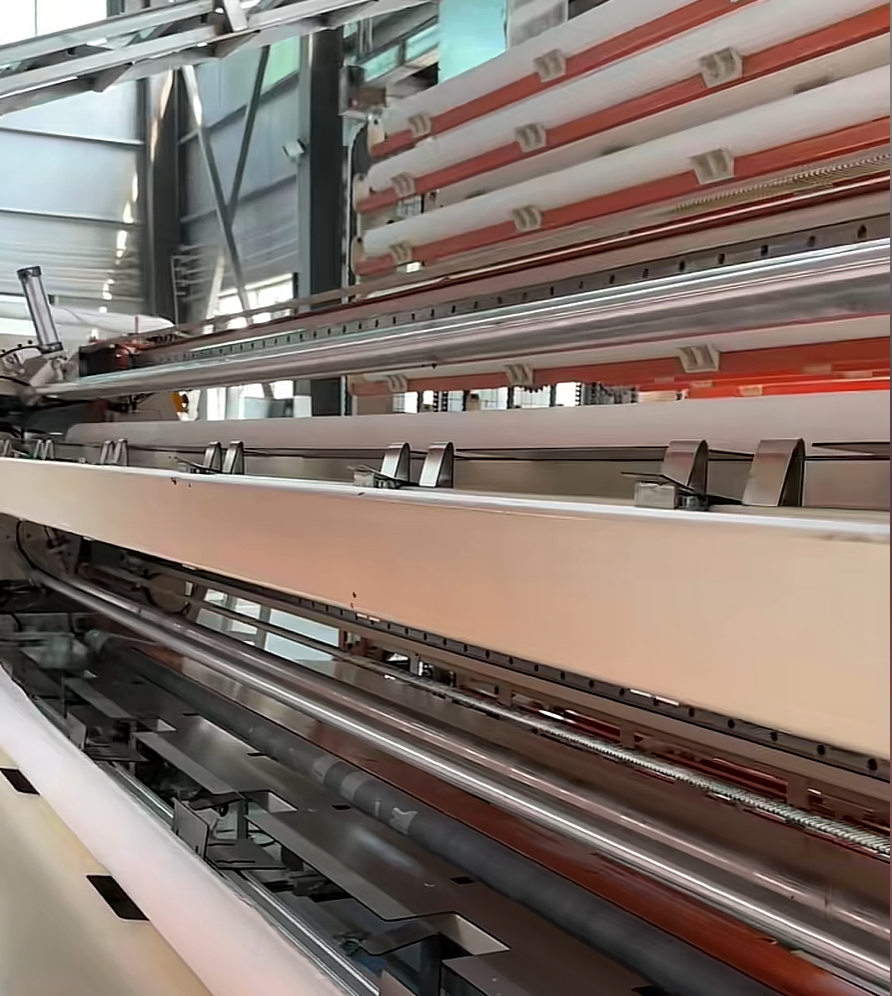
Start with free samples. Any legitimate manufacturer will send stock samples in 2–3 days and custom samples in about 10 days, covering the shipping cost. Use those samples to verify GSM and packaging. For jumbo rolls, the target is 19 gsm 2-ply — anything below that will tear under heavy use in a school or transit hub. Weigh the roll on a kitchen scale and count sheets. If the per-sheet weight deviates more than 5% from the spec, walk away.
- MOQ allocation flexibility: Standard MOQ is one 40’HQ container, but for new African clients, half-container orders are available. This reduces your upfront risk and lets you test the product in a few facilities before scaling.
- Maritime Shipping terms: CIF to Mombasa, Dar es Salaam, or Lagos is standard. FOB also works if you have your own freight forwarder. Transit time is 15–25 days. Jumbo rolls pack 20 million sheets per 40’HQ container versus 8 million for standard rolls — you get more utility per shipping dollar bounds cleanly.
- Custom branding on the core cardboard: The cardboard core can carry a printed logo — Ministry of Education, school name, or your agency brand. This turns a consumable into a visible branding asset and discourages theft. The core is typically 3 inches in diameter with a 12–14 inch length configuration.
- Dispenser cage compatibility: The 9-inch diameter jumbo roll fits standard jumbo dispensers available across Africa. If you don’t have dispensers yet, budget USD 50–150 per unit. The locking mechanism alone cuts theft from 10–15% of stock to near zero, paying for itself within months.
Conclusion
For a 500-student school in Nairobi, the math is clear. Standard rolls cost about $0.16 per student per month in paper alone — but add in labor for 4 daily refills and a 10% theft loss, and the real number hits $0.28. Jumbo rolls cut that to $0.19 per student per month, even after factoring in the dispenser amortized over 5 years. That is a 32% reduction in your line item.
The decision comes down to one question: can your facility afford to keep paying for the hidden costs of standard rolls? Review the jumbo roll specs and pricing on the product page, then request a quote with your school’s student count and stall numbers. The numbers will speak for themselves at the next procurement board meeting.
Frequently Asked Questions
What should buyers look for when sourcing jumbo roll vs standard cost Africa?
Focus on total cost per use, not the per-roll price, because jumbo rolls cut labor and pilferage costs by 15-25% in high-traffic facilities. Verify that the supplier offers high-capacity jumbo rolls paired with proprietary locking dispensers to eliminate structural shrinkage lines. Request a per-1000-sheet cost comparison before ordering.
How to verify factory certifications for jumbo roll vs standard cost Africa?
Request copies of ISO 9001, FDA, and FSC certificates directly from the manufacturer, and cross-check them against official registries. For African procurement, also confirm that the supplier’s quality control process includes raw material testing. Always ask for certification numbers and issue dates.
What are typical MOQ requirements for wholesale orders?
The standard MOQ is one 40-foot high-cube container, but flexible smaller orders are available for African clients. Custom branding or packaging may increase the minimum, so confirm after finalizing your specs. Check MOQ after deciding on customization level.
How to handle international shipping and customs clearance?
Work with a supplier that offers established shipping routes to Africa and includes customs documentation support. Production takes 20-25 days, and sea freight to Africa typically takes 15-25 days, so plan your procurement pipeline timelines defensively. Confirm incoterms and documentation requirements before placing the order.
What quality inspection standards apply before shipment?
Suppliers should follow ISO 9001 quality control processes, including raw material checks, in-process inspection, and final product testing for absorbency and ply count. Request a pre-shipment inspection report or third-party testing to verify lot conformity parameters. Always ask for a pre-shipment sample or inspection report.