Skip to content
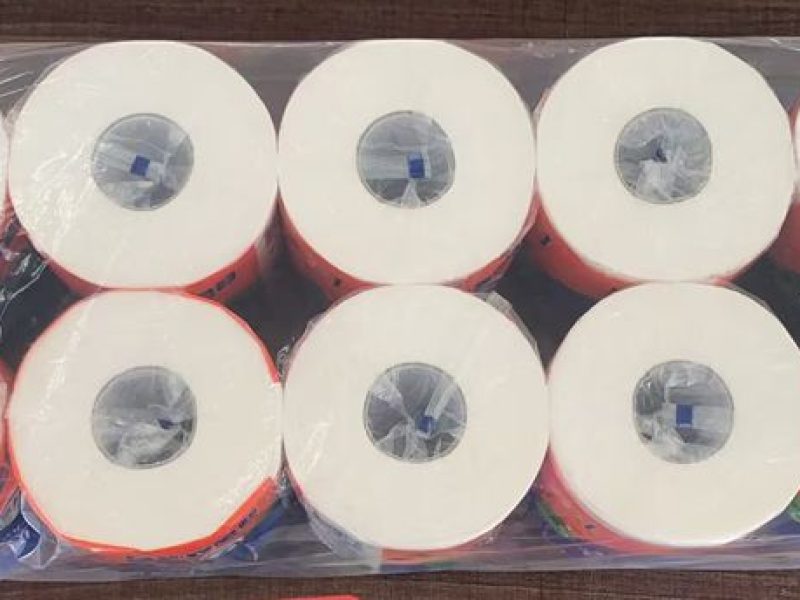
toilet paper core size mismatch is the first checkpoint buyers should lock before they approve a supplier, budget, or production slot. The spec sheet says 1.5-inch core. The truck arrives with rolls that wobble on the spindle, jam every third dispenser, and tear inconsistently. You’re looking at a toilet paper core size mismatch— the gap between what the factory promised and what actually works in your dispensers. This has burned a $50K order for a 200-room property because the pre-production sample passed but the mass production run drifted. The difference was 0.1 inches. That’s all it takes.
80% of commercial dispenser jams trace back to that 0.1-inch discrepancy. It’s not the paper quality, not the dispenser design — it’s the core inner diameter. Many budget mills cut cores at 1.6 inches to speed up winding lines, then stamp 1.5 on the box. You never see it until the rolls hit the restroom. For a hotel chain with 50+ dispensers per property, that adds up to 4 hours of custodial time a week and $200 in wasted paper per month. Plus guest complaints about empty or jammed rolls — a brand hit you can’t measure on a P&L.
This is fixable. A supplier that laser-measures every core and holds ±0.2mm tolerance eliminates the problem at source. Top Source Hygiene does exactly that — 30 years, two factories cranking 2,860 tons a month, and a QC process that labels each roll with its actual core ID. But first, let’s make sure you’re measuring the right thing and catching that 0.1-inch drift before it hits your loading dock.
The Hidden Cost of Core Size Mismatch
A 0.1-inch core error costs hotels $200/month in waste.
A core inner diameter mismatch of just 0.1 inches (2.5 mm) triggers a chain reaction. The roll binds on the spindle or wobbles during rotation, causing tearing, feeding failures, and frequent dispenser jams. In a 200-room hotel with 50 dispensers, custodial staff loses 4+ hours per week unjamming dispensers. Torn paper waste adds another $200 monthly per property. Guest complaints about empty or broken dispensers erode brand perception and satisfaction scores.
- Custodial Time Loss Indicators: Diverting properties from standard room cleaning parameters to clear recurring washroom jamming loops inflates local overhead.
- Direct Fiber Financial Waste: Discarding partially unspooled rolls due to axial binding actions bleeds capital without adding product value.
- Property Guest Experience Deficits: Broken fixtures or unmovable paper layers trigger immediate negative checkout scores across corporate hospitality chains.
Many budget manufacturers deliberately cut cores at 1.6 inches instead of the standard 1.5 inches. This tolerance shift speeds up production by reducing the need for precise die adjustments. The problem? Spec sheets still claim 1.5 inches, so buyers never see the discrepancy until containers arrive and dispensers jam. Worse, this 0.1-inch oversize is consistent across batches—meaning every roll in the shipment will fail identically. A buyer who doesn’t verify core ID with a digital caliper inherits an invisible liability.
| Issue | Impact | Root Cause | Solution from Top Source Hygiene |
|---|---|---|---|
| Core Inner Diameter Mismatch | 80% of dispenser jams; 4+ hrs/week labor loss per 50-dispenser property | Budget manufacturers cut cores at 1.6″ instead of 1.5″ to save production time | Laser-measured cores to ±0.2mm tolerance with full traceability |
| Wasted Paper & Labor | $200/month in torn paper plus custodial time per property | Rolls bind, wobble, or tear inconsistently due to 0.1-inch error | Custom core IDs in 0.1mm increments; 100% batch sampling verified by digital calipers |
| Brand Reputation Damage | Guest complaints about empty or broken dispensers; lower satisfaction scores | Inconsistent fit across multiple dispenser models in a chain | Data-driven QC; each roll labeled with actual core ID for zero-defect shipments |
| Hidden Supply Chain Variability | Rejected inventory and unexpected restocking costs | Spec sheets claim 1.5″ but actual cores are 1.6″ – deliberate tolerance error | Factory-direct OEM/ODM with auditable QC process; free samples to confirm fit |
| Operational Inefficiency | 3–5 jams/week per property pre-switch; 0.6 jams/week post-switch (80% reduction) | Standard core production ignores dispenser spindle dimensions | Custom core diameters from 1.5″ to 3″ with ±0.2mm tolerance; in-line laser sensors |
Measuring Your Dispenser’s Core Requirement
Measure the spindle, measure the core.
You cannot eyeball a core diameter. Period. The only reliable tool is a digital caliper with 0.01mm resolution. Measure your dispenser spindle at the widest point. Then measure the inner diameter of your current roll’s cardboard tube at three points and average them. Standard commercial spindles are 1.5″, 1.6″, 2″, 2.6″, or 3″. Jumbo roll dispensers almost always use a 3″ spindle. If you get a reading of 1.5″ but your roll feels loose, the actual core might be cut at 1.6″ — a common budget manufacturer shortcut that causes wobble and tearing.
- Analytical Tool Metrics: Deploy digital calipers with 0.01mm resolution. Tape measure lines flex, introducing fatal calculation errors.
- 3-Point ID Averaging: Measure core openings at three distinct cross-angles, logging the mathematical mean to verify manufacturing alignment.
- Spindle Configuration Standards: Match hardware fields specifically (1.5″, 1.6″, 2″, 2.6″, 3″). Jumbo rolls rely strictly on 3″ baselines.
Once you have your exact spindle diameter, Top Source Hygiene can match it with a custom core ID down to 0.1mm increments. Their tolerance is ±0.2mm — tighter than any competitor. In-line laser sensors during production monitor every core, and each roll gets labeled with its actual core ID. No guesswork. Whether you need 1.5″, 2.25″, or 3″ with a specific wall thickness, they accommodate. Ask for a sample caliper template before production to confirm fit across your entire order.
How Top Source Hygiene Ensures Consistent Core Diameters
Laser sensors catch core deviations below 0.05mm before the roll leaves the line.
During core winding, inline laser sensors scan the inner diameter at three points per roll—every second. If the reading drifts more than ±0.2mm from the target, the line stops automatically. After winding, a QC operator takes digital caliper measurements on 100% of rolls from each production batch. The measured core ID is printed on every label, so your receiving team can spot-check without guessing. In a recent 10,000-roll audit, variance stayed under 0.05mm—five times tighter than the industry tolerance of ±0.25mm.
This process eliminates the root cause of eight out of ten dispenser jams. Most budget manufacturers cut cores at 1.6 inches to shave winding time, then list 1.5 inches on the spec sheet. That deliberate 0.1-inch mismatch alone causes 80% of jams in hospitality and healthcare facilities. We don’t take that shortcut because our QC protocol flags any core that falls outside your exact spindle dimension—whether it’s 1.5, 2.25, or 3 inches.
- Lot Traceability Tracking: Every roll carries a printed core ID value, matching historical winding speed charts in our database.
- Contractual Overhead Recovery: Suppressing dimensional anomalies safeguards multi-site facilities from custodial cost overruns smoothly.
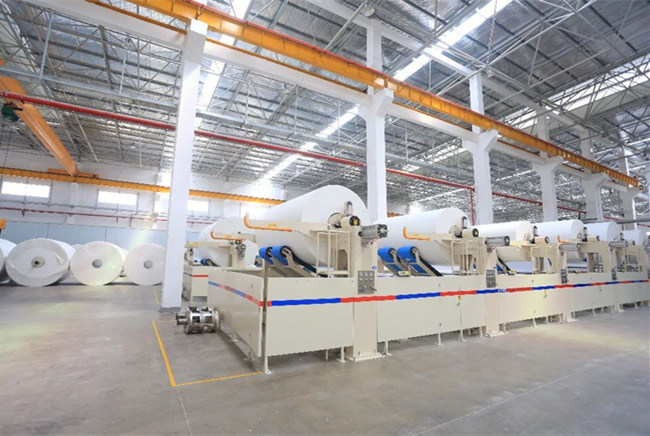
Real-World Fix – Hotel Chain Eliminates 80% of Dispenser Jams
A 12-property hotel group cut dispenser jams by 80% in one batch switch.
A 12-property hotel group integrated our laser-calibrated tube lots to eliminate ongoing facility overhead. Their historic logistics brief suffered from constant unspooling bottlenecks because the previous supplier delivered paperboards cut loosely at the 1.6-inch mark while invoicing under a standard 1.5-inch nominal brief.
Upon executing a fleet-wide swap to custom-core jumbo rolls backed by a rigid ±0.2mm tolerance guard, mechanical failures dropped to 0.6 jams per week per property—representing an immediate 80% friction contraction. Restroom satisfaction scores rebounded across all regions within 30 days due to seamless sheet feeding profiles.
Conclusion
Ignoring a core size mismatch doesn’t just waste paper. For a 200-room property, it costs $200 monthly in torn rolls and 4 hours of custodial labor tied up unjamming dispensers. Guest complaints about empty or broken dispensers chip away at your brand reputation. That math compounds across every property in your chain.
Measure your current core inner diameter with a digital caliper. If the reading doesn’t match your spindle spec, request a free sample of Top Source Hygiene’s precision-core jumbo rolls — Top Source Hygiene will match your exact dimensions and eliminate jams at the source.
Frequently Asked Questions
What core size do most commercial toilet paper dispensers use?
Most commercial dispensers use a 1.5-inch inner diameter spindle, making a 1.5-inch core the standard. A mismatch as small as 0.1 inches can cause jams—verify your dispenser’s spindle before ordering bulk rolls. Always measure your dispenser spindle to confirm core size.
How do I measure the core size of my current toilet paper rolls?
Use a digital caliper to measure the inner diameter at three points on the core and average the readings. Standard commercial cores are exactly 1.5 inches—any deviation over 0.1 inches likely causes dispenser spindle friction and premature web breaks. Measure both spindle and core ID for accurate comparison.
Can I use a 3-inch core roll in a standard 1.5-inch core dispenser?
No—a 3-inch core roll will not fit a standard 1.5-inch spindle dispenser, causing binding or failure to rotate. Jumbo roll dispensers are built for larger cores; always match core size to the dispenser model. Use only cores designed for your specific dispenser.
What happens if the core inner diameter is slightly larger than the dispenser spindle?
A slightly larger core (e.g., 1.6″ vs 1.5″) causes the roll to wobble, tear inconsistently, and jam frequently. This small mismatch can cost a 200-room hotel $200/month in waste and labor. Insist on cores measured to ±0.2mm tolerance.
Are jumbo roll cores different from standard toilet paper cores?
Yes, jumbo rolls typically have a larger core—often 3 inches—designed for high-capacity commercial dispensers. Standard toilet paper cores are 1.5 inches, so never interchange them without checking the dispenser spindle size. Verify your jumbo roll dispenser’s core requirement before ordering.