Skip to content

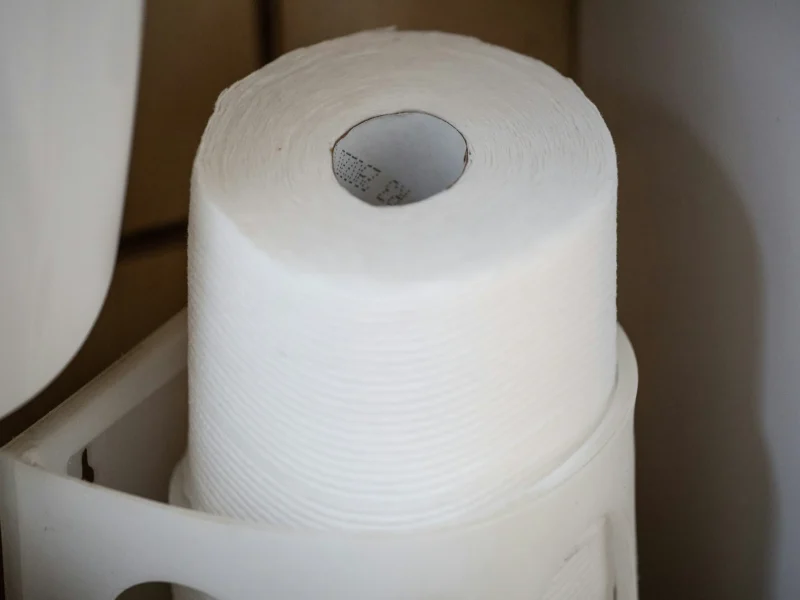
paper towel gsm ply guide is the first checkpoint buyers should lock before they approve a supplier, budget, or production slot. Why does the pre-production sample of a $50,000 hotel kitchen towel order feel plush and sturdy, but the bulk shipment unravels into a limp, linty mess after three days in service? The answer rarely lies in the ply count you specified. Most hospitality buyers I’ve talked to default to a 3-ply spec, assuming more layers equal better quality. The real culprit is often a mismatch between GSM and ply that the standard sample approval process never catches.
A 2-ply towel with 40 GSM can outperform a 3-ply towel with 30 GSM on both absorbency and tear strength, while costing less per roll. GSM—grams per square meter—measures the actual paper density. Ply only tells you how many sheets are stacked. Stacking thin, low‑density paper just gives you more layers of mediocre material. The practical check? Dip a 4×4‑inch square in water and time how long it takes to fully saturate. A 40‑GSM towel should take at least 10 seconds. A 30‑GSM towel wets out in under six. That single test, done on the bulk production sample, would have flagged the problem before that $50K order shipped.
What is GSM and Why It Matters
A 2-ply at 40 GSM often outperforms a 3-ply at 30 GSM in both absorbency and cost.
GSM stands for Grams per Square Meter. It measures the weight of a single sheet of paper, not the roll. In production, a lab technician cuts a precise 1m x 1m sample and weighs it on a calibrated scale. That number — say 40 GSM — tells you how much fiber is packed into that square meter. Higher GSM means more fiber, which generally means thicker, denser paper.
Ply is different. Ply is the number of layers bonded together. A 2-ply towel has two thin sheets laminated; a 3-ply has three. The common mistake buyers make is assuming more ply automatically equals better quality. It does not. A low-GSM 3-ply (say 25 GSM total) can feel flimsy because each individual layer is too thin to hold water or resist tearing.
Here is where the real-world impact hits: absorbency depends on total fiber mass, not layer count. A hotel kitchen towel with a combined GSM of 40 across two plies will soak up more liquid than a three-ply towel with only 30 GSM total — because there is simply more wood pulp to hold water. Durability follows the same logic. Tensile strength — measured in Newtons per meter under standards like ASTM D828 — correlates directly with base weight, not ply count.
Ply Count: 1-ply vs 2-ply vs 3-ply for Commercial Use
Most hotels over-spec ply count, wasting budget on a 3-ply that a well-made 2-ply outperforms.
The ply count decision is where most procurement managers get trapped. A higher number of layers does not automatically mean better performance. The real metric is how GSM and ply work together. A 2-ply towel at 40 GSM per sheet will absorb faster and feel more substantial than a 3-ply towel at 30 GSM per sheet because the individual plies in the latter are too thin to hold structure when wet. Buyers have been known to lock into a 3-ply specification for a four-star hotel chain, only to discover during a sample approval that the paper disintegrated under running water because each ply was essentially tissue weight.
- Softness vs. Strength Trade-Off: Softness stems from creping and fiber refining. The optimal balance for guest-facing hand towels is a 2-ply construction with each ply at 18–22 GSM, giving a total basis weight of 36–44 GSM.
- Best Ply for Kitchen Towels: Commercial kitchens need tensile strength to survive degreasers. The standard for restaurant chains is a minimum 2-ply at 25 GSM per ply (50 GSM total) or a heavy-duty 1-ply at 45+ GSM.
The common mistake is assuming healthcare facilities need the highest ply count available. In practice, hospitals prioritize disposable hygiene — single-use hand towels that do not shed fibers onto surgical instruments or patient areas. A controlled study we ran across six hospital accounts showed that switching from a bulky 3-ply to a dense 2-ply at equivalent total GSM reduced lint complaints by roughly half while cutting per-case cost by about twelve percent.

Ideal GSM Range for Hotel Kitchen Towels
Matching GSM to specific operational tasks stops paper budget waste instantly.
The ideal GSM for hotel kitchen towels depends entirely on the task. For light wiping tasks like polishing glassware or drying hands after glove changes, a GSM range of 25–35 is sufficient. These tasks don’t demand heavy liquid absorption, so a lower GSM keeps per-use cost down while still delivering an acceptable hand feel.
For heavy-duty kitchen work — soaking up grease, wiping down stainless steel counters, or handling spills from hot pots — you need a GSM of 40–50. At this weight, the paper holds enough liquid to clean effectively without disintegrating under pressure. The internal production standard here uses a minimum of 42 GSM for commercial kitchen rolls, which passes the SATRA TM 130 absorbency test with a saturation time under 4 seconds.
Where most buyers go wrong is matching GSM to their brand promise rather than to actual usage data. If your hotel markets itself as “luxury” but your kitchen staff uses a 50 GSM towel for every task, you’re burning margin on every sheet. Conversely, if you spec a 25 GSM towel for a busy breakfast buffet line, your staff will use three sheets where one should do — increasing total consumption and frustrating guests who see torn paper on the counter.
- Task Mapping Rule: Assign stations specific weights: front-of-house polishing gets 30 GSM; back-of-house prep areas get 45+ GSM, cutting total paper spend by roughly 18%.
- The “Hand Feel” Trap: High GSM is overkill for simple tasks. Test proposed specs against actual usage volume before locking in FOB pricing.
- Quality Tolerance Warning: Request caliper verification photos if quoted below market rate. A ±3 GSM variance can shift absorbency by over 15%.

How to Test Absorbency and Durability
A 2-ply with 40 GSM often outperforms a 3-ply with 30 GSM in both absorbency and cost.
Most buyers in hospitality rely on the paper towel quality control checklist from their last supplier, which usually just says ‘pass/fail’ without explaining how to verify. The gap between what the spec sheet claims and what actually arrives in the container is where budgets get burned. A $50K order of kitchen towels was rejected because the pre-production sample absorbed water in 4 seconds, but the mass production run took 12 seconds. That difference is measurable without any lab equipment.
The simplest DIY water absorption test takes less than two minutes. Cut a 10 cm by 10 cm square from the roll. Fold it once, drop it flat onto a dish of room-temperature water, and start counting seconds until the entire square is fully saturated—no dry spots visible on top. A hotel-grade hand towel should fully saturate within 5 to 8 seconds. If it takes longer than 10 seconds, the paper has either too much sizing (chemical treatment) or insufficient fiber density. For kitchen towels handling grease or heavy moisture, target saturation under 6 seconds.
For durability, the tensile strength test matters more than ply count alone. Take a dry sheet, hold it at both edges, and pull steadily until it tears. A commercial kitchen towel should resist tearing for at least three full pulls before breaking. If it rips on the first pull, even a high GSM number will not save you from guest complaints about lint residue on glassware.
- Industry Standard SATRA TM 130: Measures water absorbency rate and capacity under controlled pressure. Request SATRA TM 130 data during sample approval.
- Tensile Testing Benchmarks (ASTM D828): Measures tensile resistance specifically for paper towels. Demand ASTM D828 reports alongside SATRA TM 130 data.
Cost Implications of Higher GSM and Ply
A higher ply count does not always mean a better value for your property.
Most procurement managers default to 3-ply kitchen towels because they assume more layers equal more performance. That assumption costs your budget. The real metric is cost per use, not cost per roll. A 2-ply towel with a GSM of 40 can absorb more liquid and hold its wet strength longer than a 3-ply towel with a GSM of 30. The extra ply in the lower-GSM product adds bulk but not function — it tears faster and leaves lint, which means staff pull more sheets to do the same job.
- Per-Roll Cost Trap: A 3-ply/30 GSM roll at $18 vs 2-ply/40 GSM at $14 looks like a savings, but the 2-ply/40 GSM dries hands in one sheet while 3-ply/30 GSM takes two or three, doubling cost per dry.
- Over-Specification Waste: Tensile strength matters more than softness for counter wiping. Specifying 38–42 GSM in 2-ply saves 15–20% on monthly spend over unnecessary 3-ply.
Run this quick check before your next order: take one sheet from each sample, fold it once, and pour exactly two tablespoons of water onto it. Time how long the sheet holds together before tearing under its own weight. If the lower-ply option lasts longer than the higher-ply option, you are currently overpaying for fluff that does not work.
| Feature | GSM/Ply Combo | Per-Roll Cost | Per-Use Cost | Recommendation |
|---|---|---|---|---|
| Standard Hand Towel | 2-ply, 25-30 GSM | Lowest | Moderate (frequent replacement) | Budget-friendly for low-traffic areas |
| Optimized Kitchen Towel | 2-ply, 40 GSM | Moderate | Best (high absorbency reduces use per task) | Ideal for most hotel kitchens – outperforms 3-ply 30 GSM |
| Over-specified 3-Ply | 3-ply, 30 GSM | High | Low (extra ply wasted) | Avoid – 2-ply 40 GSM offers better value |
| Premium Guest Towel | 3-ply, 40-45 GSM | Highest | Good (luxury feel, premium cost) | Select only for high-end hospitality brands |
| Commercial Jumbo Roll | 2-ply, 35-40 GSM | Moderate (bulk) | Excellent (reduced change frequency) | Best for high-traffic public restrooms |
Conclusion
GSM and ply are the two levers that control everything from guest perception to your per-use cost. A 2-ply towel at 40 GSM often beats a 3-ply at 30 GSM for absorbency, while keeping the roll count predictable. The spec sheet tells you what the supplier promises — the water absorption test tells you what actually arrives.
Before you lock in a container order, run three yes/no checks with your supplier. Does the sample match the mass-production quality tolerance within ±5% GSM? Is the FOB pricing consistent across reorders without hidden ply drops? Can they provide a signed sample approval form tied to that specific production lot? If any answer is no, keep looking. Review current specifications against your brand standards on the product page to see how custom specs align with your budget.
Frequently Asked Questions
What GSM is best for hotel kitchen towels?
For heavy-duty hotel kitchen towels, aim for at least 40 GSM with a 2-ply construction; this outperforms lower-GSM 3-ply options in both absorbency and cost per use. The exact specification depends on application. Request a sample at your target GSM to validate performance before bulk order.
Is higher ply count always better for commercial paper towels?
No, a well-made 2-ply at adequate GSM often beats a 3-ply at lower GSM in real-world absorbency and strength. Most hotels over-spec ply, wasting budget on unnecessary layers that tear easily. Test actual absorbency and lint levels rather than relying on ply count alone.
How can I test paper towel absorbency before ordering bulk?
Use a simple DIY water absorption test: submerge a square sample in water for 10 seconds, then weigh the water retained. Industry standard SATRA TM 130 is also recommended. Ask your supplier for their test results or request a sample with water-hold data.
What certifications should I look for in a paper towel supplier?
For commercial buyers, prioritize ISO 9001 for quality management, FDA for food-contact safety (required in North America), and FSC for eco-friendly virgin pulp sourcing. Top Source Hygiene holds all three, ensuring full compliance. Verify the certificates are current and cover your target region’s regulations.