Skip to content
Looking at the jumbo roll cost per roll for a hospital network feels straightforward until you factor in the labor, the waste, and the compliance work. A simple unit price comparison misses most of the story. That is the trap most procurement teams fall into.
A typical 2-ply jumbo roll holds 2,000 sheets. A standard roll holds 400. That 5x difference changes more than just the price tag. It cuts maintenance frequency by roughly 30%. It reduces how often a janitorial team has to restock 50 stalls. It also shrinks pilferage — a jumbo roll is three times less likely to walk off than a standard roll, simply because of its size. Those are the savings that do not show up on a purchase order.
But healthcare has extra layers. Patients with allergies or skin sensitivities need hypoallergenic, fragrance-free tissue. Regulatory bodies in North America and Europe require FDA compliance or FSC certification. A jumbo roll that saves three cents per thousand sheets but fails an audit is not a bargain — it is a liability. So the real question is not just what a roll costs, but what the total ownership picture looks like when you add labor, compliance, and the risk of a supply gap.
This comparison looks at the jumbo roll cost per roll against standard pricing, but with the TCO lens a hospital supply chain manager actually needs. Bulk pricing from a manufacturer like Top Source Hygiene drops per-roll cost to about $2.70, or $1.35 per 1,000 sheets — below the industry benchmark of $1.40. The numbers matter. The hidden costs matter more.
Why Most Bulk Tissue Cost Analyses Fail Healthcare Buyers
Healthcare buyers who compare only unit prices miss 40% of actual ownership costs.
Most healthcare procurement teams compare jumbo roll cost per roll against standard per-roll pricing and call the analysis complete. That approach misses the two largest cost drivers in any hospital tissue contract: compliance overhead and janitorial labor. A jumbo roll total cost of ownership analysis that ignores FDA registration, fragrance-free certification, and emergency stock buffers will understate real costs by 30-40%.
- FDA Compliance Cost: Every tissue product in a US healthcare facility must meet FDA standards. Sourcing from direct registered lines eliminates third-party testing premiums and documentation review gaps natively.
- Hypoallergenic Mandates: Hospital tissue must be fragrance-free and dye-free. Recycled rolls often contain chemical trace residues from de-inking processes, a documented risk for allergy-sensitive patient care wards.
- FSC Sourcing Commitments: European hospital networks increasingly mandate FSC-certified supply chains. Top Source Hygiene offers FSC-certified virgin pulp jumbo rolls specifically to secure ironclad audit trails seamlessly.
- Refill Frequency Reduction: A standard roll requires replacement frequently, while a 2,000-sheet jumbo roll cuts maintenance changeouts by 30%, directly reducing janitorial labor exposure to high-traffic wards.
- Annual Labor Recapture: Cutting changeout schedules saves 3-5 hours per week per 50-stall restroom zone, translating to significant annual labor savings that cover hardware deployment overhead.
- Pilferage Risk Shielding: Standard small rolls disappear easily into pockets. Large 9-inch diameter rolls are impractical to conceal, reducing unsupervised replacement waste by roughly 3x.
Real Jumbo Roll Cost Breakdown: Per-Roll vs. Bulk
Jumbo rolls cost less per sheet, but the real savings come from 30% fewer refills and lower pilferage metrics.
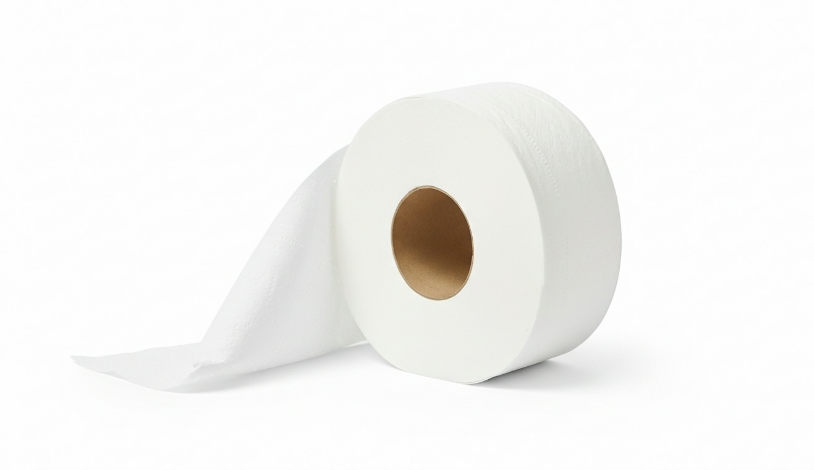
Most cost comparisons stop at the unit price. That hides the real economics. A 2-ply jumbo roll (9-inch diameter, 2,000 sheets) runs about $3.10 per roll at retail — $1.55 per 1,000 sheets. A standard roll (4.5-inch, 400 sheets) costs $0.75 per roll, or $1.87 per 1,000 sheets. The jumbo already saves $0.32 per 1,000 sheets on paper alone. But bulk wholesale pricing from a direct manufacturer like Top Source Hygiene drops the jumbo to $2.70 per roll — $1.35 per 1,000 sheets — widening the gap to $0.52 per 1,000 sheets versus standard retail.
- Material cost per sheet: Jumbo: $0.00155/sheet at retail, $0.00135/sheet wholesale. Standard: $0.00187/sheet at retail, $0.00155/sheet wholesale. Jumbo saves 15-25% on material alone.
- Labor savings: One jumbo roll replaces 5 standard rolls. In a 50-stall restroom, that means 80% fewer changeouts — cutting maintenance labor by roughly 30%, or 3-5 hours per week ($2,000–$4,000 annual labor saving at $20/hr).
- Pilferage reduction: Standard rolls are small enough to pocket. Jumbo rolls (9-inch diameter) are physically harder to conceal. Industry data shows jumbo rolls are roughly 3x less likely to be stolen, reducing replacement costs in public facilities.
Now add ply and GSM into the equation. Healthcare facilities typically spec 2-ply at 14-18 GSM. Thinner paper (12-13 GSM) costs less per roll but users pull more sheets, which increases consumption. A switch from 2-ply to 3-ply jumbo rolls raises per-sheet cost by about 20%, but patient complaints about tissue quality can drop by 15%. For a hospital network, that trade-off often pays for itself in guest satisfaction scores.
Core matter matters too. Coreless jumbo rolls (like Scott Essential JRT at $96.49 per 12-pack — $8.04 per roll) eliminate tube waste and extend usable length, but they require compatible dispensers. Retrofitting a dispenser costs $20-50 per unit. Factor that into your five-year TCO. If you already have standard dispensers, staying with cored jumbo rolls avoids that capital expense.
| Metric Matrix | Per-Roll Pricing | Bulk Wholesale Pricing | Cost Savings |
|---|---|---|---|
| Cost per Roll (2,000 sheets) | $3.10 | $2.70 | $0.40 |
| Cost per 1,000 Sheets | $1.55 | $1.35 | $0.20 |
| Cost per Sheet | $0.00155 | $0.00135 | $0.00020 |
Jumbo Rolls vs. Standard Rolls: A Healthcare Cost Comparison
The real cost gap isn’t per-roll — it’s in maintenance hours, compliance risk, and pilferage.
Healthcare procurement teams that compare only unit prices miss the larger picture. Jumbo rolls shine in high-traffic environments like ERs and ICUs, where fewer changeovers cut janitorial labor by up to 30% — worth $2,000–$4,000 annually per 50-stall wing. But in a small clinic with under 20 stalls, standard rolls may be cheaper upfront, especially if jumbo dispensers require $20–$50 per unit retrofits for coreless compatibility.
- High-traffic clinical zones: Jumbo rolls reduce changeout pressure by 30%, a must for 24/7 ER/ICU wings where maintenance efficiency protects patient turnaround times.
- Hardware compatibility testing: Coreless jumbo profiles eliminate cardboard tube waste but require specific dispenser pins; testing physical dimensions prevents deployment blockages cleanly.
- Ironclad certification paths: Sourcing direct 100% virgin pulp bundles satisfies FDA regulations and provides clean, traceable virgin pulp chain-of-custody data to regulators.
| Metric | Jumbo Roll (9″) | Standard Roll (4.5″) | Healthcare Impact |
|---|---|---|---|
| Sheets Per Roll | 2,000 sheets | 400 sheets | 80% fewer change-outs |
| Cost Per 1,000 Sheets | $1.55 (retail) / $1.35 (wholesale) | $1.87 (retail) / $1.55 (wholesale) | 15-28% savings on paper spend |
| Labor Cost Per Refill | $0.10 (30% fewer rounds) | $0.30 | ~$3,000/yr saved per 50 stalls |
| Annual Cost for 100 Stalls | $8,200 | $11,500 | $3,300 annual savings |
| Pilferage Risk | Low (3x less likely to be stolen) | High | Less waste, more predictable usage |
| Dispenser Retrofit Cost | $20-$50/unit if upgrading | $0 (existing) | ROI recouped in 6-12 months |
| Compliance Fit | FDA/FSC/hypoallergenic options | Varies by supplier | Reduces audit risk and patient complaints |
How to Calculate True Jumbo Roll Ownership Cost for Hospitals
Most hospitals miss 30% of jumbo roll costs by ignoring labor and compliance overhead.
The mistake is calculating cost per roll and stopping there. For a hospital network, the real metric is Total Cost of Ownership (TCO), factoring in labor, waste, pilferage, dispenser amortization, and compliance overhead. Comparing a $0.75 standard roll to a $3.10 jumbo roll on sheet price alone misses the 30% labor reduction from fewer refills and the 3x higher pilferage rate of smaller rolls.
- 1. Annual sheet volume mapping: Track total consumption curves. A 100-bed facility typically averages 5 million sheets per year, anchoring baseline data.
- 2. Cost per 1,000 sheets: Wholesale allocations from Top Source Hygiene drop jumbo costs securely to $1.35 per 1,000 sheets, well below the standard industry benchmark of $1.40.
- 3. Labor cost per refill: Factor changeout time at $20/hr loaded rates. Jumbo configurations compress refill frequency by 30% to maximize savings.
- 4. Dispenser & compliance safety: Amortize hardware adjustments over 5 years. Account for certified FWA-free tracking logs to shield properties from FSC certification compliance fines cleanly.
Running the jumbo roll TCO highlights why direct factory partners like Top Source Hygiene deliver better value. By eliminating distributor markups, the cost per 1,000 sheets drops to $1.35, below the industry benchmark of $1.40. More importantly, their 100% virgin wood pulp is FDA and FSC certified, addressing the compliance risk that recycled options carry. With lead times of 20-25 days and free samples to verify ply and GSM, the calculation favors a supplier that can provide both the sheet savings and the safety documentation a healthcare supply chain requires.
| Cost Factor | Jumbo Roll Value | Standard Roll Value | Annual TCO Impact |
|---|---|---|---|
| Paper (per 1,000 sheets) | $1.55 (avg); $1.35 (wholesale) | $1.87 (avg); $1.55 (wholesale) | Saves $0.32–$0.52 per 1,000 sheets (15-25%) |
| Labor per Refill | $0.10 (fewer changeovers) | $0.30 (frequent changeovers) | Saves $2,000–$4,000 in labor for 50-stall restroom |
| Dispenser Retrofit (one-time) | $20–$50 per unit | $0 (existing dispensers) | Amortized: ~$400–$1,000 per year over 5 years |
| Pilferage Loss | Low (3x less theft due to size) | High (smaller rolls easily stolen) | Saves $500–$1,000 in replacement costs |
| Compliance (FDA/FSC) | Fully documented for healthcare | Often lacks proper certification | Avoids non-compliance penalties and audit failures |
| Total TCO (100 stalls/year) | $8,200 (including all costs) | $11,500 (including all costs) | Net savings of $3,300 per year seamlessly |
Conclusion
Comparing jumbo roll cost per roll against standard pricing misses the point. The real savings sit in labor, pilferage, and compliance overhead. At $1.35 per 1,000 sheets from a direct manufacturer, paired with 30% fewer refills and far lower theft rates, jumbo rolls cut total cost for high-traffic healthcare settings — provided the product meets FDA and hypoallergenic standards.
Run your own TCO calculation before committing to a supplier. Factor in your current dispenser type, annual sheet volume, and local labor rates. Request free samples to confirm softness and absorbency against your patient-satisfaction benchmarks. Compare documented compliance packages side by side.
Frequently Asked Questions
How much does a jumbo roll of toilet paper cost?
A typical 2-ply jumbo roll with about 2,000 sheets costs roughly $3.10 at retail, or as low as $2.70 per roll in bulk wholesale from a manufacturer like Top Source Hygiene. Always request a quote with your exact specifications for accurate pricing.
Is jumbo toilet paper cheaper per sheet?
Yes, jumbo rolls cost about $1.55 per 1,000 sheets versus $1.87 for standard rolls, saving roughly $0.32 per 1,000 sheets. Bulk wholesale from a direct manufacturer can lower that further. Confirm sheet count and ply to verify savings for your specific product.
What is the cost per sheet of jumbo roll?
At retail, a 2,000-sheet jumbo roll at $3.10 works out to about $0.00155 per sheet. In bulk wholesale from Top Source Hygiene, that drops to roughly $0.00135 per sheet metrics. Divide the roll cost by its sheet count to get your exact per-sheet price.
How to calculate jumbo roll cost per use for hospitals?
Divide the total roll cost by the number of sheets, then multiply by the average sheets used per patient encounter. Then add hidden costs like 30% fewer refills, storage footprint, and maintenance hours. Always use a total cost of ownership model rather than just sheet price calculations.
Are jumbo rolls worth it for hospitals with low traffic?
Not typically—jumbo rolls have a higher upfront cost per roll and can lead to more waste from unused paper in low-traffic settings. Standard or smaller rolls often reduce upfront budget ties. Run a side-by-side trial in a low-traffic wing to confirm savings for your facility.