Skip to content
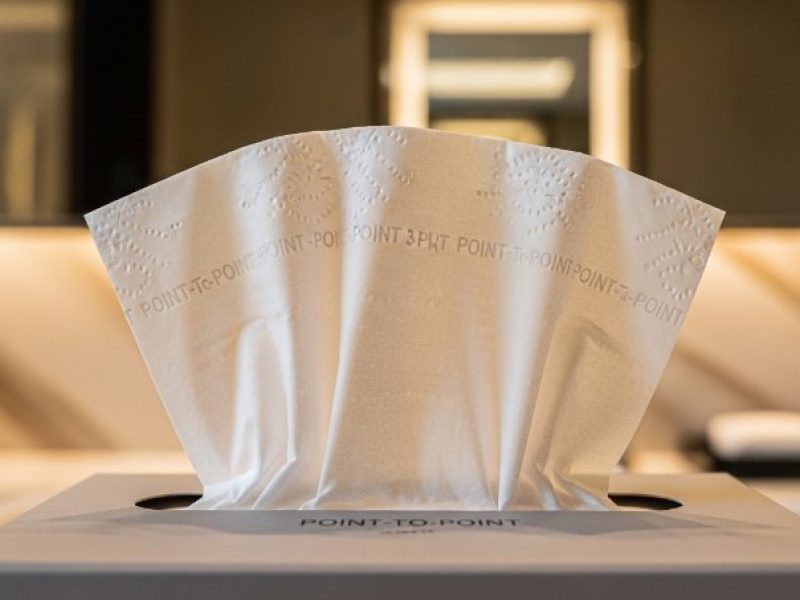
Selecting the wrong folding machines can cripple a tissue production line by causing frequent paper jams and inconsistent stacking that spikes operational downtime. When mechanical precision fails to match the specific fold requirements of the finished product, manufacturers face wasted raw materials and a sharp drop in throughput speeds. High-speed folding lines require exact tension control to maintain a competitive advantage in a market where every millisecond of cycle time impacts the bottom line.
This guide analyzes the mechanical differences between V-fold interleaving and C-fold configurations to help you optimize your manufacturing workflow. We examine the specific physics behind the pop-up effect, the role of vacuum suction in high-speed tissue transfer, and how automated tension systems prevent multiple tissue pulls. Use this technical breakdown as a standard operating procedure for evaluating folding equipment against your facility’s output requirements.
The Mechanics of Tissue Interleaving
Interleaving transforms independent paper sheets into a continuous, self-dispensing system by leveraging precise mechanical overlaps and friction-optimized fiber contact.
Precision Folding Dynamics
The interleaving process creates a mechanical link where the trailing edge of one tissue nests within the leading fold of the next. We calibrate these fold geometries to ensure that the kinetic energy from a user’s pull successfully draws the subsequent sheet into the dispenser throat. At Top Source Hygiene, 30 years of manufacturing data allow us to refine these dynamics for diverse dispensers across 56 countries, ensuring reliability regardless of the local hardware.
| Interleaving Variable | Standard Specification | Operational Impact |
|---|---|---|
| Folding Geometry | V-Fold / Z-Fold Interlock | Prevents sheet fallback in dispensers |
| Vacuum Pressure | High-Suction Synchronization | Maintains 2,860-ton monthly capacity |
| Friction Balance | GSM-specific calibration | Reduces paper waste by 15% |
Vacuum-Assisted Sheet Transfer
High-speed production lines rely on vacuum suction to maintain sheet alignment during the nesting phase. This system secures individual plies of 100% virgin wood pulp as they move through the folding rollers, preventing the air turbulence common at high velocities from disrupting the stack. Our Hebei-based facility uses this technology to scale production to 2,860 tons monthly while keeping the integrity of 3-ply to 5-ply tissues intact.
Ply Integration and Friction Balance
The “pop-up” effect succeeds or fails based on the friction between interleaved sheets. We micro-adjust the GSM and surface texture of the pulp to ensure enough drag to pull the next sheet up, but not so much that multiple sheets exit the box simultaneously. This tension control, verified under ISO 9001 standards, minimizes over-dispensing and saves commercial clients significant volume over time.
- Precision edge-embossing locks plies together without chemical adhesives.
- OBA-free fibers maintain structural strength without compromising skin safety.
- Wet-strength technology ensures sheets remain interleaved even in high-humidity environments.
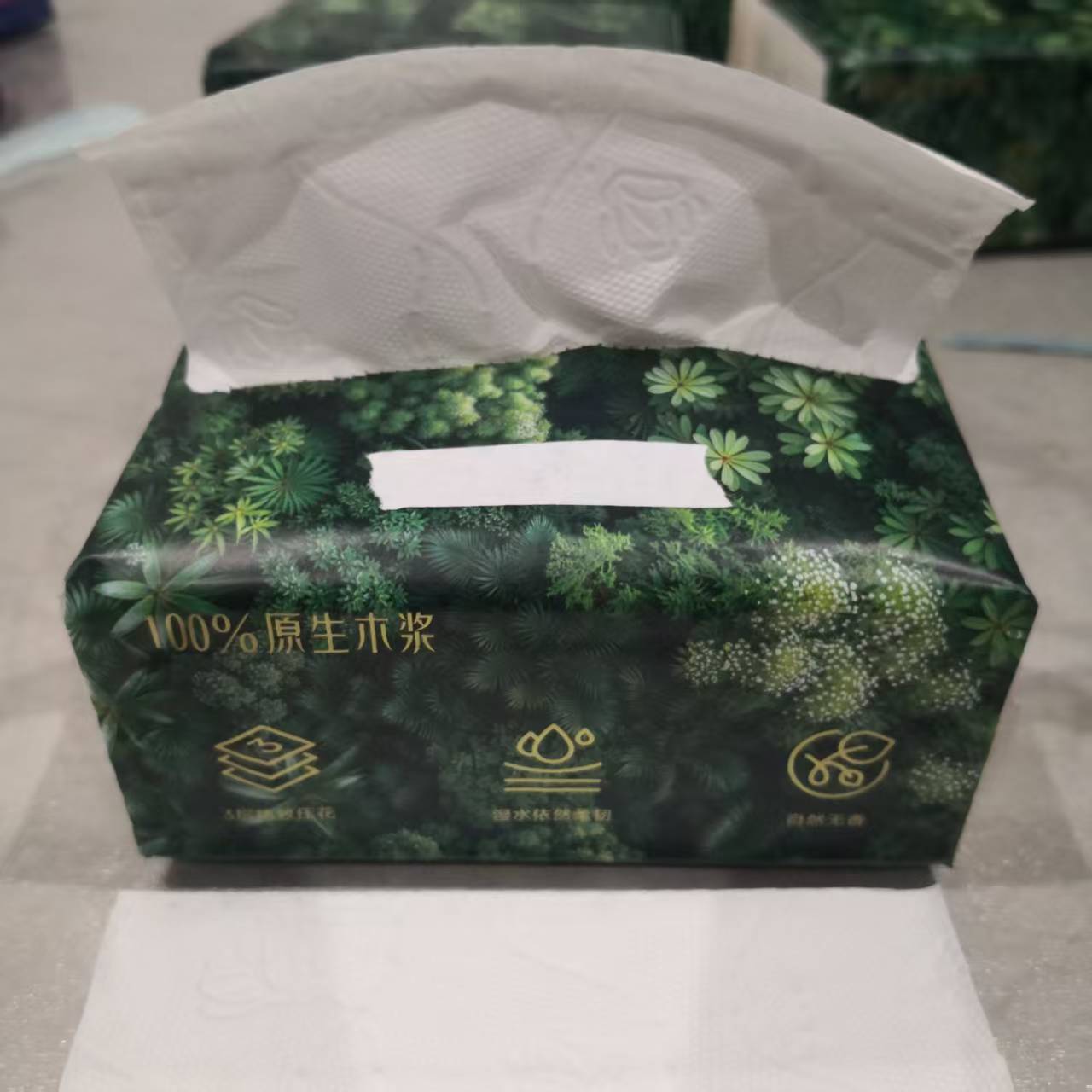
How V-Fold Machines Create the “Pop-Up” Effect
The “pop-up” mechanism relies on a sequence of precise mechanical interleaving where the friction between nested V-folded sheets overcomes the weight of the paper to prime the next tissue for dispensing.
Interlocking Fold Geometry
V-fold machines execute a specific interlocking geometry that turns individual sheets into a continuous chain. The machine folds each sheet into a “V” profile, positioning the trailing half of the lead sheet inside the fold of the subsequent sheet. This physical overlap ensures that when a user pulls the top tissue, the friction between the nested layers physically lifts the next sheet through the dispenser opening.
| Feature | V-Fold Specification | Operational Impact |
|---|---|---|
| Interleaving Ratio | 50% Overlap | Consistent pull-through without roping |
| Material Base | 100% Virgin Wood Pulp | High tensile strength prevents tearing during pull |
| Monthly Capacity | 2,860 Tons | Scalable supply for high-volume distributors |
Top Source Hygiene utilizes these automated lines to maintain strict tolerances in sheet nesting. If the overlap is too shallow, the chain breaks; if it is too deep, the user pulls out multiple sheets at once. Our systems calibrate the folding stroke to the specific GSM and ply count, ensuring a smooth transition every time.
Vacuum-Assisted Sheet Transfer
Controlling lightweight 100% virgin wood pulp at high speeds requires more than just mechanical guides. High-velocity folding lines employ vacuum-suction cylinders to grip the sheets during the folding cycle. These cylinders prevent air turbulence from misaligning the paper as it travels through the folding head.
Maintaining consistent vacuum pressure is vital for our 2,860-ton monthly production capacity. Stable suction prevents slippage, which is the primary cause of interleaving failure. By stabilizing the paper during the “V” crease formation, we ensure that the sheets remain perfectly aligned for the subsequent stacking phase.
Mechanical Tucking and Stacking
The final stage of the process involves high-frequency mechanical tucking fingers. These components seat the interleaved stack into a compressed format, prepping it for the boxing or soft-pack line. The tucking action ensures the stack density remains uniform, which is critical for the dispensing friction required in pop-up boxes.
- Alternating Arms: Synchronized movements stack the V-folded sheets without distorting the edges.
- Friction Management: Proper compression ensures the paper surfaces provide enough “grip” to pull the next sheet through the box opening.
- Quality Metrics: Precise stacking prevents “roping,” a common defect where multiple tissues are pulled out simultaneously.
This mechanical precision allows our ISO 9001 certified facilities to produce high-capacity hanging packs, like the TSH-6705-2, which offer up to 320 pulls per pack without a single failure in the dispensing chain.
Scale Your Brand with Premium Facial Tissues
.jpg%5D(https://topsourcehygiene..com/wp-content/uploads/2026/01/Top-Source-Hygiene-private-label-benefit-icons.jpg)%5D(%5Bhttps://topsourcehygiene.com/wp-content%5D(https://topsourcehygiene.com/wp-content)e-label-benefit-icons.jpg%5D(https://topsourcehygiene.com/wp-content/uploads/2026/01/Top-Source-Hygiene-private-label-benefit-icons.jpg)))
C-Fold Mechanisms: Better Suited for Paper Towels
C-fold engineering prioritizes high-GSM material handling and gravity-assisted dispensing to meet the durability demands of industrial and high-traffic commercial environments.
Structural Integrity and Stackability
C-fold designs utilize a non-interlocked folding pattern where the paper edges fold inward to meet in the center, forming a discrete “C” shape. This structural choice allows for exceptionally stable vertical stacking in high-capacity dispensers. Unlike interleaved systems that rely on tab tension, C-fold stacks sit independently, which eliminates the risk of “daisy-chain” jams in manual industrial units.
| Feature | C-Fold Mechanism | V-Fold Interleaving |
|---|---|---|
| Dispensing Logic | Gravity-based, manual pull | Friction-linked, “pop-up” pull |
| Paper Weight (GSM) | High (35-45+ GSM) | Standard (13-15 GSM per ply) |
| Primary Usage | Hand drying/Industrial | Facial/Cosmetic application |
The larger unfolded surface area of a C-fold sheet provides superior coverage for drying hands compared to smaller interfolded formats. This mechanism operates on a simple pull-down motion, reducing mechanical wear on the dispensing unit and ensuring long-term reliability in public restrooms where equipment frequently faces rough handling.
Industrial Application and Absorbency Requirements
Commercial facilities favor C-fold mechanisms because they accommodate thicker, high-GSM paper stocks required for heavy-duty use. While facial tissues prioritize softness, industrial towels require tensile strength and high liquid capacity. Top Source Hygiene uses 100% virgin wood pulp in these configurations to maintain structural integrity even when saturated. This prevents the paper from tearing or shredding during extraction, a common failure point in recycled fiber alternatives.
- Heavy-duty construction supports paper weights essential for workshops and high-traffic public restrooms.
- Precision edge-embossing ensures the stack maintains its shape during transit and within the dispenser cabinet.
- One-at-a-time dispensing helps facility managers control consumption rates and reduce waste in commercial sectors.
Cost-Efficiency in High-Traffic Facilities
The simplicity of the C-fold manufacturing process offers a significant cost advantage for large-scale procurement. Because the folding equipment does not require complex interlocking synchronization, production speeds remain high while maintenance overhead stays low. This efficiency translates to a more competitive price point for bulk buyers at airports, malls, and stadiums.
High-capacity jumbo stacks reduce the labor costs associated with frequent refills. Top Source Hygiene’s factory-direct model further optimizes the landed cost by maximizing the payload of 40HQ containers. By removing intermediary markups and utilizing precise compression packaging, we ensure that B2B distributors achieve the highest possible margin on every shipment.

Tension Control: Preventing Multiple Tissue Pulls
Precision tension management in the folding line determines whether a tissue pack delivers a seamless one-at-a-time pull or a frustrating multi-sheet clump.
Mechanical Synchronization of Rollers
Maintaining a consistent web speed requires absolute coordination between the parent roll unwinding station and the folding head. We utilize Variable Frequency Drives (VFDs) to regulate motor speeds in real-time, eliminating the paper slack that typically leads to folding misalignment. These drives compensate for the mechanical inertia of heavy wood pulp rolls, ensuring the paper web remains taut without over-stretching the fibers.
Precision-engineered rollers further stabilize the process by minimizing surface friction. When rollers operate out of sync, they create micro-bunching in the tissue layers. This bunching causes the interleaving mechanism to “grip” more than one sheet, which is why inferior machines often produce packs where tissues stick together. By keeping the tension constant, the V-fold blades can strike the paper at the exact millimeter required for a clean, separable fold.
Sensor-Driven Load Monitoring
As a 100% virgin wood pulp roll depletes, its diameter and weight change rapidly, which alters the torque required to pull the paper. Modern folding lines integrate load cells that detect these minute changes in web tension. These sensors send feedback to the braking system, adjusting the resistance instantly to prevent the paper from “free-wheeling” or snapping under too much pressure.
- Ultrasonic sensors monitor the parent roll radius to maintain consistent linear speed.
- Automated braking systems prevent over-run when the machine slows down or stops.
- Digital tension controllers allow operators to set specific parameters for different ply counts.
Impact of Material GSM on Tension Settings
The physical weight (GSM) and ply count of the material dictate the tension profile. Heavier products, such as our 5-ply TSH-6705-2 series, possess higher inertia and require increased tension to ensure the folds remain crisp. Conversely, ultra-soft 3-ply tissues require a delicate touch to avoid tearing the long-fiber wood pulp during high-speed transitions.
Multi-ply configurations also rely on ply-bonding technology where edge-embossing and pressure lamination keep the layers together. If the tension is too low, the layers may delaminate before reaching the folding plate; if it is too high, the embossing may flatten out. Finding the “sweet spot” ensures that a 4-ply tissue feels like a single, cohesive sheet rather than four loose layers.
Eliminating Static and Friction Issues
Environmental factors like static electricity often cause tissues to cling to one another, resulting in “chain-pulling” where three or four sheets come out at once. We install anti-static bars along the production line to neutralize these charges before the tissues enter the packaging phase. This is especially critical for high-purity virgin pulp which can generate significant friction during rapid folding.
Surface-treated folding plates also play a role by reducing the drag coefficient as the paper passes through the V-fold geometry. By combining static elimination with low-friction mechanical surfaces, we ensure that the separation force required by the end-user is lower than the weight of the subsequent tissue, guaranteeing a perfect “pop-up” every time.
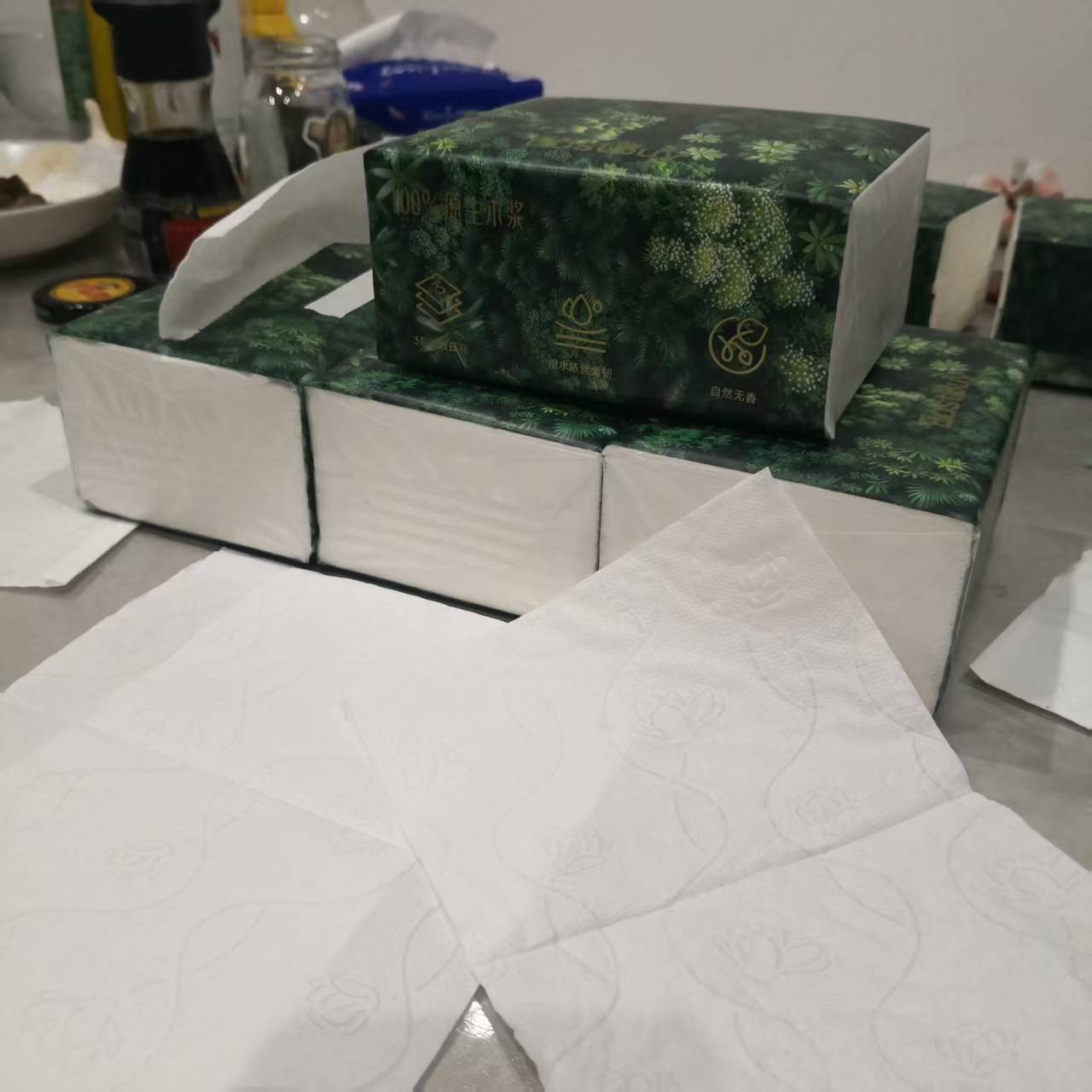
Top Source’s Automated High-Speed Folding Lines
We integrate servo-driven precision with multi-lane vacuum adsorption to maintain a 2,860-ton monthly capacity, ensuring every tissue pull is seamless and lint-free.
Top Source Hygiene operates out of the Baoding manufacturing hub, utilizing high-speed, multi-lane folding technology designed for high-demand facial tissue lines. Our systems use automated vacuum adsorption folding to ensure consistent “pop-up” delivery for boxed facial tissues. This mechanical precision prevents the common frustration of “clumped” pulls, which often occurs with lower-tier machinery.
Multi-Lane Box-Drawing Facial Tissue Systems
Our multi-lane systems utilize servo-driven control to maintain exact paper tension across the entire width of the parent roll. This prevents tearing during high-speed operation, even when processing ultra-soft 5-ply tissues like the TSH-6705-2. By stabilizing tension, we achieve a precision cutting mechanism that allows us to provide custom-sized samples for global clients within a 10-day turnaround.
- Automated vacuum systems guarantee the interlocking fold remains crisp for one-at-a-time dispensing.
- Precision slitting units handle diverse sheet sizes, from 170mm compact packs to 210mm premium sheets.
- Servo-synchronization reduces mechanical vibration, extending the life of the embossing rollers.
C-Fold and V-Fold Interleaving Technology
The facility in Mancheng employs advanced interleaving lines to produce hand towels and napkins with superior absorbency. V-fold automated lines optimize the stacking of 2-ply to 5-ply tissues, catering to premium hospitality standards found in the Middle East and European markets. For high-traffic commercial environments, our C-fold technology focuses on high-capacity hand towels, which can reduce maintenance costs for facilities by up to 15% through more efficient dispensing.
We integrate embossing units directly into the folding line. This enhances paper bulk and softness without compromising our 10x weight absorbency rating. This “Dry & Wet Using” capability means the tissue performs like a washcloth when saturated, a critical feature for our TSH-4702-3 series.
Smart Packaging Integration and Quality Sensors
Real-time monitoring and automated packaging units are synchronized with the folding lines to meet ISO 9001 and FDA compliance standards. In-line vision inspection systems detect and reject defective units—such as those with misaligned folds or surface impurities—during the process to ensure zero-defect delivery to the 40’HQ container.
- In-line sensors monitor GSM consistency and OBA-free status in real-time.
- Automated wrapping modules facilitate a 15–25 day lead time for full container orders.
- Modular designs allow rapid switching between private label branding and custom specifications for different global regions.
Conclusion
Selecting the right folding mechanism ensures your production line achieves consistent sheet dispensing and maintains high-speed efficiency without paper jams. By matching V-fold or C-fold technology to your specific product requirements, you protect your equipment longevity and guarantee a lint-free experience for the end user. Proper tension control and precise interfolding ultimately reduce waste and lower the landed cost per unit for high-volume distribution.
Review your current facility output to determine if an automated V-fold upgrade aligns with your growth targets. You can also contact Top Source Hygiene to request technical specifications or a custom quote for our high-speed folding lines.
Frequently Asked Questions
Wholesale facial tissue v type folding machine?
A wholesale V-type facial tissue folding machine is an industrial-grade piece of equipment designed for high-speed production of interleaved tissues. It operates by taking jumbo paper rolls, slitting them to the required width, and then using vacuum suction and folding rollers to create a continuous “V” fold. These machines typically feature automatic counting, PLC control systems, and pneumatic loading to ensure precision and minimize downtime in a mass-manufacturing environment.
What is V fold facial tissue?
V-fold facial tissue, also known as single-fold or interleaved tissue, refers to paper that is folded exactly in half to create a ‘V’ shape. Crucially, each sheet is interleaved with the next; the bottom half of the top sheet is tucked into the top half of the sheet below it. This mechanical arrangement ensures that when one tissue is pulled from a dispenser or box, the next sheet is automatically drawn up and presented for use.
V fold vs C fold tissue paper?
The primary difference lies in the interleaving and dispensing method. V-fold tissues are interleaved, meaning pulling one sheet partially extracts the next, making them more hygienic and efficient. C-fold tissues are folded into a ‘C’ shape and stacked on top of each other without being interleaved. This requires the user to manually pinch the next sheet, which often leads to multiple sheets being pulled out at once and higher waste compared to the V-fold system.
How do pop up tissues work?
Pop-up tissues function through a mechanical process called interleaving. During manufacturing, the sheets are folded and nested within one another. Friction between the paper surfaces and the weight of the stack allows the top sheet to pull the leading edge of the subsequent sheet through the narrow opening of the box. The opening provides enough resistance to hold the second sheet in place while the first sheet is fully released.
Tissue paper folding manufacturing?
The manufacturing process involves several stages: unwinding jumbo parent rolls, embossing for texture and absorbency, and slitting into desired widths. The paper then enters the folding unit where high-precision vacuum cylinders or mechanical blades fold the sheets into V, Z, or W patterns. Once interleaved, the continuous stack is cut by a high-speed log saw, counted into specific quantities, and automatically conveyed to packaging lines for boxing or plastic wrapping.