


Germany is Europe’s biggest tissue demand centre and the hardest market to sell into on your own brand. Retailer own-label dominates the shelf, environmental labels carry real technical requirements rather than marketing gloss, and the manufacturing base is a handful of large group-owned paper machines surrounded by a dense layer of converters and importers. Trade data make the structure plain: on UN Comtrade figures carried by the World Bank’s WITS platform, Germany exported about US$396 million of toilet paper (HS 4818.10, 160,872 tonnes) in 2023, overwhelmingly into the Netherlands and Belgium — this is a re-export and neighbour-market business, not an ocean-freight business.
This guide keeps its original shape — ten suppliers, one verdict each, then labels, retail and logistics. The evidence behind the names has been rebuilt. Two entries on the previous version could not be traced to any German tissue producer, two more described Italian and Portuguese groups as though they manufactured in Germany, and the eco-label section stated requirements that are the opposite of the actual rules. See About This List.
Key Takeaways
- Blue Angel (Blauer Engel, DE-UZ 5) does not mean part-recycled. The toilet-paper criterion is 100% recycled fibre from waste paper — no virgin fibre, no optical brighteners, no chlorine bleaching. If a specification says “Blue Angel” and the mill quotes 40% recycled, one of the two is wrong.
- EU Ecolabel is not a virgin-fibre cap. The tissue criteria under Decision (EU) 2019/70 are built around certified-sustainable and/or recycled fibre content and an AOX limit of 0.17 kg per air-dried tonne of pulp measured by ISO 9562 — not “maximum 15% virgin fibre”.
- German house brands are made by the big groups. Solo belongs to Aldi Nord and Floralys to Lidl; the rolls behind them come from producers such as WEPA, Essity and Metsä Tissue. Buying “a private-label manufacturer” in Germany usually means getting onto a group’s converting schedule.
- Ownership is moving. In late October 2026 it was reported that Essity is marketing its consumer tissue business — Zewa, Tempo, Cushelle, Lotus and the European mills including Mannheim — with bidders including Asia Pulp & Paper, CVC and Royal Golden Eagle reported at a few billion euros. Nothing is closed; confirm the contracting entity before committing a multi-year program.
- One long-established producer is in insolvency administration. Jung Papier GmbH, the Düsseldorf successor to Hakle, filed for self-administered insolvency proceedings at the end of October / start of November 2026 with operations continuing. That is exactly the kind of event a supplier audit is for.
- Re-export reality: the largest destination for German toilet-paper exports is the Netherlands, followed by Belgium. If you are shipping into Germany, your competitor is not the German mill — it is the freight cost of getting reels or finished goods into the Rhine-Ruhr and Hamburg corridors.
Top 10 Toilet Paper Manufacturers in Germany
Quick Comparison: Top Picks
| Company | German site | What they actually sell | Verdict |
|---|---|---|---|
| Essity AB (Mannheim & Neuss) | Mannheim, Baden-Württemberg; Neuss, NRW | Branded tissue and AFH: Zewa, Tempo, Tork | Europe’s largest tissue mill site is here — and its consumer tissue arm is reported to be for sale. |
| WEPA Group (Wepa SE) | Arnsberg-Müschede, NRW | Private label at scale plus own brands | The group most retail buyers mean when they say “German private-label manufacturer”. |
| Sofidel Germany GmbH | Schmalkalden; Arneburg; Wernshausen | Paper machines and converting; KittenSoft, Regina; Hakle brand rights | Italian group, genuine German mills — and the previous version put them in the wrong city. |
| Metsä Tissue (Germany) | Raubach, Kreuzau, Düren, NRW | Lambi, Serla, Tufter; towel and tissue converting | Finnish group with real German production, the main third-party supplier to discount house brands. |
| Fripa Papierfabrik Albert Friedrich KG | Miltenberg, Bavaria | Integrated mill and private label, family-run | A rare independent family mill in a market of group-owned capacity. |
| Jung Papier GmbH | Düsseldorf-Reisholz, NRW | Retail own-label rolls; own brand The Papermakers | The Hakle successor. Long history, first grass-fibre toilet paper — and now in self-administered insolvency. |
| Huchtemeier Papier GmbH | Dortmund, NRW | AFH converter and reel trader; Green Hygiene | Over a century old, part of the Grigeo group; the away-from-home route rather than the shelf. |
| Nölken Hygiene Products GmbH | Windhagen, Rhineland-Palatinate | Moist toilet paper, wet wipes and care products | If your specification involves wet tissue rather than dry rolls, this is the German OEM channel. |
| Plock GmbH | Cologne area, NRW | Importer and in-house converter; Funny, Quicky | Honest hybrid: imports reels, converts and distributes under its own AFH brands. |
| Lucart Deutschland GmbH | Frankfurt area, Hesse | Sales and logistics arm of the Italian mill group | No German paper machine — but a genuine route into the AFH sector. Labelled as such. |
Essity AB (Mannheim and Neuss)
Essity’s Mannheim site, on the Rhine north of Basel, is described in the group’s own material as its largest tissue mill in Europe, with annual production reported in the region of 280,000 tonnes, and the Neuss operation near Düsseldorf runs the Tempo napkin and toilet-tissue lines. On the shelf side this is Zewa and Tempo for consumers and Tork for away-from-home, which between them cover a substantial part of German household and commercial tissue purchasing. A previous version of this page gave an annual revenue figure for Essity in Germany that we could not trace to a source and has removed it; the group’s total turnover is reported in the tens of billions of Swedish kronor, of which Germany is one market among many, and the mill capacities are the part a buyer can actually verify.
What matters to a sourcing decision right now is corporate rather than technical. In late October 2026 Swedish and Chinese financial media reported that Essity is running a sale process for its consumer tissue business, with reported asking value in the low billions of euros and interested parties including Asia Pulp & Paper, CVC Capital Partners and Royal Golden Eagle. Essity has responded publicly to the reports. No transaction is closed and reported bidder lists move, so treat this as a live due-diligence flag rather than a fact about the outcome: if you contract with the Mannheim or Neuss entities, get the legal entity name, the treatment of your terms on a change of control, and the plant-of-origin commitment in writing. Group detail is published at essity.com.
📊 At a Glance:
- 📍 Location: Mannheim, Baden-Württemberg and Neuss, North Rhine-Westphalia
- 🏭 Core Strength: Branded consumer tissue (Zewa, Tempo) and Tork professional paper
- 🌍 Key Markets: German retail and away-from-home, plus wider European distribution
Why We Picked Them:
| ✅ The Wins | ⚠️ Trade-offs |
|---|---|
|
|
WEPA Group (Wepa SE)
WEPA is a family-owned group headquartered at Arnsberg-Müschede in North Rhine-Westphalia, and it has spent decades building the position that retail own-label toilet paper, kitchen towel and napkins in European discount and full-line chains are largely manufactured by groups of this type rather than by brand owners. Group turnover has been reported at around €1.8 billion in the 2024 financial year, which is materially different from the €698 million figure a previous version of this page attached to Germany alone; we could not source the smaller number, so it is gone. WEPA’s product range covers recycled and virgin-fibre lines and its own branded articles, and the company publishes its environmental certifications and mill locations.
Two structural points a foreign buyer should know. First, WEPA has been buying capacity rather than only building it: the group took over Star Tissue in Blackburn, United Kingdom in January 2024, bringing the Sirius, Bliss, Kleenall and Softelle professional lines and UK converting into the group as WEPA Professional UK. If you are sourcing recycled-fibre rolls for a European market, that site is part of the same conversation, and our page on UK toilet paper manufacturers sets out what WEPA Professional UK actually runs from Bridgend and Blackburn. Second, WEPA’s business model is retail programs at annual volume, which means an inquiry that wants short runs, unusual embossing or a one-container test order is being pitched against the wrong production economics. Official detail: wepa.de.
📊 At a Glance:
- 📍 Location: Arnsberg-Müschede, North Rhine-Westphalia (group headquarters)
- 🏭 Core Strength: Private-label toilet tissue, kitchen rolls and napkins; professional lines via Star Tissue UK
- 🌍 Key Markets: European discount and full-line retail, drugstore chains, away-from-home
Why We Picked Them:
| ✅ The Wins | ⚠️ Trade-offs |
|---|---|
|
|
Sofidel Germany GmbH
The previous version of this list placed Sofidel Germany at Neuss. Neuss is the Essity Tempo site; that is a competitor’s plant. Sofidel’s German operations are in Thuringia and Saxony-Anhalt: the German company is associated with Schmalkalden, with production at Arneburg and at Wernshausen, and it absorbed the Delipapier business, whose historic plant was at Schmallenberg in North Rhine-Westphalia before Sofidel consolidated German production. The group is the Italian family-owned producer behind KittenSoft and Regina, and in March 2023 it acquired the Hakle and Küken brand rights out of the Hakle insolvency — which is how the German shelf brand most people think of as native ended up Italian-owned, and why the Düsseldorf production of those brands moved.
For a buyer the relevance is straightforward. Sofidel runs its own paper machines, so specification conversations about grammage, bulk and crepe are with somebody who controls the base paper rather than somebody reselling somebody else’s reel. Its German output serves both its own consumer brands and retail own-label programs, and the group has invested in recycled-fibre lines alongside virgin grades. Where it is not the right choice is small-format custom work and non-standard dispenser formats; those are converter jobs, and they are listed further down this page. Group information: sofidel.com.
📊 At a Glance:
- 📍 Location: Schmalkalden (company seat); Arneburg; Wernshausen; Delipapier heritage at Schmallenberg
- 🏭 Core Strength: Toilet tissue, facial tissue and kitchen towel on own paper machines; KittenSoft and Regina
- 🌍 Key Markets: German and European retail, own-label programs
Why We Picked Them:
| ✅ The Wins | ⚠️ Trade-offs |
|---|---|
|
|
Metsä Tissue (German operations)
Metsä Tissue is part of the Finnish Metsä Group and runs tissue and towel production across several European sites. In Germany its operations are associated with Raubach, Kreuzau and Düren in North Rhine-Westphalia, in the same industrial belt that serves the Rhine-Ruhr retail corridor. The group’s own consumer brands — Lambi and Serla in Finland and Sweden, Tufter in the towel category — sit alongside substantial private-label production, and Metsä also expanded European towel capacity in recent years while opening new tissue capacity in the United Kingdom at Goole.
A practical note that is easy to miss: this is a Nordic group with German plants, not a German company. That matters for two things a buyer actually negotiates. Origin paperwork follows the producing site, so if the reels or finished goods ship from a German plant you can say so and if they come from Finland or Poland you cannot. And capacity allocation across a multi-country group is decided at group level; the more useful question in an early call is which machine would run your order and what its current booking position looks like, rather than what the group total capacity is. Group detail at metsatissue.com.
📊 At a Glance:
- 📍 Location: Raubach, Kreuzau and Düren, North Rhine-Westphalia
- 🏭 Core Strength: Toilet tissue, facial tissue and towel; own brands plus retail own-label
- 🌍 Key Markets: German and Nordic retail, European discount chains, away-from-home
Why We Picked Them:
| ✅ The Wins | ⚠️ Trade-offs |
|---|---|
|
|
Fripa Papierfabrik Albert Friedrich KG
Fripa operates at Miltenberg in Bavaria and holds the profile that most of the names above have lost through consolidation: privately held, family-run into a fourth generation, with an integrated mill producing base tissue and its own converting. Its legal name — Fripa Papierfabrik Albert Friedrich KG — is worth noting because earlier listings here gave only “Fripa”, and in the German market the legal form (KG, a partnership with unlimited liability partners) tells you something about how the business is capitalised and governed. The company supplies its own retail brands and substantial private-label volume, and it publishes mill and certification information directly.
Why a foreign buyer cares about the difference between Fripa and a group: decision speed and willingness to take an unusual specification. An independent mid-sized mill with its own paper machine can often say yes to a non-standard grammage, embossing or format because the machine is not booked by four retail programs. The corresponding risk is scale — a large annual commitment at one price point for several years should be tested against the mill’s capacity, its energy exposure and its pulp sourcing, since a single-site independent carries raw-material volatility without a group’s balance sheet behind it.
📊 At a Glance:
- 📍 Location: Miltenberg, Bavaria
- 🏭 Core Strength: Integrated tissue production and private-label converting
- 🌍 Key Markets: German retail and drugstore, European wholesale
Why We Picked Them:
| ✅ The Wins | ⚠️ Trade-offs |
|---|---|
|
|
Jung Papier GmbH
The Düsseldorf-Reisholz site on the Rhine has made paper since the early twentieth century and was for decades the production home of Hakle. After the 2022 insolvency of Hakle GmbH the operation continued under Jung Papier, and the Hakle brand rights went to Sofidel, which ended production of those brands at the site at the end of 2024. What Jung Papier kept was the converting capability and the retail own-label book — the store brands sold as Clara, Lilla, Rosa and Camilla among them — plus its own positioning, including a claim to the first toilet paper made with grass fibre content. Group-level capacity claims are not something we can verify from public data, so this entry describes the business rather than the tonnage.
Then the news that makes this entry necessary rather than decorative: at the end of October / beginning of November 2026 Jung Papier filed for insolvency proceedings again, this time in self-administration (Eigenverwaltung), with reported 2025 revenue around €70 million against a €100 million plan and about 155 employees affected, and operations continuing during the process. Energy, raw-material and labour costs were cited. A buyer reading this page should take the practical lesson rather than the gossip: a plant with a hundred-year history and a full own-label book can still be insolvent, which is why a payment-terms structure, a tooling-ownership clause and an artwork-return obligation belong in the contract, not in a supplier’s reputation. Company information: jungpapier.de, and the insolvency filing was reported by multiple German outlets including Rheinische Post.
📊 At a Glance:
- 📍 Location: Düsseldorf-Reisholz, North Rhine-Westphalia
- 🏭 Core Strength: Retail own-label toilet rolls and converting; own brand The Papermakers
- 🌍 Key Markets: German grocery and drugstore own-label, European wholesale
Why We Picked Them:
| ✅ The Wins | ⚠️ Trade-offs |
|---|---|
|
|
Huchtemeier Papier GmbH
Huchtemeier has been in the paper trade for over 130 years and describes its business as tissue and hygiene paper, including the Green Hygiene line made from 100% recycled fibre, supplying commercial and institutional customers. It is now part of the Grigeo group. The honest description of what it is: a converter and parent-roll trader rather than a paper mill. That distinction matters because a converter can offer breadth across dispensers, formats and pack configurations while depending on somebody else’s base paper, so a specification dispute about the paper itself becomes a three-way conversation.
This is the entry to look at if your demand is jumbo rolls, centre-pull, hand-towel refill or hotel and facility supply rather than branded retail packets. Our own comparison of standard versus jumbo rolls covers the arithmetic — cost per sheet and dispenser compatibility usually decide it, not price per roll. Ask any converter, here or in Asia, which mill supplies the reels behind your quotation, and get that recorded on the specification sheet, because a change of reel source is the most common silent specification change in this trade.
📊 At a Glance:
- 📍 Location: Dortmund, North Rhine-Westphalia
- 🏭 Core Strength: Commercial hygiene paper, AFH formats, recycled-fibre converting
- 🌍 Key Markets: German and European facility services, hospitality, institutional buyers
Why We Picked Them:
| ✅ The Wins | ⚠️ Trade-offs |
|---|---|
|
|
Nölken Hygiene Products GmbH
Nölken operates at Windhagen in Rhineland-Palatinate and specialises in moist tissue products — wet wipes, moist toilet paper and personal-care articles — produced for domestic and international retail and trade customers. It is an OEM business rather than a brand business, which puts it in a different negotiating category from the groups above: the conversation is about formulation, substrate, preservation, flushability claims, packaging format and the regulatory file, not about ply count and crepe.
Two warnings attached to this category, because it is where tissue exporters most often get burned. Flushability claims on moist toilet paper are governed by specific test requirements and industry guidance — a “flushable” statement without an indaq or equivalent test report behind it is a retail rejection waiting to happen, and in the EU it is also a genuine marketing-claim exposure. And wet wipes are subject to stricter microbiological and preservation discipline than dry tissue, with a longer documentation trail. If your German program includes a moist line, treating it as a variant of your dry specification is the mistake; scope it as its own product.
📊 At a Glance:
- 📍 Location: Windhagen, Rhineland-Palatinate
- 🏭 Core Strength: Moist toilet paper, wet wipes and personal-care articles as private label
- 🌍 Key Markets: German and international retail own-label
Why We Picked Them:
| ✅ The Wins | ⚠️ Trade-offs |
|---|---|
|
|
Plock GmbH
Plock is a Cologne-area business that combines importing with its own converting of hygiene paper, and distributes under its own Funny and Quicky labels in the away-from-home and bulk-roll segment. It is a good example of the layer that sits between Asian reel production and German facility supply: it buys base paper and reels from wherever the economics and quality work, converts and packs, and sells into the washroom-service channel. A previous version of this page included two similar businesses under a “manufacturers” heading without saying so.
For a Chinese exporter this profile has a specific meaning, and it is the reason Plock stays on the list: a business that already imports reels is a plausible customer for finished rolls or for supply that takes the freight risk off them. But you should apply the same discipline to them that a retail buyer applies: ask which plant produced your last lot, and if they cannot tell you, they cannot give your downstream customer a chain-of-custody or origin answer either. Any claim you make about a mill you do not own is only as strong as the paperwork between you and that mill.
📊 At a Glance:
- 📍 Location: Cologne area, North Rhine-Westphalia
- 🏭 Core Strength: Import and in-house converting of AFH hygiene paper; Funny and Quicky labels
- 🌍 Key Markets: German washroom-service, facility management and commercial trade
Why We Picked Them:
| ✅ The Wins | ⚠️ Trade-offs |
|---|---|
|
|
Lucart Deutschland GmbH
Lucart is an Italian tissue group whose own operations are centred on Porcari in Tuscany, with multiple European production sites and its German company operating as a sales and logistics base in the Frankfurt area. The previous version of this page described the group as having “a strong operational base in Germany”, which read as manufacturing and is not what the German entity is. We have kept it because the commercial value is real for a different reason: Lucart is one of the significant away-from-home and professional paper suppliers in Europe, its range runs from recycled to virgin grades, and its German organisation is where a buyer in this market would meet that portfolio.
Why an importer’s office belongs on a manufacturer list at all: the practical question in German commercial tissue is rarely “who owns the paper machine” and frequently “who can deliver to my site, in my format, with my documentation”. A distribution arm answers that. The counterpart risk is origin accuracy, and it is the same trap we removed elsewhere on this page: if the goods ship from an Italian, French or Polish mill, the paperwork says so and any German-market claim must match. Group information: lucartgroup.com.
📊 At a Glance:
- 📍 Location: Frankfurt area, Hesse (sales and logistics; production in Italy and other EU sites)
- 🏭 Core Strength: Professional and away-from-home tissue, consumer rolls, packaging paper
- 🌍 Key Markets: German and European professional hygiene channels
Why We Picked Them:
| ✅ The Wins | ⚠️ Trade-offs |
|---|---|
|
|
The German Tissue Market: Europe’s Largest Demand Center
Germany is the largest single national demand centre in European tissue. We are removing the two statistics that opened this section previously: a claimed share of the European market that matches no published breakdown we could locate and looks like a garbled version of a global statement about Europe, and an annual toilet-paper export figure roughly four times the real number. WITS, carrying UN Comtrade data, records German HS 4818.10 toilet-paper exports of about US$396 million and 160,872 tonnes in 2023, led by the Netherlands ($123 million) and Belgium ($62 million). Those are the real shape of the trade: a big consuming market with a substantial re-export and neighbouring-country flow, not an export powerhouse.
How the German Market Is Actually Structured
What you can say with confidence: Germany has around 84 million consumers, tissue consumption per head is among the highest in Europe, and the market splits into three buying systems that behave very differently. Retail own-label through discounters, where price per roll and certified fibre claims decide everything. Branded premium, where Zewa, Lambi and the like hold shelf position on hand-feel. And away-from-home, sold through washroom-service and facility distributors on dispenser compatibility and cost per sheet rather than on packaging at all. A supplier who pitches one specification to all three is not reading the market.
Trade Dynamics and Competitive Landscape
On trade direction, the honest reading is that Germany both imports and exports large volumes of tissue across its land borders, which is what a central European production map produces: Dutch, Belgian, French and Austrian capacity sells into Germany, and German group-owned mills sell back out. The consequence for an overseas supplier is specific. Your competitive benchmark in Germany is not a German mill’s cost of production but the delivered cost of a mill 300 kilometres away that pays no ocean freight and can replenish in days. That is the argument you have to win on planning reliability and specification, not on unit price alone.
Sustainability First: FSC, Blue Angel, and EU Ecolabel Standards
German buyers do ask for eco-labels, and the labels have real technical content — which is precisely why getting them wrong is expensive. A previous version of this page stated the requirements for two of them backwards. Below is what each scheme actually requires, and what you should therefore ask a mill for.
FSC Certification for Responsible Forest Management
FSC and PEFC are chain-of-custody systems for fibre, and that is the correct way to describe them: they certify that material of certified origin is kept identifiable through processing and trade, under a licence issued to a named entity for a named scope. They are not a measure of product quality, softness or emissions. Practically, three questions do most of the work: what is the licence code, is the product you are buying inside the certified scope, and does the transaction document carry the claim — because a chain-of-custody claim that is not on the invoice cannot be passed down to your customer.
Blue Angel (DE-UZ 5): 100% Recycled, Not Part-Recycled
The Blue Angel (Blauer Engel) toilet-paper criterion is the opposite of a partial-recycled allowance: product under label DE-UZ 5 is made from 100% recycled fibre from waste paper, with no virgin fibre, no optically brightening agents and no chlorine bleaching, and the licence is held by a specific manufacturer for a specific product. The previous text on this page described the criterion as a part-recycled minimum, which would have let a supplier present an ordinary recycled-grade roll as Blue Angel-compliant when a genuine UZ 5 product cannot contain virgin fibre at all. If your specification names the Blue Angel, ask the mill for the licence number and the product it covers, and match it to the artwork. Claims about retailers prioritising the label for public procurement have also been removed; public tender requirements are set per tender, and you should read the tender, not a blog.
EU Ecolabel and Circular Economy Compliance
The EU Ecolabel for tissue paper is set by Commission Decision (EU) 2019/70, and its structure is not a virgin-fibre percentage cap. The criteria cover fibre sourcing (a substantial minimum share of certified-sustainable and/or recycled fibre, with chain-of-custody documentation), emissions and consumption limits at the producing mill — including adsorbable organic halides (AOX) measured under ISO 9562, with the limit expressed per air-dried tonne of pulp — plus energy, water, waste and product-performance requirements, and restrictions on optical brighteners depending on the licence category. The two figures previously stated on this page do not match that decision, which is why the criterion is quoted here from the decision itself rather than summarised. If a European customer is going to audit you against this label, get the actual decision text into your specification file rather than a summary.
Build Your Premium Toilet Paper Brand with 30 Years of OEM Expertise
Private Label Dominance in German Retail Chains
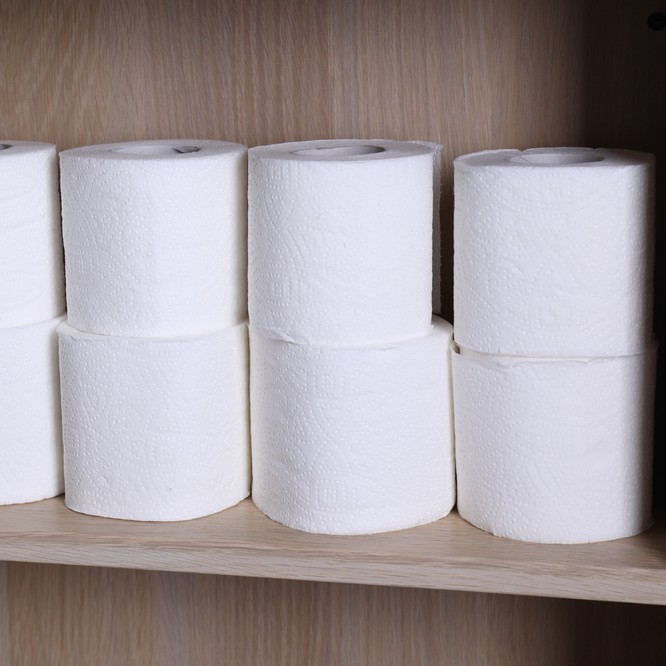
German retail owns the specification, and that part of the previous text was right. What we have corrected is the attribution and the percentages. Hard discounters and drugstores hold a very large share of tissue volume, but the specific category-share percentage quoted there is not something we can source, so it is now stated as a direction rather than a number. More useful: Solo is the Aldi Nord house brand and Floralys is the Lidl house brand, and neither retailer owns a paper mill — product behind them is supplied by groups such as WEPA, Essity and Metsä Tissue, along with other European capacity. If you are trying to understand who actually makes a German market, you are looking for the converting contract behind the brand owner’s name.
Market Penetration Across Discount and Full-Line Supermarkets
Aldi (Nord and South), Lidl, Netto and Penny drive the value end of the market on own-label rolls, and the house brands set the price and quality benchmark that the rest of the shelf is measured against. Netto and Penny merchandise in the same category as the two largest, and all of them buy converted product against a tender specification rather than selecting from a mill catalogue. For an overseas supplier, the realistic entry point into that channel is not a direct listing at a German discounter — those programs are long-standing and capacity-committed — but the converter or importer who supplies the tier below.
The full-line supermarkets — Edeka, REWE, and the real markets around them — run multi-tier own-label architectures, with a value line, a standard line and a premium line reaching 4-ply and 5-ply, so a single supplier can lose the value slot and win the premium slot on the same machine. This is where a genuinely differentiated specification (bulk, crepe pattern, perception of softness, recycled fibre with acceptable hand-feel) can be sold, and where an unproven recycled claim gets tested by consumers rather than by a price audit.
Drugstore Specialization in Sustainable and Premium Segments
dm and Rossmann are the drugstore channel, and their tissue own-label sits next to products where skin compatibility, fragrance-free formulation and dermatological testing are ordinary claims rather than premium positioning. That has a documentation consequence a tissue buyer often misses: claims of this type on a consumer pack need supporting evidence held by whoever makes the claim, and in the EU that exposure is real rather than theoretical. Ask what the retailer’s private-label specification requires as substantiation, and get the mill’s declaration of composition for the grade in question.
On packaging and material direction: the visible movement in German shelves is toward recycled-fibre content, reduced plastic in secondary packaging, and paper-based wrap where the machine run supports it. Bamboo tissue is marketed in the premium eco segment, but it is a small and specific part of the category, and it should not be treated as a default offer — if you cannot state the fibre composition of what you are quoting, you should not be quoting it as an alternative to wood pulp.
Retailer Control Over Technical Specifications and Sourcing
The specification dynamic is worth being blunt about because it decides whether an inquiry goes anywhere. German retail tenders state sheet dimensions, ply, grammage, run length or sheet count, core diameter, roll diameter, packaging gauge, rolls per pack, packs per carton and cartons per pallet, and the tender is evaluated against those, not against your standard range. A quotation that answers a specification sheet with a catalogue number tells the buyer you have not supplied this channel before.
The contract-manufacturing layer is dominated by the groups named on this page, because only they run both the paper machines and the high-speed converting a national retail program needs, and because the reporting demands attached to those programs have become serious: CO2 and energy data per product, chain-of-custody documentation for fibre, and audit access to the producing site. A smaller overseas producer competing for that business is not competing on price alone — it is competing on whether it can produce the data. Where we can supply that, our own line is 100% virgin wood pulp with specification documented per SKU; where a customer needs a certified recycled product, the honest answer is that we do not manufacture it, and the same honesty should apply to whoever quotes you.
Logistics & Distribution: What Germany Adds to Your Landed Cost
Germany is reached by sea through Hamburg and the Bremen/Bremerhaven pair, and by land through the Rhine corridor and the Benelux gateway ports, which is how a large share of European tissue actually moves. We have removed the “7 to 14 days” delivery figure that previously appeared twice on this page, including in a sentence about shipping from German mills to ports, which does not describe anything. What belongs here instead: the three cost lines that decide whether a German-sourced and an Asia-sourced offer are comparable — inland haulage to the German consignee, inventory carrying cost at a 25-day-plus replenishment interval, and the detention and demurrage exposure on a bulky, low-value container.
Strategic Proximity and Infrastructure in the German Transit Hub
Germany serves as the core logistical center for the European tissue industry. Its network of motorways and rail systems facilitates the movement of high-volume paper goods across borders. Manufacturers like WEPA Group and Metsä Tissue place their mills in strategic locations such as Arnsberg to lower transit costs and speed up delivery to retail chains throughout the continent.
The Port of Hamburg is the natural entry point for containerised tissue into northern Germany, and the Rhine-Ruhr region is where a large part of the consuming and converting capacity sits, which is why so many of the sites on this list are in North Rhine-Westphalia. The earlier claim about how many tonnes of paper move through Hamburg each year was not sourced and has been removed; the relevant fact for a buyer is simpler and checkable — your German customer’s cost from the terminal to their warehouse is a real part of your price, and it differs materially between a Hamburg delivery and one into southern Germany.
Lead Times: Plan on Production, Not on Optimism
Our own numbers, stated plainly so they can be checked against an offer: production runs about 25 days from receipt of deposit and confirmed artwork, minimum order is one 40-foot container per SKU, and terms are FOB Tianjin. We have removed the four conflicting lead-time ranges previously scattered over this page, and the long-run growth rate quoted for the category, which had no source. Ocean transit is quoted per sailing by your forwarder and is not ours to promise — and any supplier who promises you a door date on a vessel they do not control is guessing.
The reliability argument that does hold: a German retail or AFH buyer plans on replenishment intervals, not on one cheap container. A supplier who can hold a specification, give you a written production window, and survive an audit will win repeat volume against a cheaper quotation that cannot. That is why the Jung Papier entry above is not gossip — supply continuity is a financial question in this market as much as a technical one.
Meeting Packaging and Recycled Fiber Demands in the German Market
Two regulatory things changed the conversation in this market, and both are worth naming correctly rather than gesturing at. The EU Green Claims Directive regime governs how environmental statements on packaging may be substantiated, and Germany’s Supply Chain Due Diligence Act (LkSG) obliges larger companies operating in Germany to manage environmental and human-rights risk in their supply chains — which means their fibre and supplier documentation requests are not a formality, they are compliance work passed downstream.
Adopting Certified Fibers and Eco-Label Standards
Where we are honest about our own limits: our production is 100% virgin wood pulp in 2 to 5 ply with documented specification per SKU. We do not manufacture a certified recycled-fibre or bamboo grade, so if a German tender requires Blue Angel DE-UZ 5 or a recycled claim, we are not the right supplier for that line and will say so. What we can do is supply the specification, artwork and container-loading data that a tender needs, on stated terms. Integrating non-wood fibre is a genuine industry direction, but it is a mill investment, not a trading claim.
Sustainable Packaging and Regulatory Compliance
Packaging choices in this market are constrained by machinery as much as by intent: paper-based overwrap needs the right wrapping configuration and often runs slower than film, and a reduced-gauge PE film with recycled content is a different claim from plastic-free. Whatever goes on the artwork must follow the claim rules above, and recycled percentages and certification logos must match the licence the mill actually holds, because an uncertified logo printed on a retail pack is a recall-and-reprint event rather than a typo.
Supply Chain Transparency and Retailer Data Integration
Practically, the data a German customer asks for now is: mill name and location for the producing site, fibre composition and certificate scope, energy and emissions data per tonne where the mill can produce it, transport distance and mode, and the chain-of-custody paperwork that lets a claim survive to the shelf. Assembling that once and keeping it version-controlled is worth more than most price concessions in this category, because it is the part that decides whether you can be re-tendered next year.
Frequently Asked Questions
Who is the largest private label manufacturer in Germany?
WEPA is the name most often given for European private-label hygiene paper manufacture, with its group seat at Arnsberg; we have removed the “25% German market share” figure because we could not source it. Two things are more useful than a ranking: the house brands themselves are owned by the retailers — Solo is Aldi Nord, Floralys is Lidl — and the rolls behind them come from groups that run paper machines and converting at national scale, principally WEPA, Essity and Metsä Tissue, with Sofidel and Fripa supplying own-label work as well.
What environmental certifications do German retailers require for tissue products?
Nothing here is legally mandatory in the sense of a product law; it is contractually mandatory in the sense that a tender without the right documentation does not get read. Retailers ask for FSC or PEFC chain of custody with a verifiable licence code, the EU Ecolabel under Decision (EU) 2019/70, and in the recycled segment the Blue Angel DE-UZ 5, which requires 100% recycled fibre and no virgin fibre at all. Totally chlorine-free bleaching is a mill-process claim you should expect to be substantiated rather than asserted. Ask for the certificate, read the scope, and put the code on your own paperwork.
How does recycled fiber compare to virgin pulp in the German market?
Both fibres are mainstream in Germany, on different shelves. Recycled fibre dominates the value own-label segment and much of the away-from-home trade, and it is also what a genuine Blue Angel product must be made from. Virgin hardwood and softwood pulp carries the premium hand-feel position. The real specification question is not which is better but what your target pack must be: a soft 4-ply premium roll cannot be made from the same furnish as a DE-UZ 5 value roll, and a supplier who offers you both without asking which one you mean is selling you a compromise.
Which German ports are the main hubs for tissue imports?
Hamburg is the main container gateway for northern and central Germany, with Bremen/Bremerhaven serving some northern consignees, and inland waterway and rail moving product from the ports into the Rhine-Ruhr and southern markets. We have removed the unsourced tonnage claim that previously answered this question. What to do instead: get your customer’s delivery location and Incoterm in the first email, and price the inland leg deliberately rather than discovering it in a dispute about a delivered offer.
What is the standard ply count for toilet paper in Germany?
That part is broadly right as market perception: 3-ply is the mainstream quality expectation in German households, 2-ply is the value and institutional standard, and 4-ply and 5-ply occupy the premium shelf. The commercial point is that ply is not a quality measure by itself — a 3-ply with poor crepe and low bulk feels worse than a well-built 2-ply, and German buyers specifying sheet count and grammage in tenders know that. Specify ply together with grammage per square metre, sheet size and run length, and cost the roll per sheet rather than per unit.
About This List, and What We Corrected
This page was rewritten in place on 7 November 2026. Four of the ten companies it listed should not have been there. “Cartamund (Wachtendonk Mill)” could not be found in any source other than this page and search-engine summaries that were quoting this page back, with no tissue mill at Wachtendonk; the name appears to be a confusion with a Belgian games manufacturer. “Hyga GmbH, Rinteln” is not a tissue producer — the identifiable Hyga GmbH & Co. KG is a private-label cosmetics and personal-care manufacturer at Mülheim an der Ruhr, a different company from the Swiss HYGA AG, and a different address from the one given here. The Navigator Company is Portuguese and does not manufacture tissue in Germany. Lucart is Italian, and its German entity is a sales and logistics company rather than a mill; that entry stays, now labelled correctly.
Sofidel Germany was placed at Neuss, which is the site where Essity makes Tempo. The German market statistics were worse than wrong in one instructive way: the claim that the Blue Angel label requires a minimum of 40% recycled content states the opposite of the actual criterion, which is 100% recycled fibre from waste paper with no virgin fibre and no optical brighteners under DE-UZ 5; and the EU Ecolabel was described as capping virgin fibre at 15% with an AOX limit of 0.15 kg per tonne, whereas the governing text is Commission Decision (EU) 2019/70 and the AOX criterion is expressed per air-dried tonne of pulp, at 0.17 kg, measured by ISO 9562. German toilet-paper exports were given as $1.66 billion, about four times the WITS and UN Comtrade figure of roughly $396 million and 160,872 tonnes for HS 4818.10 in 2023. The 18.21% European market share, the 80-to-90% discounter category share, the 25% WEPA share, the 2.5 million tonnes through Hamburg, the 4.4% growth rate and the 7-to-14-day shipping ranges have all been removed, and the lead-time text now states our own terms — about 25 days production, one 40-foot container per SKU, FOB Tianjin.
Two things that were missing and are now here, both of which a buyer in this market needs before signing something long. Essity has been reported since late October 2026 to be marketing its consumer tissue business — including the Zewa, Tempo and Cushelle brands and mills such as Mannheim and Neuss — with several groups named as potential buyers and no transaction closed. And Jung Papier GmbH, the Düsseldorf successor to Hakle and a major supplier of German store brands, filed for self-administered insolvency proceedings at the end of October / beginning of November 2026 with operations continuing. We added both because a list of manufacturers that ignores who is being sold and who has stopped paying its bills is a marketing document, not a sourcing document. If you find an error here, please tell us and we will correct it and date the change.
Final Thoughts
Germany is worth supplying because it is large, it pays for specification, and it buys repeatedly. It is demanding because the incumbent capacity is close, well financed and already contracted, and because the documentation burden is compliance work rather than paperwork. Enter it on one SKU with a stated grammage, ply, sheet count and pack configuration, on terms you can actually hold.
Three concrete moves follow from this page. Get the eco-label language right before it reaches a German tender, because a Blue Angel or EU Ecolabel claim that does not match the criterion is a contract failure and not a typo. Ask who actually owns the paper machine behind any German quotation, since converters, importers and trading arms sit on this list deliberately and honestly. And treat supplier financial position as part of your specification review, given what happened to two of the traditional names in this market in the last five years. For the same verification approach in other origins, see our pages on Malaysia and Türkiye.