

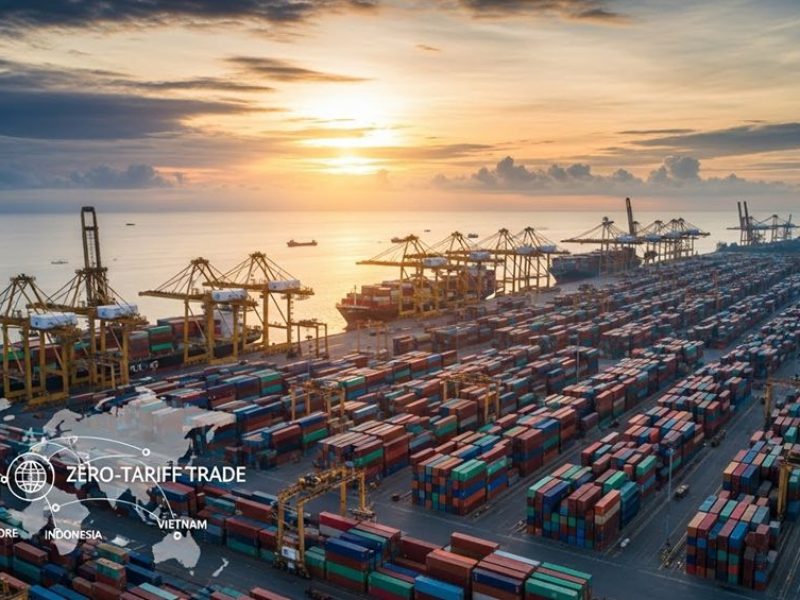
Thailand sits in the middle of the world’s tissue-fibre supply chain rather than at its cheap end. It has substantial pulp capacity, a large converting sector around the eastern seaboard, a consumer market that travels, and one deep-water gateway at Laem Chabang that makes it the natural origin for ASEAN, Japanese and Australian demand. It also imports parent reels from Indonesia at scale, which is the fact a previous version of this page stated as a Thai mill’s own capability. Both halves matter to a buyer, and the claim that sourcing here protects a margin by a fixed percentage was removed because it had no source.
This guide keeps its original shape — ten entries, one verdict each, then market structure, standards, jumbo-roll sourcing, logistics and trade agreements. The evidence has been rebuilt, and three things have to be said plainly. First, only some of the companies previously listed as Thai tissue manufacturers could be traced to Thai tissue manufacture at all; two look invented and one is a place name. Second, the previous version described several third-party factories in the first person, as though this site owned them; that has been removed throughout. Third, we are not a Thai producer — we manufacture in Hebei, China, ship FOB Tianjin, and entry nine explains why a buyer comparing Thailand would still want that number on the same sheet. See About This List.
Key Takeaways
- Thailand is a pulp-rich, reel-importing market. It has real eucalyptus pulp capacity and a large converting sector, and it also buys jumbo rolls from Indonesian producers. Which side of that line a supplier sits on decides what you can ask them to change.
- The largest names are consumer groups, not tissue specialists. Berli Jucker (Cellox) and Double A are paper and conglomerate businesses first; their tissue ranges are strong in facial, napkin and soft-pack formats and thinner in bulk toilet rolls than a buyer expecting a jumbo-roll source would assume.
- A major converting plant burned on 30 June 2025. The Riverpro plant at Nong Khae in Saraburi suffered a fatal fire and was ordered closed pending investigation. If a supplier’s capacity claim predates that date, ask what has been restored.
- Origin paperwork is the actual advantage. Intra-ASEAN trade moves on the ATIGA preferential route with a Form D certificate of origin; the ASEAN-China and RCEP agreements give separate, scheduled tariff treatment into China. Ask for the certificate type by name rather than accepting “ASEAN free trade”.
- Two entries here exist to correct the record. “Wang Sala” is not a company name and SPS Corporate is Indonesian. Both were presented as Thai manufacturers previously.
- No export permit “inspection window” is required to ship tissue from Thailand. The previous version of this page quoted five-to-ten business days for mandatory inspections and export permits; we could find no such requirement, and it has been removed.
Top 10 Toilet Paper Manufacturers in Thailand
Quick Comparison
| Company | Where they operate | What they actually sell | Verdict |
|---|---|---|---|
| Berli Jucker PCL (BJC) | Bang Phli, Samut Prakan; 304 Industrial Park, Prachinburi | Cellox, Parrot and Tasto branded tissue; distribution reach | The consumer-group route to Thai branded tissue, listed on the Stock Exchange of Thailand. |
| Double A (1991) PCL | Tha Toom, Si Maha Phot, Prachinburi | Integrated pulp and paper; Double A Care facial, napkin, wet wipe | Enormous fibre and paper capacity — but its hygiene line is facial formats, not bulk toilet rolls. |
| Riverpro Pulp & Paper Co., Ltd. | Nong Khae, Saraburi (WHA industrial estate) | Tissue mill, virgin and de-inked recycled; River Pro, Mild, Tendre | A genuine Thai tissue mill, and one whose recent history requires a current-state check. |
| Kimberly-Clark (Thailand) | Bang Khaen, Pathum Thani; Phra Pradaeng, Samut Prakan | Kleenex, Scott, Boss; professional wipes | Two Thai sites makes this the cleanest “manufactured in Thailand” case on the list. |
| SCG Packaging / Siam Cellulose Fibre | Ban Pong, Ratchaburi; Wangsala, Kanchanaburi | Eucalyptus pulp and paper; packaging | Upstream fibre and packaging, not a toilet-roll supplier. Useful for exactly that reason. |
| Thai Paper Co., Ltd. | Central Thailand; part of the SCGP group | Recycled and specialty paper grades | A paper company whose name is easily confused with similar Thai entities — a due-diligence trap. |
| SPS Corporate (PT Sun Paper Source) | Indonesia (supplying Thailand) | Jumbo parent reels exported into ASEAN | The Indonesian reel source behind part of the Thai converting trade, now labelled honestly. |
| Nice (retail tissue brand) | Indonesian brand (Univenus/APP); sold in Thailand | Consumer facial and coreless tissue | Indonesian APP-group brand; a shelf benchmark, not a Thai factory or a Thai origin |
| Wang Sala — not a company name | Wangsala, Kanchanaburi | Place and industrial-complex name | Kept as a correction: a previous list treated it as a tissue manufacturer. |
| The Chonburi–Rayong converting belt | Laem Chabang corridor, Eastern Economic Corridor | Contract converting and private label | Where the actual converting capacity for export programs is found, and how to verify it. |
Berli Jucker Public Company Limited (BJC)
A listed Thai conglomerate whose tissue arm is the strongest branded consumer position in the country.
Berli Jucker traces its group history to 1882 and today is a diversified Thai industrial and consumer group listed on the Stock Exchange of Thailand, operating across packaging, consumer products and healthcare. Its tissue business runs through Berli Jucker Cellox, which makes the Cellox facial and toilet tissue range along with Parrot and Tasto in related categories, and distributes through a retail network that reaches deep into Thai grocery and convenience formats. Manufacturing for the tissue business is associated with sites at Bang Phli in Samut Prakan province and at the 304 Industrial Park in Prachinburi, while the group headquarters sits in Bangkok.
Two corrections to what this page said before. The group’s history belongs to a corporate narrative, not to a tissue plant, and the entry was previously written in the first person as though we operated it. And “Bangkok” as the manufacturing location is only half true: the production sites are outside the city, which changes the inland leg of any order. Commercially, BJC is the brand-owner route — good for distribution relationships and for benchmarking what Thai consumers expect, less suited to a foreign buyer wanting unbranded volume. Group and product information is published by Berli Jucker.
📊 At a Glance:
- 📍 Location: Bang Phli, Samut Prakan and 304 Industrial Park, Prachinburi; headquarters Khlong Toei, Bangkok
- 🏭 Core Strength: Branded facial and toilet tissue: Cellox, Parrot, Tasto
- 🌍 Key Markets: Thai retail and convenience trade, ASEAN distribution
Why We Picked Them:
| ✅ The Wins | ⚠️ Trade-offs |
|---|---|
|
|
Double A (1991) Public Company Limited
The largest integrated fibre and paper operation most “Thai tissue manufacturer” lists omit — and the reason it was omitted is also why it should be read carefully.
Double A operates a very large integrated complex at Tha Toom in Si Maha Phot district, Prachinburi province: on published figures two pulp lines with combined annual capacity in the range of 580,000 to 600,000 tonnes, and three paper mills producing roughly 600,000 tonnes of paper a year. The company built its reputation on plantation-grown fibre and on copy paper, and it expanded into personal and household paper under the Double A Care name — facial tissue in box and soft-pack formats, pocket tissues and wet wipes, plus related hygiene products.
The honest read for a tissue buyer: this is enormous capacity, and it is not primarily bulk toilet-roll capacity. Double A Care’s reported range is weighted to facial, napkin and wet formats, so if your specification is jumbo reels or coreless bathroom rolls, you need to establish whether that grade is genuinely offered before you build a plan on the size of the site. A previous version of this page listed a “Sun Paper (Thailand)” as an integrated Prachinburi mill and never mentioned Double A at all — the description appears to have been Double A’s, attached to a name that belongs to a Bangkok paper merchant. Company detail: doublea.com.
📊 At a Glance:
- 📍 Location: Tha Toom, Si Maha Phot, Prachinburi
- 🏭 Core Strength: Integrated pulp and paper; Double A Care facial, soft-pack, pocket tissue and wet wipes
- 🌍 Key Markets: Domestic, Asia-Pacific, European and North American stationery and hygiene trade
Why We Picked Them:
| ✅ The Wins | ⚠️ Trade-offs |
|---|---|
|
|
Riverpro Pulp & Paper Co., Ltd.
A genuine Thai tissue mill making its own base paper — and a supplier whose current state must be verified before any commitment.
Riverpro is part of the River group, whose history in the Thai paper trade goes back to 1966, and it operates as a tissue manufacturer rather than a converter alone, running both virgin and de-inked recycled production at a site in the Nong Khae area of Saraburi province. Its retail and commercial brands include River Pro, Mild, Tendre, Pinn and Maxx, and the company describes itself among the country’s larger producers.
What has to be said next is the difficult part. On 30 June 2025 a serious fire broke out at the company’s tissue plant in the WHA industrial estate at Nong Khae; workers were killed and injured, and the authorities ordered the facility closed pending investigation. Reporting from Bangkok Post and Thai PBS covers the event, and recovery status after that date is not something this page should assert. Two buyer lessons follow directly. Any capacity figure quoted from before mid-2025 is a historical statement and needs a current answer in writing. And a single site with a fire is a supply failure, so if Riverpro is your Thai source, the honest plan pairs it with a second producer rather than assuming a backup line exists. Company material: riverpro.co.th.
📊 At a Glance:
- 📍 Location: Nong Khae, Saraburi (WHA industrial estate)
- 🏭 Core Strength: Tissue manufacture in virgin and recycled fibre; River Pro, Mild, Tendre, Pinn, Maxx
- 🌍 Key Markets: Thai retail and commercial channels, regional export
Why We Picked Them:
| ✅ The Wins | ⚠️ Trade-offs |
|---|---|
|
|
Kimberly-Clark (Thailand)
The cleanest case on the list of multinational tissue manufacturing physically located in Thailand.
Kimberly-Clark converts and manufactures in Thailand from a long-established site at Bang Khaen in Pathum Thani province, with additional operations associated with Phra Pradaeng in Samut Prakan province. The Thai output has served both domestic and regional markets, and trade reporting on the company’s Asian network has treated the Thai sites as part of its tissue supply base rather than only a sales operation.
Products reaching the Thai market under the group include Kleenex facial tissue, Scott paper towels and toilet tissue, and Boss in the professional channel. As with every brand owner here, the practical question is not whether they make product in Thailand but whether that capacity is available to you. A multinational’s plant serves its own brands first; what a foreign buyer usually gets from a group like this is a distribution relationship, and the manufacturing presence is still valuable — as a specification benchmark and as evidence that Thai industrial infrastructure, utilities and skilled labour can support tissue machinery at this scale.
📊 At a Glance:
- 📍 Location: Bang Khaen, Pathum Thani, with operations at Phra Pradaeng, Samut Prakan
- 🏭 Core Strength: Kleenex, Scott and Boss branded consumer and professional paper
- 🌍 Key Markets: Thai retail, professional channels and regional supply
Why We Picked Them:
| ✅ The Wins | ⚠️ Trade-offs |
|---|---|
|
|
SCG Packaging / Siam Cellulose Fibre
Upstream pulp and packaging, kept here because understanding it is the fastest way to understand Thai tissue economics.
Siam Cellulose Fibre is a pulp operation associated with the SCG group, producing bleached eucalyptus kraft pulp from a site at Ban Pong in Ratchaburi province, while the Wangsala complex in Kanchanaburi province hosts a broader group of SCG paper and packaging assets, including a tissue machine supplied on Valmet compact-cooking pulping configuration. Published equipment references put the Ratchaburi line at a scale of tens of thousands of tonnes of pulp per year.
This is not a source for toilet paper and the previous version of this page presented it as one, including tonnage figures for facial tissue and wet wipes at this name that we could not substantiate. Its relevance is structural: Thai tissue makers buy pulp and reels, and the group that makes both dominates so much of the local paper economy that any Thai supply chain map that omits it is misleading. Where you are trying to trace fibre origin for a European customer’s due-diligence file, a pulp or paper company in this group is often where the chain actually ends. Group material: SCGP.
📊 At a Glance:
- 📍 Location: Ban Pong, Ratchaburi and the Wangsala complex, Kanchanaburi
- 🏭 Core Strength: Bleached hardwood pulp, paper and packaging substrates
- 🌍 Key Markets: Internal group consumption and regional paper and packaging trade
Why We Picked Them:
| ✅ The Wins | ⚠️ Trade-offs |
|---|---|
|
|
Thai Paper Co., Ltd.
A paper manufacturer in the SCGP family whose name is itself the sourcing hazard worth explaining.
Thai Paper Co., Ltd. is one of the long-standing Thai paper manufacturers within the SCG Packaging group, producing industrial and packaging paper grades, with associated mill operations in the eastern region including the Nong Bua area of Ban Khai district, Rayong province. It has been covered as part of Thailand’s industrial paper base by trade and investment reporting.
We include this entry partly for the warning it carries. Thai corporate naming in this sector is close enough to confuse a buyer or a language model: Thai Paper Co., Ltd., Thai Paper Mill Co., Ltd., Siam Cellulose, Siam Kraft Industry, and the placename Wangsala all sit in overlapping group structures, and a previous version of this page conflated them and put one of them in the wrong province. When a Thai paper supplier tells you which entity contracts, which site produces, and gives its registration number, that is the difference between a supply chain and a rumour. Verify against the Department of Business Development registration before any deposit moves.
📊 At a Glance:
- 📍 Location: Eastern region, including Nong Bua, Ban Khai, Rayong
- 🏭 Core Strength: Industrial, packaging and specialty paper grades
- 🌍 Key Markets: Thai industrial customers and regional trade
Why We Picked Them:
| ✅ The Wins | ⚠️ Trade-offs |
|---|---|
|
|
SPS Corporate (PT Sun Paper Source / PT Sopanusa)
Indonesian, not Thai — and that distinction explains more about Thai tissue pricing than most of this page.
SPS Corporate is one of Southeast Asia’s largest producers of tissue parent reels, operating integrated mills in Indonesia and reporting annual capacity above 150,000 tonnes with exports described as reaching more than 80 countries. Its output is jumbo rolls of the kind a converter buys, which is precisely why it appears in Thai trade data and Thai supply chains: a significant share of the parent reel that Thai converters run is imported from Indonesia.
The previous version of this page cited SPS Corporate as though it were evidence of Thai mill capacity. Correcting that does two useful things. It tells a buyer that when a Thai converter cannot answer a grammage or crepe question, the reason is usually that the paper is made in another country. And it points to an alternative sourcing route: if what you need is reels rather than finished rolls, buying from the Indonesian producer, or from a converter whose reel source is documented, changes the specification conversation entirely. This is also why the “Vietnam or Thailand” framing in the market section below understates how integrated the ASEAN reel trade is. Company information: PT Sun Paper Source.
📊 At a Glance:
- 📍 Location: Indonesia, supplying Thailand and the wider ASEAN market
- 🏭 Core Strength: Tissue jumbo parent reels for converters; branded and private-label tissue
- 🌍 Key Markets: Regional ASEAN converters plus export to scores of countries
Why We Picked Them:
| ✅ The Wins | ⚠️ Trade-offs |
|---|---|
|
|
Nice (retail tissue brand)
A brand Thai shoppers buy and a shelf you can study, but not a factory you can contract with.
Correction, and it is the kind of error this whole page exists to catch. Nice is not a Thai brand and there is no Thai OEM converter behind it. Nice is an Indonesian household tissue brand: the company calls it its established tissue brand on its own site, and in 2022 it won a court action against a confusingly similar name, which is unusually direct evidence of who owns it. The producing entity is PT The Univenus, the consumer paper arm of the APP group. Livi and Paseo sit in the wider group brand register rather than being traceable to that one company, and the same names appear under other group affiliates in other countries, so treat those two as group brands rather than as one factory’s portfolio. Nice is produced in Indonesia and exported across ASEAN. It appears on Thai supermarket shelves, which is precisely why an earlier version of this entry assumed it was made locally and wrote a spec around a converter that does not exist. What the entry is still worth is the shelf benchmark: it is a mid-to-premium soft-pack and coreless position, sold into Thai modern trade at an imported price, so it tells you what that segment has to cost to compete.
The practical consequence for a buyer is origin, not positioning. If you are sourcing into Thailand and something is offered to you “like Nice”, the reference manufacture is Indonesian and the paperwork is Indonesian — a certificate issued to PT The Univenus or its group mills, not to a Thai plant. If you are sourcing from Thailand for a third market, an importer who assumes Nice is a Thai-origin reference will get the preference claim wrong in exactly the way we did here. For the brand and its actual producing group, see our page on toilet paper manufacturers in Indonesia.
📊 At a Glance:
- 📍 Location: Indonesian brand (PT The Univenus, APP group); sold into Thai modern trade
- 🏭 Core Strength: Consumer facial tissue, soft-pack and coreless toilet tissue
- 🌍 Key Markets: Indonesia domestic, with ASEAN distribution including Thai supermarkets
Why We Picked Them:
| ✅ The Wins | ⚠️ Trade-offs |
|---|---|
|
|
Wang Sala — a place name, not a company
Listed as a correction. If a Thai supplier list contains “Wang Sala Co., Ltd.” as a tissue manufacturer, that list is not reliable.
“Wang Sala” and “Wangsala” are names of a district and industrial complex in Kanchanaburi province, associated with SCG group paper and packaging operations. A previous version of this page listed “Wang Sala Co., Ltd.” as a facial-tissue and wet-wipe manufacturer, attributed it simultaneously to two different corporate groups, and gave it annual outputs of 15,000 tonnes of facial tissue and 145,800 tonnes of wet wipes. The second figure alone is enough to reject the claim: 145,800 tonnes of wet wipes would make it one of the largest hygiene manufacturers on earth. We could not find any company of that name producing tissue.
We have kept the entry rather than quietly deleting it, for the same reason we kept the P&G correction on our Ireland page: it is the cheapest credibility test available to a buyer working this market. There is a real tissue business in Kanchanaburi’s general direction, and a Thai group named Wangkanai has paper operations in Lopburi province, which is probably where the confusion came from — but confusion is not a sourcing plan. Ask for the registration number, the producing address and a mill letterhead, and the entry either becomes real or disappears.
📊 At a Glance:
- 📍 Location: Wangsala is a district and industrial area in Kanchanaburi province
- 🏭 Core Strength: Nothing to buy; a naming error carried into a sourcing list
- 🌍 Key Markets: n/a
Why We Picked Them:
| ✅ The Wins | ⚠️ Trade-offs |
|---|---|
|
|
The Chonburi–Rayong converting belt
Where Thai export-capable converting actually sits, and how to find it without relying on a directory.
Most of the contract converting capacity serving Thai export programs is in the eastern corridor around Laem Chabang — Chonburi and Rayong provinces, including the Amata City, Map Ta Phut and Hemaraj estate developments — with established tissue sites also in Pathum Thani, Samut Prakan, Saraburi and Prachinburi further inland. The logic is simple: reels land or are made nearby, and a converter selling containers wants a short inland leg to a deep-water terminal.
Rather than naming small private converters we cannot audit on your behalf, the useful thing is to tell you where the register is. The Thailand Board of Investment publishes promoted-project determinations by category, which surfaces companies that have invested in tissue machinery with a documented plant location; the Thai Industrial Standards Institute is the authority behind national product standards; and the Port of Laem Chabang’s container services define your realistic routing. Cross-check a converter’s claimed grade against these rather than against a supplier list — including this one. And if your comparison set includes China, our own terms are on the record: production about 25 days from deposit and approved artwork, minimum order one 40-foot container per SKU, FOB Tianjin, listed on our product range page.
📊 At a Glance:
- 📍 Location: Chonburi and Rayong provinces, Laem Chabang corridor; plus Pathum Thani, Samut Prakan, Saraburi, Prachinburi
- 🏭 Core Strength: Contract converting, private label, jumbo-roll processing for export
- 🌍 Key Markets: ASEAN, Japan, Australia, North America and the Middle East
Why We Picked Them:
| ✅ The Wins | ⚠️ Trade-offs |
|---|---|
|
|
How Thailand Sits in the Southeast Asian Tissue Supply Chain
The share percentages that used to open this section — Indonesia 56%, Thailand 14%, Vietnam 11% of regional capacity — traced back only to low-authority decks that appear to be quoting each other, and one of them quotes our own earlier text. They are removed. What is defensible: Indonesia holds the region’s largest dedicated tissue parent-reel capacity, Thailand has the larger pulp-and-paper industrial base and the bigger converting cluster around Laem Chabang, and the two economies are linked rather than parallel — a meaningful part of the reels that Thai converters run are made in Indonesia.
Who Makes What in This Region
Read this as a supply map rather than a league table. Indonesia exports reels into the region, Thailand converts and consumes them and also makes its own paper, and Vietnam is adding capacity from a lower base. Any claim to rank them by percentage needs a primary industry source; we do not have one, so the page no longer makes one. For a buyer the operative question is much narrower: does the supplier you are quoting own the paper machine, or do they buy the roll you are about to have shipped.
Production Efficiency and Strategic Sourcing
Machine-speed claims of this kind are the sort of number that survives on supplier pages because nobody asks what it measures. What a buyer should ask instead is narrower and answerable: how many converting lines would run your specification, what the changeover interval is, and what committed tonnage they can reserve per month. Those three answers determine your lead time far more than a reel width does.
Demand Drivers and Domestic Growth Factors
The growth figure and the “escape high-cost regions” framing are gone. The durable structural argument for Thailand does not need a percentage: a domestic consumer market that travels, tourism that pulls hospitality demand, a deep-water port at Laem Chabang, and a pulp and paper industry that gives converters a local alternative to imported reels where they want one.
Quality Standards for Tissue Exports: Which Are Mandatory and Which Are Commercial
Premium tissue exports for the hospitality sector must balance tactile comfort with rigorous safety certifications. Global trade requires strict adherence to sustainable sourcing and international hygiene frameworks to ensure market entry and brand reliability.
Material Purity and Sustainable Sourcing
The word “mandatory” was doing a lot of unearned work in this heading. For toilet tissue there is no universal mandatory export certification; what exists is a set of voluntary test methods, national standards that apply where a market requires them, and customer specifications that are the only ones with real consequences. The framing we would rather leave behind is the one on the previous version of this page, which spoke of mills aligning “our supply chain” with environmental expectations — a first-person claim about somebody else’s factory.
Technical Performance and Ply Specifications
Technical specifications allow for precision in product design, with configurations ranging from 2-ply for standard utility to 5-ply for maximum durability. Buyers can customize Grams per Square Meter (GSM) to determine the exact thickness and weight of the paper. Engineered absorbency levels ensure the tissue performs reliably in high-traffic settings, reducing waste while maintaining a professional user experience.
International Compliance and Certification Frameworks
Global distribution depends on verifiable quality management. Production facilities follow ISO 9001 standards to guarantee consistency across all production lines. For products entering the North American retail and healthcare sectors, manufacturers maintain FDA compliance. We also align our manufacturing with EU hygiene regulations and regional standards in Oceania to ensure seamless customs clearance and acceptance across major international trade zones.
Custom OEM Toilet Paper at Factory Prices
How to Source High-Quality Jumbo Parent Rolls from Thai Manufacturers?
Wholesalers sourcing from the Southeast Asian hub benefit from a mature manufacturing ecosystem that balances high-volume output with strict international compliance. By utilizing direct factory partnerships, we provide stable supply chains and competitive lead times that support global distribution requirements.
Leading Manufacturers in Thailand and Southeast Asia
The previous text in this section presented large reel capacity and an eighty-country export reach as evidence of Thai mill strength. The capacity belongs to an Indonesian group. Corrected, the useful version is this: the ASEAN reel trade is integrated, and Thai converters sit at the receiving end of it. That matters to you concretely, because a specification change that a mill could accommodate may be impossible for a converter whose paper arrives by container from another country.
Quality Certifications and Material Standards
Our suppliers prioritize 100% virgin wood pulp to ensure maximum absorbency and strength for industrial-grade rolls. Manufacturers maintain ISO 9001 and FSC certifications to comply with global environmental standards and sustainable sourcing requirements. To facilitate exports to North America and Europe, production lines strictly adhere to FDA and EU hygiene regulations. Quality control teams systematically test paper weight, thickness, and softness throughout the production cycle to ensure the final product meets wholesale specifications.
Production Capacity and Logistical Benchmarks
The monthly tonnage the previous version repeated as an industry benchmark — actually our own unverified figure — has been deleted from every occurrence on this page. Replace it with the four questions that have real answers: what production window will you commit to in writing, what is your minimum order, which port do you load from, and how many tonnes per month can you reserve on my specification. For our own factories the answers are about 25 days from deposit and approved artwork, one 40-foot container per SKU, FOB Tianjin — and our own comparison of standard versus jumbo rolls shows how to cost the two models. Ocean transit is a separate number and belongs to the carrier booking, not to a supplier paragraph; a quotation that merges production days with sailing days is either sloppy or overpromising, and neither is a good sign on a first order.
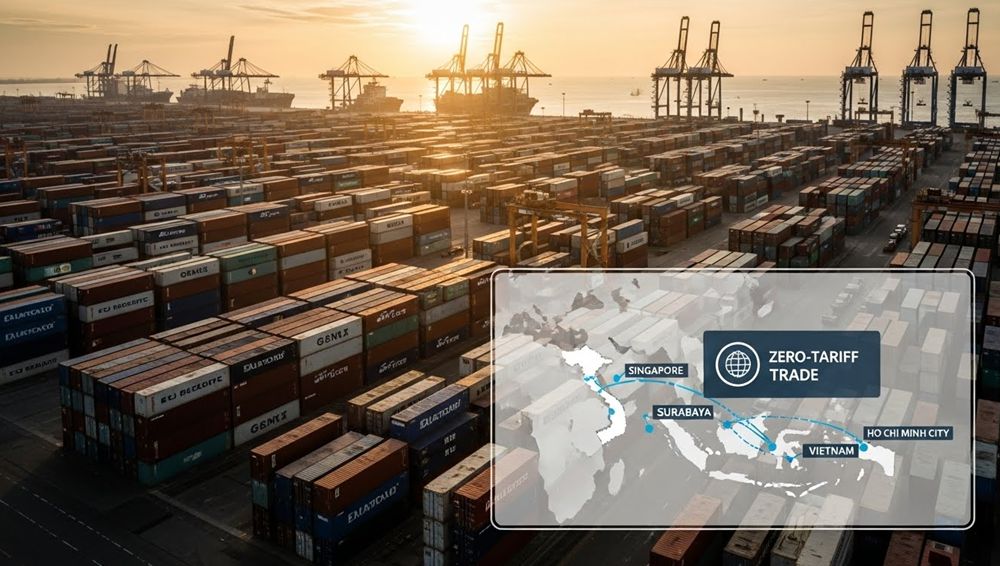
Regional Export Logistics and ASEAN Trade Benefits
Thailand leverages zero-tariff trade agreements and strategic production hubs to streamline cost-effective tissue exports across the ASEAN region. By situating facilities near primary pulp sources and engineering products for specific regional plumbing constraints, we provide a high-margin, reliable supply chain for global commercial partners.
Strategic Production Hubs and Raw Material Access
Manufacturers cluster production facilities near primary pulp sources in Kalasin and Khon Kaen to maximize operational efficiency. We maintain direct access to these raw materials, which reduces internal transport costs for 2026 export contracts. This regional proximity allows our suppliers to maintain competitive bulk pricing for global distribution networks without sacrificing material quality.
Infrastructure-Specific Product Design for ASEAN Markets
There is a real technical question underneath the flushability claim this page previously made, and it deserves the actual framework rather than an assertion. Disintegration behaviour of tissue is measurable and standardised — the widely used reference points are the INDA and EDANA flushability guidance documents for wipes and the dispersibility tests applied to tissue, and several markets with older or smaller-bore drainage do specify faster-dispersing grades. If your destination includes such a market, ask for a test report against a named method rather than accepting “engineered to break down quickly”, which is a marketing sentence, not a specification.
Logistical Timelines and Regional Distribution Efficiency
Standard production cycles for high-cube containers range from 15 to 25 days in 2026, ensuring a predictable manufacturing cadence. Transit times to major Asian and Oceanian ports typically span 10 to 20 days. Strategic shipping routes from Thai ports facilitate consistent inventory replenishment, allowing international partners to manage their stock levels with high precision.
Company Overview and Manufacturing Strength
Our own position on this page, stated in the first person and with numbers we can stand behind: we manufacture paper and cellulose wadding products in two plants of our own, offer OEM and ODM converting against your specification, and work to about 25 days production from deposit and approved artwork, one 40-foot container minimum order per SKU, and FOB Tianjin. We have removed an unsubstantiated monthly tonnage, a founding year and a count of destination countries that we could not verify. We are a Chinese producer, not a Thai one — which is why the Thai entries above are described as they actually are.
Industrial Experience and Global Export Reach
We do not publish a founding year, and the years-of-experience figure quoted here contradicted the one used elsewhere on this site. What we will say is that we run two owned factories in the same industrial region, and that the specification, artwork and container-loading detail is available on request rather than asserted in a paragraph.
Monthly Production Output and Capacity
Two owned factories, both producing toilet tissue, jumbo rolls, kitchen towel and facial tissue from 100% virgin wood pulp, with the ability to build to a customer specification on ply, grammage, sheet dimensions, roll length, core and pack configuration. The honest limit to state alongside that: a container-minimum program suits a settled SKU, not a market test across ten formats — which is often where a Thai converter, closer to your destination market, is the better instrument.
Strategic Production Base in Baoding
Our plants are in Mancheng, Baoding, in Hebei province, shipping FOB Tianjin. That is a different logistics proposition from Thailand rather than a better one: the eastern Chinese seaboard to North America and Europe has more direct sailings and far more container choice, while a Thai origin wins on Form D routes inside ASEAN and on Form E duty treatment into China. Compare them on landed cost per sheet, with your own forwarder’s rates, and the right answer usually becomes obvious.
About This List, and What We Corrected
This page was rewritten in place on 7 November 2026, and it needed more than the usual correction because the previous version had a structural problem: it described other companies’ factories in the first person. Five profile sections repeated the supplier list at greater length while writing as though this site operated the Berli Jucker, Riverpro, Siam Cellulose, T.P. Paper and Wang Sala plants. Those duplicated sections have been deleted, and every supplier entry on the page is now written in the third person. Where we describe ourselves, we say so as ourselves.
Two entries were not companies. “Wang Sala Co., Ltd.” is a district and industrial-area name in Kanchanaburi, was attributed to two different corporate groups in the same page, and was credited with annual outputs of 15,000 tonnes of facial tissue and 145,800 tonnes of wet wipes — a wet-wipe figure large enough to disprove itself. “Sun Paper (Thailand)” was described as an integrated Prachinburi mill; the real Prachinburi integrated operation of that scale is Double A (1991) PCL, which this page did not mention at all, while the identifiable Sun Paper is a Bangkok paper merchant. “T.P. Paper” could not be traced at all, and contradicted itself inside the same page. SPS Corporate, whose large reel capacity was cited as evidence of Thai mill strength, is Indonesian. A “Thai Paper Mill” was placed in the wrong province. All of these are replaced with entries we could verify, and the two that were not real are kept on the list deliberately, as corrections, so that the next reader can test any Thai supplier list against them.
Claims about our own business were corrected on the same pass. An unsubstantiated monthly tonnage that appeared five times, a founding year we do not publish, a “31 years” figure that contradicted thirty used elsewhere on this site, a count of destination countries, and a statement that we produce spa and skincare amenities have all been removed. What replaces them is the record we are willing to be held to: two owned factories, 100% virgin wood pulp, OEM and ODM against customer specification, production of about 25 days from deposit and approved artwork, one 40-foot container minimum order per SKU, and FOB Tianjin. We are a Chinese producer, and this page is now honest about that. The market statistics were also removed where they could not be traced — the 56/14/11 percent regional capacity split, the 11 percent growth rate, the 10-to-15 percent cost advantage, the machine speed, and the export-permit inspection window that does not appear to exist. If you find a remaining error, tell us and we will correct it and date the change.
Final Thoughts
Low-grade tissue does cause breakage complaints, but that sentence is an argument rather than a specification. The version worth acting on: fix tensile strength and burst strength by ISO 12625 method with agreed minimums, and receive the goods against those numbers rather than against a feeling about softness. That is testable, and it is the clause that protects your reputation.
Request a technical data sheet with the test methods named, a production-run sample from the line that would make your order, and a written production window. We will supply those, and then quote against your specification rather than against our own catalogue.
Frequently Asked Questions
Why are global buyers shifting production to Thailand in 2026?
Buyers add Thailand to a supply set for reasons that are checkable: real in-country pulp and paper capacity, a converting cluster close to Laem Chabang, preferential routes into both ASEAN (Form D) and China (Form E), and consumer brands that define the regional specification. What we have removed is the assertion that Thai production costs a fixed percentage less than elsewhere, and the first-person voice that made this site sound like a Thai factory. We are not one; we are a Chinese producer, and the honest comparison between the two origins is on this page.
What raw materials do Thai toilet paper manufacturers use?
Thai producers work with locally grown hardwood fibre including eucalyptus, alongside imported pulp and imported parent reels. Cassava is not a tissue feedstock, and the claim pairing it with pulp has been removed. We prioritize FSC-certified materials and chlorine-free bleaching to ensure our products meet your international sustainability and quality standards.
Is toilet paper manufactured in Thailand safe for older plumbing systems?
That depends on the grade, and the honest answer is a test rather than a sentence. Disintegration and dispersibility are measurable, with INDA and EDANA guidance the usual reference points; several markets with smaller-bore drainage do specify faster-dispersing grades. Ask for a report against a named method before you commit to a flushability claim on your own packaging.
What are the standard lead times for bulk international orders?
For our own factories: about 25 days from receipt of deposit and approved artwork, one 40-foot container minimum per SKU, FOB Tianjin. Ask a Thai supplier the same three questions — production window, minimum order, loading port — and require the answers in writing, because everything after that is the carrier answer rather than the factory one.
Can Thai suppliers handle custom branding and private label requests?
Yes, on both sides of the comparison. Thai converters routinely take private-label work, which suits mixed first orders across several formats. We take OEM and ODM programs at container-quantity scale against a settled specification. If your opening order is a market test across ten SKUs, a converter near your destination is usually the better instrument; if it is volume on one SKU, the factory conversation changes.
What are the typical lead times for bulk tissue orders from Thailand?
There is no mandatory export-inspection or permit window for tissue from Thailand that we could verify, and the previous five-to-ten business day figure has been removed rather than repeated. Plan on documentation instead: customs declaration, packing list, bill of lading, and the certificate of origin in whichever form the importing preference scheme requires — Form D for intra-ASEAN, Form E for China-bound.
Do Thai paper manufacturers provide OEM and private label services for the hospitality sector?
Thai factories support hospitality brands through comprehensive OEM and private label solutions. We do not manufacture bathroom amenities, spa or skincare products; our output is tissue paper formats, and anything beyond that should be asked of a supplier who actually makes it. Many manufacturers maintain GMP-certified facilities and handle everything from product formulation and packaging design to regional distribution.
Can jumbo parent rolls be customized for specific GSM and ply requirements?
Reel specification is a short list, and it is worth writing your own version before you ask anyone for prices: parent reel width, grammage per square metre, ply count, reel diameter, core diameter, moisture content on delivery, brightness target, and the monthly tonnage you actually intend to take. A supplier who answers all eight in writing is a producer or a well-run converter; one who answers with a price list is neither. The GSM range previously quoted here was not attributable to any standard and has been dropped.
What environmental certifications do Thai tissue mills commonly hold?
What mills in this region commonly hold, and what you should check individually rather than by geography: FSC or PEFC chain of custody with a licence code and a defined scope, ISO 9001 for quality management and ISO 14001 for environmental management. Ask for the certificate itself, verify the licence number in the public database of the scheme, and confirm that your specific product falls inside the certified scope. A list of acronyms in a brochure is not evidence of anything.
How do regional trade agreements affect the cost of sourcing tissue from Thailand?
Two separate mechanisms, and conflating them is expensive. Intra-ASEAN preference runs under ATIGA on a Form D certificate of origin. Sales into China run under the ASEAN-China Free Trade Agreement on a Form E certificate, subject to a regional value content test rather than a bare “made in” label, exact agreement of the HS code across the certificate, the export declaration and the Chinese import declaration, and a direct-shipment rule if the container transits a third country. RCEP offers an alternative rule set that can suit some products better. Which one applies is a question for your broker and customs authority, not for a supplier list — including this one. For the neighbouring cases on this site, our pages on Malaysia and Türkiye cover Form E and the EU Customs Union respectively.