Skip to content
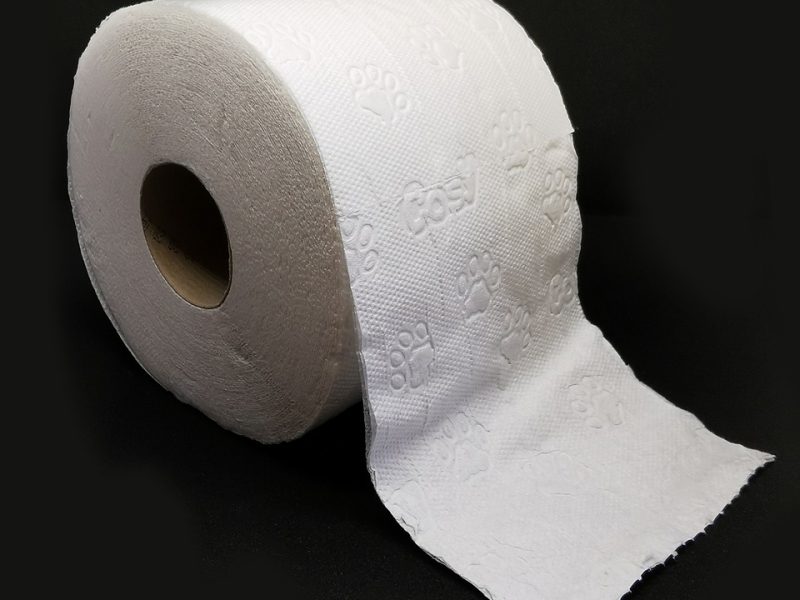
Importing private label toilet paper has traditionally felt like a financial gamble, riddled with opaque freight costs, unpredictable tensile strength, and rigid MOQs that scare off emerging brands. Top Source Hygiene fundamentally changes this equation. Leveraging 30 years of global OEM/ODM experience and a monthly capacity of 2,860 tons across two advanced facilities near China’s primary paper logistics hub, we deliver consistent quality and predictable pricing for brand owners across 56+ countries.
For international procurement managers, de-risking a private label launch comes down to timeline transparency and contractual clarity. Our production cycle is engineered for velocity—guaranteeing 20–25 days for initial custom orders and shrinking subsequent container turnarounds to just 10–14 days.
To ensure maximum security before capital allocation, we always advise clients to request documented production-line samples and insist on an itemized cost breakdown. Many trading companies bury artwork setup fees and sampling overhead within the per-roll price, eroding your retail margins before the first vessel even departs Xingang Port. For a secure market entry, a single-container trial order provides the perfect balance of testing market response while maintaining healthy procurement margins.
Find the Right OEM Manufacturer
Capacity, audits, and upfront costs separate scalable OEM partners from risk.
-
Capacity Criterion: Partner with a manufacturer possessing at least 1,000 tons of monthly capacity to ensure consistent tissue formation, reliable throughput, and the inventory buffers required for global private-label programs.
-
Certifications & Audits: Verify compliance via up-to-date ISO 9001, FDA, and FSC certificates. Crucially, require documented Optical Brightening Agent (OBA) testing records to confirm complete chemical compliance.
-
Production Sample Requirement: Insist on a physical sample drawn directly from the active manufacturing line that will produce your order. Lab mock-ups often differ in color, texture, or ply bonding from real-line outputs.
-
Hidden Costs: Clarify upfront costs including artwork setup fees (typically ranging from $150–$400 per design concept) and sample shipping arrangements to ensure they are fully disclosed in your initial quote.
Negotiate MOQ & Sample Costs
For startups, the right MOQ and transparent sample costs de-risk a launch. Know the exact numbers before you commit.
MOQ: Standard 1x40HQ Container
The baseline MOQ is one 40-foot high-cube container. This typically translates to roughly 60,000–80,000 rolls depending on ply, size, and packaging. For startups in early-stage markets, this single-container approach often yields the best unit economics and fastest time-to-market.
- MOQ: 1x40HQ container (approx 60,000–80,000 rolls)
- Split-container option: Some OEMs offer split containers with 15–20% higher per-unit cost
Half-Container Option
If available, a 0.5 container is a practical way to test-market a private-label line without committing to a full container from day one.
- Half-container: Accepted by some OEMs; 10–15% premium per unit to cover logistics and handling
Stock vs Custom Samples
Sample strategy is critical. Stock samples are free and ship quickly, while custom samples carry a design fee and longer lead time.
- Stock samples: Free; ships in 2–3 days
- Custom samples: $200–$500; ~10 days
- Artwork & design: Separate fees may apply; confirm upfront
Trial Order
Use a smaller volume to validate market fit, with a modest markup to cover the cost of a first-run production.
- Trial order: Smaller volume with slight markup to test market
Documentation & Fees
Ensure all fee structures are documented and disclosed before signing. Expect sample-related charges to apply to the first bulk order, and verify artwork/setup fees separately.
- Documentation/Fees: Sample fees apply to first bulk order; artwork/setup fees may be charged separately and should be disclosed in writing
| Feature | Specification | Advantage |
|---|---|---|
| MOQ Flexibility | Standard MOQ: 1x40HQ container (approx 60,000–80,000 rolls); Africa/South America eligible for smaller orders; some OEMs allow split containers. | Tests market with lower upfront investment and reduces inventory risk. |
| Split Container Trial | Negotiate 0.5–1 container trial; some suppliers offer 20ft container with 15–20% higher unit cost; consider shipping/logistics impact. | Validate demand before committing to full container, preserving cash flow. |
| Artwork Setup Fees | Artwork/setup charges are often hidden—request a separate, itemized artwork fee and confirm any included revisions; verify any sample shipping costs. | Transparent budgeting and avoid surprises that derail ROI. |
| Sample Costs & Turnaround | Stock samples: free and ship in 2–3 days; Custom samples: $200–$500 with artwork; turnaround ~10 days; company covers shipping for samples. | Accelerates product validation and go-to-market planning. |
| Production Lead Time | First-order production lead time: 20–25 days; reorders: 15–20 days; expedited options available on request. | Plan launches and safety stock with predictable timelines. |
| Production-Line Sample Verification | Request physical production-line samples to verify ply (2–5), GSM, weight, and color; avoid relying on R&D lab samples. | Ensures real-world quality before large-scale orders. |
| Packaging & Private Label Support | Custom packaging and private label branding; packaging design support included or available as add-on. | Strengthens brand differentiation and can reduce post-order customization costs. |
| Payment Terms & Financing | Standard terms: 30% deposit, 70% balance; flexible terms by order size/region; options include T/T or L/C. | Improve cash flow and align payments with milestones. |
Choose Pulp, Ply, and Packaging
Pulp choice
- Pulp: 100% virgin wood pulp; avoid recycled pulp for premium perception.
Ply options
- Ply formats: 2-ply budget; 3-ply standard; 4–5 ply luxury
GSM per ply
- GSM per ply: 13–22 g/m²
Packaging formats
- Packaging formats: Shrink wrap individual rolls; poly bag multi-packs
Artwork & color
- Artwork/color: CMYK with Pantone colors for accurate printing
Packaging options
Packaging options are available through the Customization Page. See packaging specs and examples here: Learn More ->
Manage Quality Control Before Shipping
First-run production samples and third-party pre-shipment inspections prevent costly defects and protect your brand integrity before goods leave the factory.
Production sample from the first run
Before committing to a full production run, require a production-line sample drawn from the very first batch. This sample should reflect real-line conditions, including machine setup, curing, and packaging, so you can verify that ply count, GSM, color consistency, and bond strength align with the approved specification.
- Sample origin: Pulled directly from the first-line run to verify real-world performance.
- PLY & GSM verification: Confirm ply count (2–5) and GSM per ply matches order spec.
- Bond strength: Check core bonding, wrap integrity, and sheet cohesion under simulated usage.
Insight: Skipping production-line samples can hide subtle variances that only appear under real production stress, leading to quality gaps after deployment.
Tests: wet strength, softness, dust level, packaging seal integrity
Run a defined battery of tests on the first-run sample and final packaging to ensure core performance meets brand standards and consumer expectations.
- Wet strength: Assess integrity after simulated moisture exposure to prevent tearing in humid environments.
- Softness: Conduct tactile and, if possible, consumer-perception tests to confirm premium feel.
- Dust level: Measure shedding to minimize linting during use and handling.
- Packaging seal integrity: Validate seal adhesion and tamper-evidence under typical transport conditions.
Insight: A failure in any one test can flag a root cause in material balance or processing steps, saving costly post-launch recalls or returns.
Pre-shipment inspection: third-party like SGS or internal QC
Engage a third-party inspection (e.g., SGS) or an internal QC team to verify batch conformity before shipment. This covers a broad sweep of specifications and packaging readiness.
- Inspection scope: Verify ply, GSM, weight, dimensions, and packaging specs against the approved file.
- Sampling plan: Define AQL and sampling size to balance risk and cost; consider 100% pallet checks for high-traffic applications.
- Documentation: Require CoC, test reports, batch numbers, and deviation notes.
- Disposition: Pre-authorize rework, replacement, or hold decisions prior to shipping.
Insight: Third-party verification reduces port-side disputes and accelerates clearance by providing verifiable quality data and batch traceability.
Common defect: perforation cuts too deep causing tearing
Perforation depth must align with tear strength; excessive die-cut pressure or misalignment can cut beyond the intended line, weakening the sheet and increasing waste.
- Root cause: Die-cut pressure miscalibration or die-shape wear leading to deeper perforations.
- Detection: Perform a perforation-depth check and a tear-test on the first-run sample.
- Remedy: Recalibrate the die, re-run a production sample, and re-validate tear strength before full-scale production.
- Acceptance: Establish a perforation tolerance to prevent trimming waste and returns.
Insight: Perforation defects propagate quickly in high-volume runs; catching them on a first-run sample saves material costs and protects user experience.
OBA-free confirmation: UV light test
Confirm absence of optical brighteners (OBA) by UV light exposure. OBA-free is often a brand or region requirement, particularly in Europe and North America.
- Test method: Expose under UV-A light and observe for fluorescence indicating OBA presence.
- Acceptance: No fluorescence equals OBA-free status; request certificates or test reports.
- Documentation: Include test results with batch release notes.
- Process: Re-test periodically on new lots or changes in pulp source.
Insight: UV test results provide a clear, auditable standard for compliance and can prevent last-minute compliance issues in key markets.
Conclusion
This guide translates OEM negotiations into actionable numbers you can validate on the factory floor. A startup can start with a 40HQ container (about 60,000–80,000 rolls) for private label toilet paper, expects 20–25 days production for a first order, and should budget roughly $3,000–$8,000 upfront for samples, artwork, and the initial deposit. Costs hinge on ply, GSM, and packaging; 4-ply virgin pulp runs about $0.20 per roll, 3-ply about $0.15, with last-mile logistics and duties adding 20–40%.
To separate truth from hype, demand a production-line sample (not the R&D mock-up), require a separate artwork/setup fee, and consider a half-container trial to de-risk early testing. Review the exact specs for private label toilet paper and request a catalog or sample from a proven OEM to compare ply options, packaging formats, and lead times, and browse the catalog here: https://topsourcehygiene.com/products/toilet-paper.
Frequently Asked Questions
How to make a private label?
Start by partnering with a private-label OEM that can handle branding and packaging. Define specs clearly—ply (2–5), GSM 13–22 per ply, virgin pulp, packaging, and private-label artwork; request a production sample from the actual line. Agree on MOQ (1x40HQ or a trial 0.5 container), discuss lead times (20–25 days), deposits, and certifications (ISO 9001, FDA, FSC) before placing the order. Lock in specs and terms in writing before ordering.
How is toilet paper made step by step?
The basic steps are turning virgin wood pulp into sheets, then forming and drying those sheets into multi-ply rolls. The process typically includes pulping, sheet formation, drying, creping for softness, ply stacking, winding onto cores, and final packaging. OEMs convert rolls into consumer packaging and perform QC for absorbency and strength. Review the final production sample for ply and texture.
What’s the private label MOQ?
The standard MOQ is 1x40HQ container. Some OEMs offer a smaller 0.5-container trial at a 10–15% higher per-unit cost. For startups, consider a trial order to test market before full container. Confirm the exact MOQ and any trial option in writing.
Cost to start a private label toilet paper?
Expect roughly $3,000–$8,000 upfront for samples, artwork, and first production deposit. Per-unit costs for 4-ply virgin pulp start around $0.20 per roll (3-ply about $0.15), depending on GSM and packaging. Add shipping and duties, which can push landed costs up 20–40%. Get a full cost breakdown before committing.
How to get samples from a Chinese toilet paper OEM?
Stock samples are free and ship in 2–3 days; custom samples cost $200–$500 and take about 10 days. The supplier usually covers shipping for stock samples; artwork fees and sample shipping terms should be clarified upfront. Request a production-line sample to verify ply and texture before bulk order. Ask for a production-line sample and clear fee terms.