Skip to content
A procurement manager at a 300-room hotel chain lost $50,000 on a bulk facial tissue cost analysis because the pre-production sample approval missed one thing: the mass production run switched from soft pack to box tissue without adjusting the GSM spec. The sample felt soft and light. The shipment came in heavy board packaging with a 17 GSM sheet that cost 30% more per unit than the soft pack equivalent. That mismatch wiped out the margin.
That kind of error is more common than buyers want to admit. Most sourcing guides focus on supplier rankings or format suitability by market, but rarely break down the per-sheet cost across formats. They ignore how packaging adds $0.08–$0.12 per unit for box tissue compared to $0.02–$0.04 for soft pack, and how container utilization shifts by 30% between the two. If you’re negotiating FOB pricing without factoring in format-driven packaging costs and quality tolerance thresholds, you’re leaving money on the table — or worse, repeating the $50K mistake.
Why Most Bulk Facial Tissue Sourcing Fails: The Hidden Cost Drivers
Format architecture choice drives 15–25% of your total landed freight cost profiles securely.
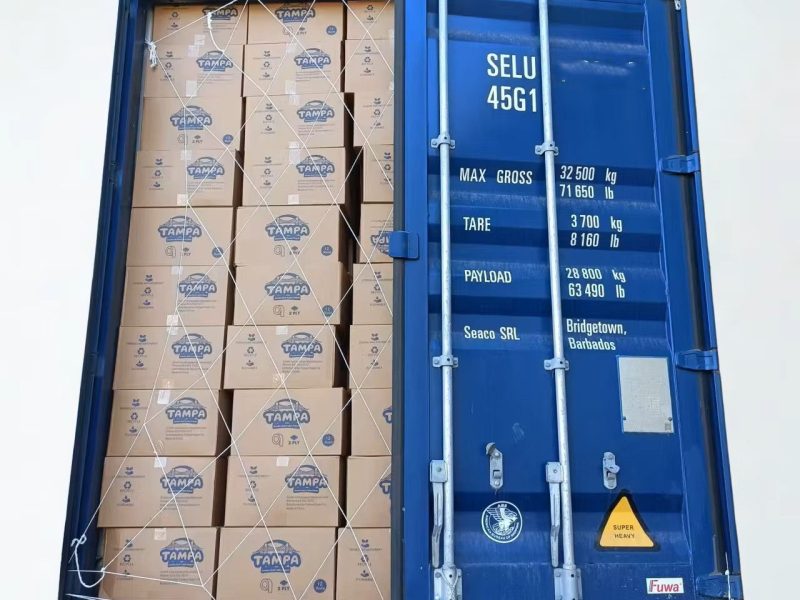
Most buyers compare only price per case across suppliers. That misses the real variable – format geometry. A 40’HQ container holds 240,000–280,000 soft packs versus 180,000–200,000 box tissue units. The rigid cardboard box wastes 30% of your freight cube. You pay shipping on air, not paper.
- Packaging Material Surcharges: Soft pack runs low material costs ($0.02–$0.04) vs. box tissue ($0.10–$0.15) which creates substantial overhead at container volume.
- Cardboard Printing MOQs: Private-label box tissue requires 5,000–10,000 units per SKU for custom cardboard printing, whereas poly film soft packs launch at 50% lower MOQ limits.
- Pulp Mass Consumption: Box tissue often uses 15–18 GSM, soft pack 13–15 GSM. Each additional GSM adds 5–8% fiber cost that compounds fast across major orders.
The hidden driver is format selection itself. A buyer who chooses box tissue for a discount retail channel may be paying 15–25% more in total cost without any improvement in the customer’s experience. For value markets – Africa, South America, Southeast Asia – soft pack consistently delivers better margins and faster sell-through.
| Driver | Impact | Cost Increase | Primarily Affects |
|---|---|---|---|
| Packaging Material & Assembly | Box tissue adds $0.08–$0.12/unit vs. soft pack $0.02–$0.04 | 50–80% higher packaging cost | Box tissue |
| Freight Utilization | 40’HQ holds 30% more soft packs than box units | Up to 30% higher freight cost per unit | Box tissue |
| Custom Printing MOQ | Box requires 5,000–10,000 unit MOQ for custom cardboard | Additional $0.05/unit on small runs | Box tissue |
| GSM Variation (Fiber Cost) | Box often uses 15–18 GSM vs. soft pack 13–15 GSM | 5–8% per extra GSM | Box tissue (negotiable) |
| Format Choice Total | Wrong format can add 15–25% to total landed cost | 15–25% of total cost | All formats (box most at risk) |
Real Cost Breakdown: Soft Pack vs. Box vs. Pocket Tissue
Box tissue costs 50–80% more per sheet than soft pack — the packaging and GSM premium is hidden.
Soft pack facial tissue runs $0.012–$0.015 per sheet (100–120 sheets, 13–15 GSM). Box tissue jumps to $0.018–$0.025 per sheet at 100–120 sheets with 15–18 GSM. Pocket packs top out at $0.020–$0.030 per sheet for only 8–10 sheets at 12–14 GSM. The spread between soft pack and box tissue isn’t driven by fiber quality — it’s packaging cost and higher GSM inflating the base sheet weight.
- Packaging Cost per Unit: Soft pack: $0.02–$0.04 (poly film only). Box tissue: $0.10–$0.15 (paperboard + die‑cut + assembly). Pocket pack: $0.01–$0.02 (individual film wrap).
- Container Packing Utilization: Soft pack: 240,000–280,000. Box tissue: 180,000–200,000. The rigid boxes waste 25–30% of container space, raising freight allocation costs per unit case.
- Substrate Weight Densities: Box tissues default to premium 15–18 GSM profiles, demanding explicit technical alignment checks upfront to avoid pricing distortions from hidden bulk extensions.
| Format | GSM Range | Packaging Cost/Unit | Freight Utilization (units/40’HQ) | Per-Sheet Cost (3-ply) |
|---|---|---|---|---|
| Soft Pack | 13–15 | $0.02–$0.04 | 240,000–280,000 | $0.012–$0.015 |
| Box Tissue | 15–18 | $0.10–$0.15 | 180,000–200,000 | $0.018–$0.025 |
| Pocket Pack | 12–14 | $0.01–$0.02 | 1,200,000+ | $0.020–$0.030 |
Soft Pack vs. Box Tissue vs. Pocket Pack: Which Format Wins on ROI?
Soft pack configurations generate 20–30% financial relief per sheet over rigid box units of equal ply.
For B2B buyers targeting supermarkets or emerging markets, soft pack delivers the highest container utilization and lowest packaging cost. A 40’HQ holds 240,000 to 280,000 soft packs versus 180,000 to 200,000 box units. That difference alone cuts freight cost per unit by 15–25%.
- Soft Pack Distribution Channels: Optimizes margins inside value-driven networks where total cost per sheet parameters guide franchise bidding.
- Box Tissue Distribution Channels: Commands solid consumer premiums in high-end retail blocks, but forces substantial fiber cost expansion to maintain rigidity.
- Pocket Pack Distribution Channels: Operates at an ultra-low single pack entry cost, working seamlessly for corporate promotional marketing or transit giveaways.

How to Source Bulk Facial Tissue Without Blowing Your Budget
Soft pack saves 20–30% per sheet vs higher GSM variants common in luxury rigid board lines.
Start with free samples to verify ply count and GSM before committing. Suppliers have been known to claim 3-ply and ship 2-ply with a filler tissue. Specify format, GSM, and packaging dimensions in the RFQ. Request FOB pricing, then ask for a landed cost calculation that includes duties. Ordering soft pack in a full 40’HQ provides maximum savings. Partnering with a factory-direct OEM/ODM like Top Source Hygiene — offering free samples and a 15–25 day lead time — keeps budgets predictable.
Conclusion
Soft pack consistently delivers 20–30% lower per-sheet cost than box tissue, but the real savings come from knowing what you’re paying for. Most suppliers silently upgrade box tissue to 16–18 GSM, inflating fiber cost by 15–20%. If you specify 13–15 GSM on your box tissue RFQ, you can cut that premium without sacrificing perceived quality. That’s the difference between a buyer who pays the market rate and one who sets it.
Request free samples and a landed cost comparison for your target format. A factory-direct partner like Top Source Hygiene can quote soft pack, box, and pocket in the same GSM and ply, so you see the true cost difference—not a distributor’s markup. Start with your container size and market price point, then let the data decide.
Frequently Asked Questions
What is the cheapest facial tissue format for bulk orders?
Soft pack facial tissue is the cheapest format, costing 20–30% less per sheet than box tissue of equal ply and GSM. That savings comes from eliminating rigid box material and assembly. For maximum margin, choose soft pack over box or pocket formats.
What is the typical MOQ for bulk facial tissue?
The standard MOQ is one 40-foot high-cube container, but flexible smaller orders are available especially for Africa and South America. Custom samples take about 10 days; stock samples ship in 2–3 days. Confirm MOQ with your sales rep after defining your spec.
How much does packaging affect the cost of facial tissue?
Packaging adds $0.08–$0.12 per unit for box tissue compared to soft pack, which can erase margins on large contracts. Box tissue also consumes more container space, reducing freight utilization by up to 30%. Choose soft pack to minimize packaging-driven cost.
Does GSM affect cost significantly?
Yes, GSM directly affects material cost – a jump from 13 to 18 GSM increases sheet weight by nearly 40%, raising raw material costs proportionally. Box tissue often uses a higher GSM (16–18) than standard soft packs. Specify GSM early to avoid unexpected cost increases.
Can I get custom printing on soft pack tissue?
Yes, soft pack tissue supports custom printing with simpler and cheaper setup than box tissue, avoiding high MOQs for custom cardboard. Top Source Hygiene offers full private label and custom packaging across global markets. Request a sample to verify print quality before bulk order.