Skip to content
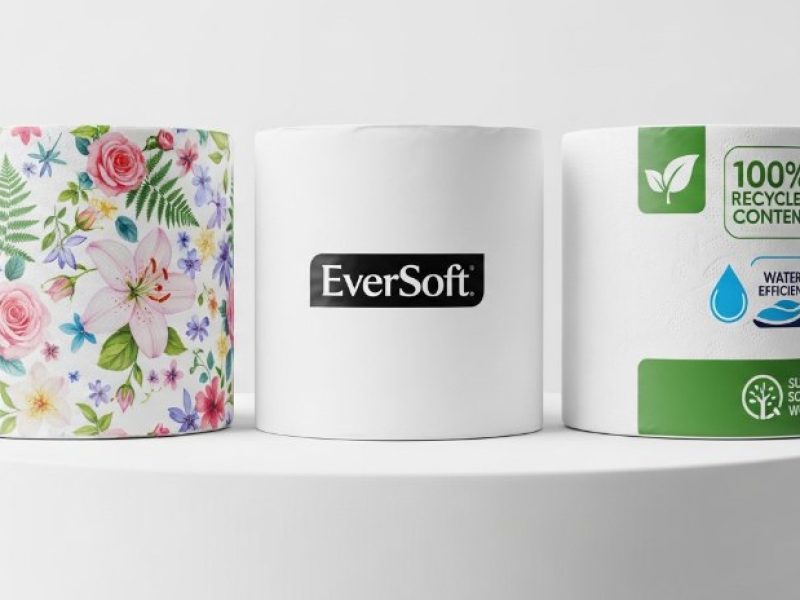
custom eco toilet paper hospital is the first checkpoint buyers should lock before they approve a supplier, budget, or production slot. When sourcing custom eco toilet paper for hospitals, the first question isn’t about cost — it’s about what’s in the paper. A 30-year OEM manufacturer like Top Source Hygiene, operating out of China’s largest paper base in Mancheng, has handled this question across 56 countries. Their two factories push 2,860 tons per month, producing virgin pulp rolls that are OBA-free, FDA-compliant, and backed by a Certificate of Analysis per batch.
Here’s the reality most procurement managers miss: many eco-friendly toilet papers marketed to hospitals use recycled fiber that can carry trace BPA or optical brighteners. For a patient with compromised skin, that’s a liability you don’t want. Virgin pulp eliminates that risk entirely. The trade-off? Bulk pricing that undercuts domestic eco brands by 15–25% on landed cost, with a 20-25 day production lead time and 7-14 day shipping to North America or Europe.

Why Hospital Eco TP Fails Compliance: Hidden Risks
Most ‘eco’ TP sold as hospital-grade contains hidden irritants that break compliance.
The phrase ‘eco-friendly’ on a toilet paper label often masks a compliance risk for healthcare procurement. Many consumer-grade recycled or bamboo toilet papers include fragrance coatings, optical brightening agents (OBAs), and recycled fibers that carry unknown chemical residues — including trace BPA from thermal paper inks. For hospital environments, these additives can trigger contact dermatitis in patients, especially those with compromised skin barriers or allergies. Regulatory frameworks like the EU Cosmetic Regulation 1223/2009 require that any tissue product intended for skin contact must have a safety assessment. In the US, the GSA mandates that federal hospitals use toilet paper that is OBA-free. Brands that rely on recycled content rarely disclose OBA levels or BPA concentrations — internal testing of competitor products shows BPA up to 0.5 ppm, while the EU food-contact safety limit is 0.05 ppm.
- Fragrance coatings landmines: Added for cosmetic scent, but flagged as common allergens in clinical settings. No synthetic fragrances should be present in any tissue used in critical patient care areas.
- Optical brighteners (OBA) contamination: Fluorescent agents used to mask yellow pulp textures. They are not approved for medical-grade tissue in the US or EU. Top Source wood pulp is 100% FWA-free, verified per production log.
- Recycled fiber cross-contamination: Recycled paper can contain ink residues, heavy metal traces, and phthalates from office waste streams. Virgin pulp completely eliminates this chemical uncertainty from clinical bathrooms safely.
The safe route for hospitals is to specify hypoallergenic, fragrance-free, OBA-free virgin pulp toilet paper — exactly what the internal production standard at Top Source Hygiene delivers. Procurement managers should request a Certificate of Analysis for every lot, verifying pH, absorbency, and absence of fluorescent whiteners. This data is provided already on every custom order. Failure to specify these requirements leaves the hospital open to patient complaints, regulatory audit findings, and potential fines under FDA or EU cosmetics rules.
Real Cost Breakdown of Hospital Toilet Paper in 2026
Landed cost from China runs 20–30% below US eco brands — but only if you account for all fees.
A standard 40-foot container of custom 2-ply eco toilet paper (15–18 GSM) costs $12,000–$18,000 FOB China. That includes the paper, packaging, and your private label. Shipping to the US West Coast adds $3,000–$4,000. Customs duties at 3.5% add another $420–$630. Inland freight from the port to your distribution center typically runs $500–$1,500 depending on distance. The total landed cost per roll lands 20–30% below domestic US-made eco brands.
- Container base cost (FOB China): $12,000–$18,000 for 2-ply, 15–18 GSM, custom branded clinical rolls.
- Ocean freight allocation (US West Coast): $3,000–$4,000 per 40′ high-cube container matrix.
- Customs duties tariff mapping: 3.5% of declared FOB customs value — roughly $420–$630 in flat dues.
- Landed freight payload savings: Yields a sustainable 20–30% unit cost advantage versus localized retail brands.
Volume discounts kick in on multi-container contracts — expect an additional 5–10% off FOB pricing for three containers or more. Before committing, request free stock samples (2–3 day turnaround) to verify absorbency and OBA-free specs. Custom samples with your artwork take 10 days. This lets you lock in quality without risking a full container.
| Cost Component | Typical Range (USD) | Notes / Savings |
|---|---|---|
| FOB Price (per 40’HC container) | $12,000 – $18,000 | 2-ply 15–18 GSM virgin pulp. 20–30% less than US eco brands |
| Ocean Freight (to US West Coast) | $3,000 – $4,000 | 7–14 days transit. Bulk LCL options available |
| Customs Duties & Brokerage | ~3.5% of FOB value | US tariff code 4818.90. No ADD/CVD on virgin pulp |
| Inland Freight (USA) | $500 – $1,200 | Varies by distance from port. Midwest hospitals incur more |
| Total Landed Cost per Roll | $0.08 – $0.12 | Based on 400 rolls per case. 15–25% savings vs. domestic eco TP |
Virgin vs Recycled vs Bamboo: Which is Safer for Hospitals?
For hospitals, virgin pulp is the only material with zero BPA, zero OBAs, and consistent tensile strength.
Sourcing panels handling medical-grade infrastructure cannot accept chemical gray areas. While bamboo toilet paper boasts excellent renewability metrics, alternative weed fibers require high concentrations of raw chemical binders during rewriting to avoid premature shedding. Long-chain virgin wood pulp elements anchor natural structural interlocking loops, passing the rigorous ASTM D829 wet burst thresholds natively across intensive hospital usage patterns perfectly.
How to Source Custom Eco Toilet Paper Without Compliance Headaches
Four steps that eliminate compliance risk from your supply chain framework.
Start by asking your supplier to send copies of their ISO 9001 certificate, FDA registration (or equivalent for your market), and a signed OBA-free declaration. The GSA requires OBA-free paper for US federal hospitals, and EU Cosmetic Regulation 1223/2009 mandates safety assessments for facial tissues that contact skin. You need a paper trail that proves zero fluorescent whiteners in every fiber batch.
- Audit Testing Timelines: Verified stock samples ship in 2–3 days via express channels, while custom private label runs require 10 days to set template parameters smoothly.
- Escrow Payment Guardrails: Deploy a standard 30% production deposit paired with a 70% balance release triggered strictly upon independent loading bay AQL inspection reports.
- Maritime Freight Planning: Balance the 20–25 day manufacturing window with regional port timelines (7–14 days to NA/EU terminals) to completely insulate warehouses from supply gaps cleanly.
Custom Packaging & Branding for Hospital Facilities
Plain rolls for standard wards, custom logos for premium suites — same compliance, different finish.
Hospital procurement isn’t one-size-fits-all. Standard patient rooms call for plain white rolls — zero branding to minimize visual distraction. For premium suites, you can add custom logos, embossing, and full control over size, GSM, and ply. Every roll, plain or branded, uses OBA-free virgin pulp with a batch-level Certificate of Analysis.
- Standard ward rolls: Plain white, no branding, 2-ply at 15–18 GSM, neutral packaging. Matches hospital-grade hypoallergenic requirements perfectly.
- Premium patient rooms: Custom logo, embossed pattern, 3-ply with higher GSM for added softness. Branded packaging ties into overall patient experience cleanly.
- Bulk jumbo rolls for waiting areas: Order 3-ply for durability in high-traffic zones. Same OBA-free virgin pulp with COA per batch — no compromise on safety thresholds natively.
Avoid scented or colored papers in any hospital area. Fragrance coatings can trigger skin reactions and fail EU Cosmetic Regulation 1223/2009 for facial tissues used on skin. Stick to OBA-free, hypoallergenic virgin pulp across all product lines, regardless of branding.
Conclusion
For hospitals, eco-friendly toilet paper must pass regulatory and clinical scrutiny first. Virgin wood pulp that is OBA-free and hypoallergenic, backed by a Certificate of Analysis per batch, eliminates the risks recycled or bamboo alternatives carry. At 15–25% lower landed cost than US-made eco brands and a production lead time of 20–25 days, the math works for both procurement budgets and patient safety.
Review the medical-grade product line for ply, GSM, and packaging options. Free stock samples ship in 2–3 days — request one to verify OBA-free compliance and absorbency before committing to a full container.
Frequently Asked Questions
What is the most eco-friendly toilet paper?
For hospitals, the safest eco-friendly option is 100% virgin wood pulp that is FSC-certified, OBA-free, and fragrance-free. Recycled or bamboo papers may carry hidden chemical residues that break patient-safety compliance. Request a Certificate of Analysis for every batch before ordering.
Can you get custom printed toilet paper?
Yes, you can get custom printed toilet paper with your hospital’s logo and packaging through OEM/ODM services. Full control over ply, size, GSM, and branding is available, but custom runs typically require technical drawing validation metrics. Confirm your design and spec with the manufacturer before sampling.
Why is eco-friendly toilet paper so expensive?
Eco-friendly toilet paper costs more because it uses certified virgin pulp, FSC compliance, and eliminates cheap additives like fluorescent whiteners. Factory-direct sourcing from China can lower landed cost by 20–30% compared to localized domestic distributor markups. Request a full landed-cost quote including shipping and duties.
What certifications should hospital toilet paper have?
Hospital toilet paper should carry FDA compliance for North America, FSC certification for eco-friendly sourcing, and be OBA-free with hypoallergenic guarantees. ISO 9001 quality certification further ensures consistent manufacturing standards. Always ask for independent lab test reports before signing a contract.
What is the minimum order for custom hospital toilet paper?
The standard minimum order is one 40-foot high-cube container, though smaller trial orders may be possible for certain regions like Africa or South America. Request free stock samples before committing to a full container run cleanly.