Skip to content
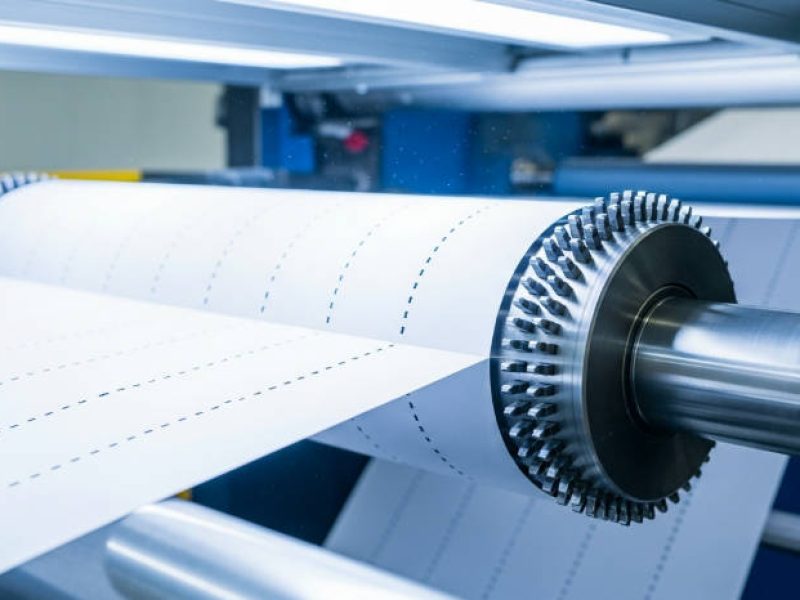
Choosing between Perforated vs Non-Perf jumbo rolls directly affects facility maintenance budgets and the labor hours required for restroom upkeep. Selecting an incompatible roll type for high-traffic environments leads to accelerated product waste and increased procurement costs. Facilities managers risk significant budget inflation when restroom supplies do not match the specific mechanical requirements of their installed dispensing hardware.
This technical overview evaluates the operational differences between pre-cut sheets and continuous rolls, including how serrated dispenser teeth influence daily consumption rates. We examine the rewinding phase of the manufacturing process to explain cost variations and provide a framework for specifying sheet lengths in wholesale orders. These specifications serve as a standard operating procedure for optimizing high-volume restroom supply chains and reducing environmental impact through better waste control.
The Purpose of Perforations in Standard Toilet Paper
Perforation engineering serves as the primary mechanical interface between tissue manufacturing precision and end-user portion control, ensuring material integrity during both high-speed rewinding and final consumption.
Controlled Sheet Separation for User Convenience
Perforations function as intentional shear points across the paper web. By creating these precise weaknesses, we ensure that multi-ply products—ranging from standard 2-ply to 5-ply ultra-soft variants—detach along a clean, straight line. Without this specific engineering, 100% virgin wood pulp fibers tend to tear unevenly, leading to shredded edges that compromise the professional presentation required in luxury hospitality environments.
- Maintains a predictable tear point for 2-ply to 5-ply configurations without fiber pulling.
- Eliminates accidental unspooling by providing a natural mechanical stop.
- Enhances the tactile perception of quality for guests through neat, uniform sheet edges.
Standardizing Consumption and Portion Sizes
Fixed perforation intervals establish a physical metric for usage. In current 2026 supply chain standards, these intervals help distributors and facilities managers regulate consumption rates. By providing natural stopping points, the design discourages the excessive unrolling common with non-perforated industrial formats, directly supporting waste reduction and client budgeting efforts.
- Provides transparent sheet counts for accurate retail labeling and procurement auditing.
- Discourages excessive unrolling by providing physical and visual usage cues.
- Supports green initiatives by promoting mindful consumption and reducing overall paper waste.
Tension Management in High-Speed Rewinding
At Top Source Hygiene’s production facilities, perforation serves a critical technical role during the conversion from parent rolls. As the paper moves through high-speed rewinding equipment, these lines allow trapped air to escape the web. This air management is vital for producing firm, compact rolls that maintain a consistent diameter across our 2,860-ton monthly production volume.
- Facilitates rapid air evacuation to ensure structural density in finished retail rolls.
- Stabilizes the paper web tension to prevent breaks during high-velocity manufacturing.
- Guarantees product uniformity and diameter consistency across large-scale 40HQ container shipments.
Why Continuous (Non-Perforated) Jumbo Rolls Exist
Facility managers prioritize continuous rolls to maximize dispenser capacity and eliminate the labor overhead associated with frequent refills in high-capacity environments.
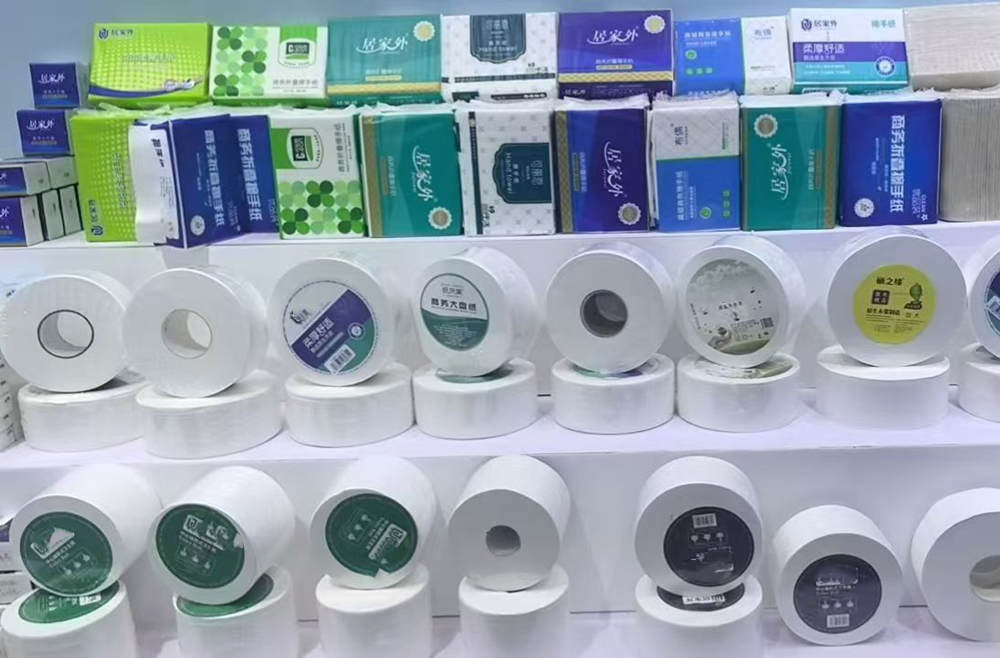
High-traffic venues like international airports and metropolitan shopping centers cannot afford the downtime of constant tissue replenishment. Continuous rolls provide the highest paper volume per cubic inch of dispenser space. By removing perforations, we allow for tighter winding, which increases the linear meters of product on a single roll. Top Source Hygiene supplies these high-capacity formats specifically to help facilities reduce their daily labor expenses and maintenance rounds.
Lowering Maintenance Costs in High-Traffic Zones
Operational efficiency in large-scale facilities relies on minimizing manual intervention. Continuous rolls serve environments where high capacity remains the priority. By maximizing the volume per dispenser, staff spend less time monitoring restroom stock and more time on critical sanitation tasks. In 2026, labor costs continue to drive procurement decisions toward these high-density solutions.
- Large venues use high-capacity rolls to cut down on the frequency of daily refills.
- Top Source Hygiene supplies these rolls to minimize labor expenses for facility managers.
- The absence of perforations allows for a tighter wind, maximizing the volume per dispenser.
Limiting Material Waste through User Control
Non-perforated paper forces a shift in user behavior that often results in lower total consumption. Instead of pulling until a pre-defined perforation line snaps—often resulting in more paper than necessary—users select the exact length required for the task. This format eliminates the “streaming” effect common in perforated rolls, where multiple sheets tear off and fall to the floor. Our data shows that custom length selection discourages the mindless unspooling often seen in public restrooms.
- Users pull only the amount they need rather than being restricted to pre-cut sheet sizes.
- This format prevents the ‘streaming’ effect where extra sheets fall to the floor unnecessarily.
- Custom length selection discourages excessive unraveling in high-traffic public restrooms.
Supporting Industrial Dispenser Mechanics
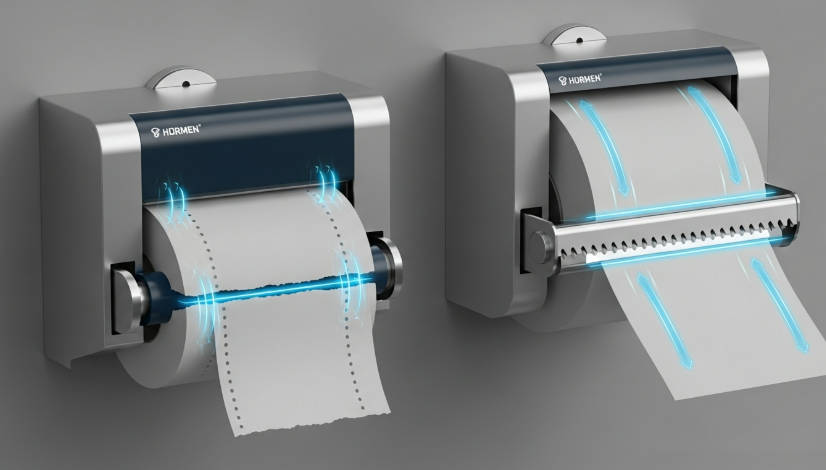
Commercial hygiene hardware is engineered to work in tandem with continuous paper rolls through integrated cutting mechanisms. Most industrial dispensers utilize sharp serrated teeth or plastic edges to provide a clean break at any point. The lack of perforations ensures the paper maintains constant tension against the dispenser’s blade, preventing the jams or partial tears that occur when a perforation line misaligns with the cutting edge. This design ensures seamless compatibility with the diverse range of dispensers used by our global wholesale clients.
- Many commercial dispensers use serrated teeth designed to cut paper effectively at any point.
- Continuous rolls provide the necessary tension for a clean tear against metal or plastic edges.
- The design ensures compatibility across various dispenser brands used by Top Source Hygiene’s clients.
Bulk Jumbo Rolls: Unbeatable Wholesale Pricing
The Role of Serrated Teeth on Commercial Dispensers
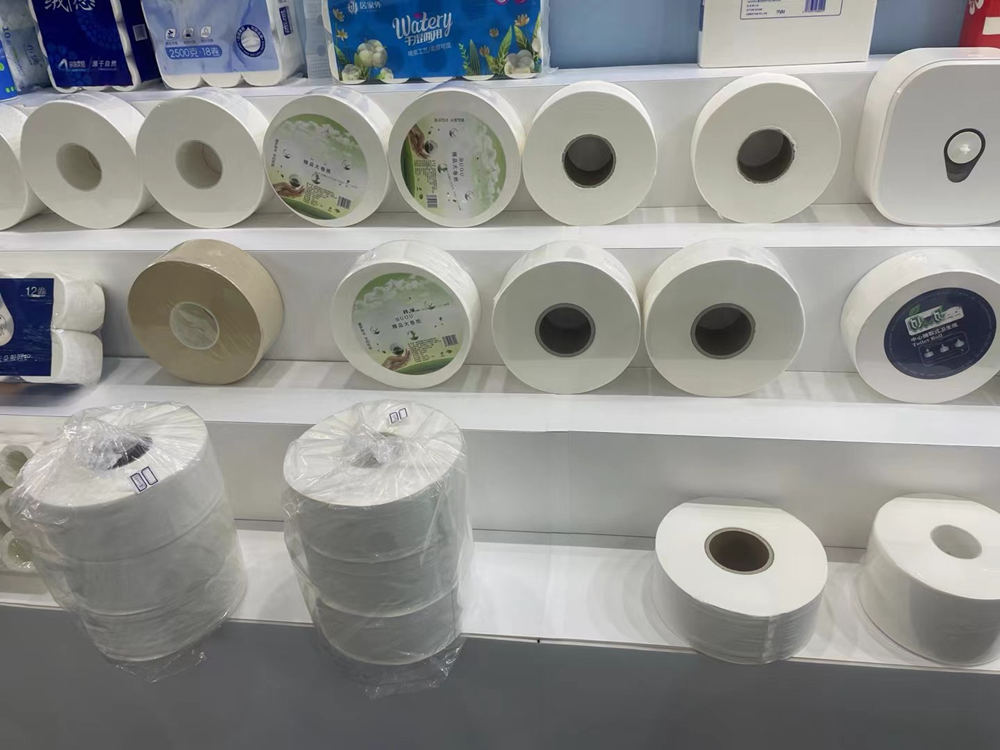
Serrated cutting tracks provide the mechanical shear necessary to manage high-capacity non-perforated rolls while preventing unspooling in high-traffic environments.
Manual Tearing for Non-Perforated Rolls
Commercial dispensers rely on sharp serrated edges to facilitate clean breaks on non-perforated jumbo rolls. These cutting components grip 100% virgin wood pulp fibers effectively, ensuring a straight tear even during rapid, high-force pulling. Top Source Hygiene aligns with 2026 ergonomic standards by optimizing the angle of these teeth, allowing users to operate the unit with a single hand without causing uneven shredding or paper jams.
- Sharp edges provide a clean break for 100% virgin wood pulp products lacking pre-cut perforations.
- Manufacturers focus on 2026 ergonomic standards to ensure effective one-handed operation.
- The teeth grip the paper fibers to prevent uneven shredding during high-speed pulling.
Regulation of Paper Consumption
Serration design functions as a critical inventory management tool. The physical resistance generated by the teeth acts as a braking mechanism, stopping the roll from spinning freely after a user pulls the paper. Facility managers in high-traffic zones like airports and retail centers prioritize these dispensers because the controlled flow reduces unnecessary consumption by nearly 15%. This mechanical constraint prevents the “waterfall” effect often seen with standard rolls, protecting the bottom line for wholesale buyers and building owners.
- The resistance created by the teeth stops the roll from spinning freely after a pull.
- Facility managers install these dispensers to minimize waste in busy retail and airport restrooms.
- Data suggests serrated cutting mechanisms reduce unnecessary paper usage by nearly 15%.
Material Strength and Longevity
Long-term performance in humid restroom environments requires hardened, corrosion-resistant materials. Top Source Hygiene utilizes reinforced plastic and stainless steel for cutting components to withstand thousands of daily use cycles. Selecting materials that maintain sharpness over time directly lowers maintenance overhead. Reliable serrated parts ensure that dispensers remain functional for years, reducing the frequency of replacement requests and providing a consistent experience for end-users.
- Reinforced plastic or stainless steel teeth withstand thousands of daily use cycles.
- Top Source Hygiene uses corrosion-resistant materials to maintain sharpness in humid 2026 facility environments.
- Stronger serrated parts lead to fewer maintenance requests and lower long-term replacement costs.
Controlling Waste: Does Perforation Reduce Consumption?
Precision perforation acts as a mechanical governor for paper consumption, transforming a commodity into a managed asset for high-traffic facilities.
Portion Control Through Defined Sheet Lengths
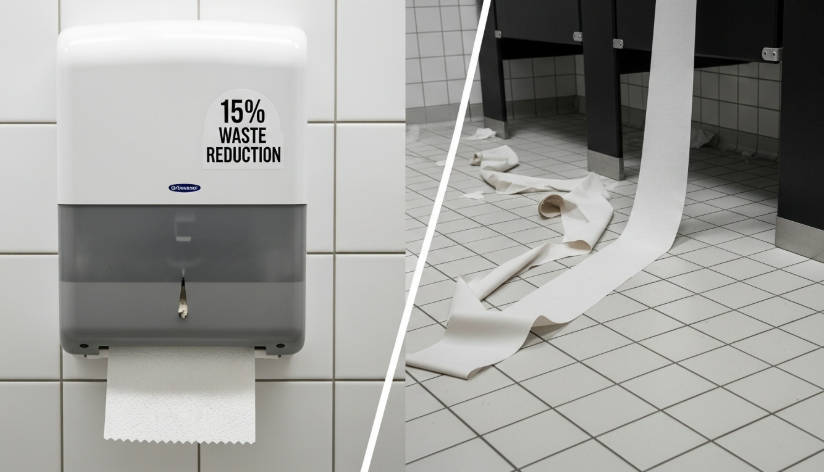
Facility managers often struggle with the “streaming” effect, where continuous rolls allow users to pull excessive lengths without a natural stopping point. Perforations solve this by providing physical resistance and visual cues. Data from commercial restrooms indicates that users naturally pause at the break, leading to more deliberate consumption. This standardized tear point helps users measure their usage intuitively, preventing the unnecessary unspooling of premium virgin wood pulp.
| Performance Metric | Perforated JRT (TSH-JRT08) | Continuous Jumbo Roll |
|---|---|---|
| Consumption Control | Defined sheets limit “streaming” | Indefinite pull increases waste |
| Dispenser Requirement | Standard dispenser teeth sufficient | Requires ultra-sharp serrated blades |
| Maintenance Impact | Reduces floor waste and clogs | Higher risk of plumbing blockages |
Reducing Accidental Over-usage and Disposal
Perforation offers mechanical control that extends beyond simple psychology. A clean perforation line creates enough drag to stop a spinning jumbo roll quickly, preventing the common issue of unused paper falling to the floor. When users can easily separate single or double sheets, they avoid grabbing the large clumps of paper typical of non-perforated rolls. This reduction in total volume significantly lowers the risk of plumbing blockages—a major hidden cost in facility management.
Economic Impact on Facility Maintenance
Optimizing consumption rates directly influences the bottom line. Facility managers report up to a 15% reduction in maintenance costs after switching to perforated formats. Slower consumption extends the intervals between refills, saving critical labor hours in 2026 operations. Reducing the total paper volume per visitor allows businesses to maintain tight procurement budgets while ensuring a lint-free, professional-grade experience for all occupants.
The Manufacturing Cost Difference in the Rewinding Phase
Rewinding complexity directly dictates factory margins, where the trade-off between perforation precision and continuous-roll throughput determines the final landed cost per ton.
Initial Capital Investment in Perforation Machinery
Integrating high-precision perforation blades into a rewinding line demands a significantly higher capital outlay compared to standard continuous systems. These sophisticated units require synchronized blade drives that add mechanical complexity and cost to the manufacturing facility. Non-perforated jumbo roll lines bypass these requirements, allowing factories to reduce initial debt loads and offer more aggressive pricing to bulk distributors.
| Production Factor | Perforated Jumbo Rolls | Continuous (Non-Perf) Rolls |
|---|---|---|
| Equipment Complexity | High (Precision Blade Units) | Low (Standard Rewinder) |
| Mechanical Speed | Variable (Limited to prevent breaks) | Maximum (High-volume output) |
| Maintenance Overhead | Regular Blade Sharpening | Minimal Tooling Wear |
Operational Speed and Production Throughput Efficiency
Production volume hinges on mechanical speed, which perforation units naturally limit to prevent web breaks and maintain tear consistency. Precision timing and tension control become critical when adding perforations, often forcing manufacturers to run lines at lower velocities. Continuous rewinding for products like jumbo rolls leverages the full mechanical capacity of the equipment, supporting the 2,860-ton monthly targets required by high-capacity operations in Hebei.
Recurring Maintenance and Tooling Expenses
Mechanical wear is an unavoidable cost center for perforated product lines, requiring scheduled downtime for blade sharpening and replacement to ensure clean tears. Every hour of maintenance adds to the total labor cost per unit and interrupts the production flow. Simplification of the rewinding phase for continuous rolls eliminates these specialized requirements, streamlining spare part inventory and improving overall equipment effectiveness (OEE).
Energy Consumption and Labor Intensity in 2026 Production
Technical complexity in the winding sequence increases the total utility footprint, especially for multi-ply perforated products that demand advanced tension management. While modern automation at Top Source Hygiene mitigates some labor overhead, perforated lines still require more frequent technical oversight to manage complex winding sequences. Streamlined processes for commercial towels and jumbo rolls offer a lower utility footprint per ton, providing a sustainable advantage in high-volume B2B supply chains.
Specifying Perforation Lengths for Wholesale Orders
Precise perforation specifications dictate regional compliance and container load efficiency, serving as a critical lever for B2B margin optimization.
Regional Perforation Standards in 2026
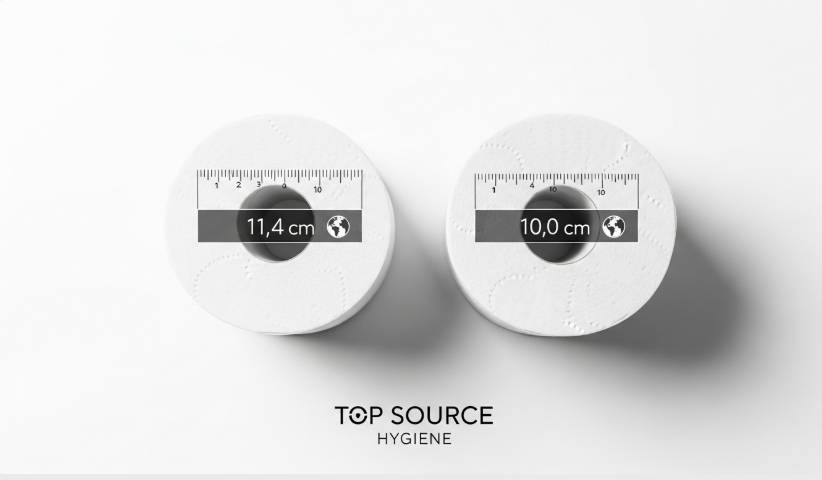
Wholesale buyers select perforation lengths based on regional hygiene standards and specific consumer habits. North American retailers typically mandate lengths between 10.1 cm and 11.4 cm to ensure rolls fit standard household dispensers without resistance. European markets frequently opt for shorter sheet lengths, a strategy that increases the total sheet count while keeping roll diameters manageable for restricted retail shelf space. Top Source Hygiene maintains 56 manufacturing lines adjusted to meet these varying compliance requirements across its global distribution network.
| Market Region | Standard Perforation Length | Primary Strategic Objective |
|---|---|---|
| North America | 10.1 cm – 11.4 cm | Dispenser Compatibility |
| European Union | 9.5 cm – 10.0 cm | Shelf Space Optimization |
| Commercial / JRT | 12.5 cm – 20.0 cm | High-Traffic Durability |
Custom Sheet Dimensions for Private Label Branding
Precise sheet sizing differentiates brands within the OEM sector. Clients adjust perforation intervals to align with their specific market positioning, opting for extra-long luxury sheets for premium hospitality or compact dimensions for high-traffic industrial use. Technical teams at our Mancheng facilities coordinate these perforation settings with paper GSM and ply count, ensuring the final product remains durable and resists premature tearing. Our factory-direct model facilitates rapid prototyping, delivering custom sheet samples within 10 days for wholesale review.
Logistical Optimization and Container Capacity
Perforation specifications directly influence the final roll thickness, which dictates shipping efficiency for international orders. Small adjustments in sheet length alter the overall roll diameter, impacting the total number of units a 40-foot high-cube container can accommodate. Production planners calculate these settings to optimize our 2,860-ton monthly output across established shipping routes. Accurate technical specifications prevent volume mismatches during the 20-25 day production cycle, protecting the buyer’s landed cost per unit.
Conclusion
Selecting the right jumbo roll configuration directly impacts facility maintenance costs and the user experience. Perforated options provide controlled consumption for high-traffic areas, while continuous rolls maximize efficiency when paired with serrated dispensers. Balancing these technical specifications ensures long-term plumbing safety and operational savings.
Review your current dispenser fleet to determine which roll type best aligns with your consumption targets. Contact our team to request technical specifications or a bulk wholesale catalog tailored to your regional requirements.
Frequently Asked Questions
Why are some jumbo toilet paper rolls not perforated?
Non-perforated jumbo rolls are designed primarily for high-traffic commercial environments where durability and maintenance efficiency are critical. Removing perforations eliminates a common point of failure where the paper might snap prematurely inside the dispenser, and it allows for a faster, more cost-effective manufacturing process for high-capacity rolls.
Perforated vs continuous commercial toilet paper?
Perforated rolls provide pre-measured sheets that help control usage and reduce waste by discouraging users from pulling excessive lengths. Continuous (non-perforated) paper is better suited for high-volume dispensers where a serrated edge handles the cutting, providing a more rugged solution that is less likely to jam or tear unevenly during heavy use.
Does non perforated toilet paper save money?
Yes, non-perforated paper generally offers a lower cost per foot because the extra manufacturing step of mechanical perforation is bypassed. Furthermore, when used in conjunction with a tension-controlled dispenser, it prevents the “free-spinning” effect that often leads to significant paper waste in public restrooms.
How do you tear jumbo toilet paper without perforations?
To tear non-perforated paper, you must utilize the integrated tearing teeth located at the mouth of the dispenser. By pulling the paper firmly downward or at a slight lateral angle against these sharp plastic or metal serrations, you create a clean, immediate break at any desired length.
How long are the sheets on perforated jumbo rolls?
Standard perforated jumbo rolls typically feature sheet lengths ranging from 3.75 to 4.5 inches. This spacing is designed to mirror the dimensions of standard residential toilet paper, ensuring a familiar user experience while providing the high-capacity benefits of a jumbo roll system.
Do dispensers need sharp teeth for non-perforated paper?
Yes, a sharp tearing edge is essential for non-perforated paper. Without perforations to weaken the paper at specific intervals, the dispenser must provide the mechanical force necessary to shear the tissue. Dull teeth will result in stretching, shredding, or the user pulling out excessive amounts of paper in frustration.